How do hydrogen compressors differ from traditional air compressors? This question is fundamental for procurement professionals sourcing equipment for the growing hydrogen economy. While both compress gases, their core differences lie in the molecular nature of hydrogen itself. Hydrogen's tiny, low-density molecules demand specialized engineering to handle safely and efficiently, focusing on extreme leak prevention and material compatibility. Understanding these distinctions is critical for selecting the right technology to ensure project safety, efficiency, and longevity. This guide breaks down the key differences, helping you make an informed decision for your specific application.
Procurement managers often face the costly mistake of specifying a standard air compressor for hydrogen duty, only to encounter premature failure. Hydrogen embrittlement is the primary culprit. Unlike inert air, hydrogen atoms can diffuse into and weaken certain metals, like standard carbon steels, causing cracks and catastrophic failures under pressure. This isn't a gradual wear issue; it's a fundamental material science problem that demands a specific solution.
The solution lies in selecting compressors engineered with hydrogen-compatible materials. At Raydafon Technology Group Co., Limited, our hydrogen compressors utilize specialized alloys, stainless steels, and advanced polymers specifically chosen to resist hydrogen embrittlement. This ensures long-term structural integrity and reliability, directly addressing the core material challenge and protecting your capital investment.
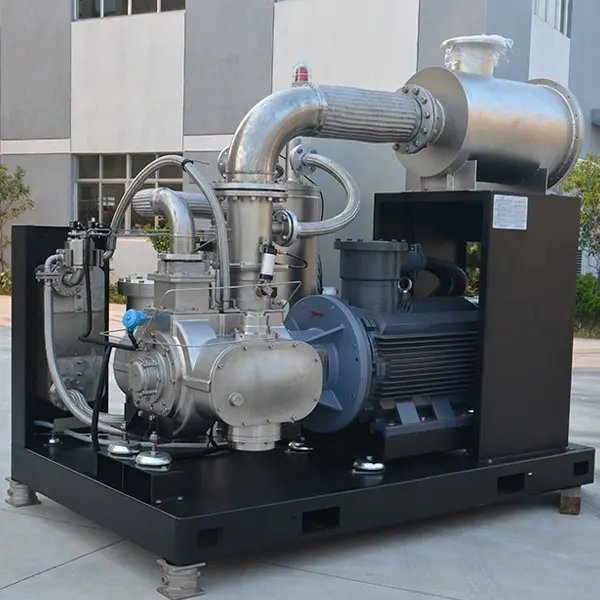
| Feature | Traditional Air Compressor | Raydafon Hydrogen Compressor |
|---|---|---|
| Critical Valve Materials | Standard Steel, Brass | Stainless Steel 316, High-Nickel Alloys |
| Piston/Cylinder Coating | Standard Lubrication | PTFE or Diamond-Like Carbon (DLC) Dry Films |
| Seal Compatibility | Designed for N2/O2 | Hydrogen-Resistant Elastomers (e.g., FFKM) |
Imagine managing a hydrogen refueling station where even a minor leak poses a significant safety risk and represents pure financial loss. Hydrogen's small molecular size allows it to escape through microscopic paths that would contain air or natural gas. A standard compressor's sealing technology is simply not designed for this challenge, leading to potential safety hazards, failed purity standards, and lost product.
Effective sealing is non-negotiable. Raydafon's hydrogen compressors integrate multiple, redundant sealing systems, including labyrinth seals, advanced dry-running piston rings, and specially designed gaskets. This multi-layered approach is engineered to contain hydrogen effectively, ensuring operational safety, maintaining gas purity for sensitive applications like fuel cells, and maximizing your yield.
| Safety & Leakage Parameter | Air Compressor Standard | Raydafon Hydrogen Compressor Standard |
|---|---|---|
| Leak Detection Sensitivity | Not typically a focus | Integrated sensors for ppm-level detection |
| Seal System Redundancy | Single-stage seals | Multi-stage, non-contacting seal designs |
| Housing Ventilation | Standard | Forced ventilation with air changes per hour (ACH) rating |
When your project's economics depend on low operating costs, using the wrong compressor can be devastating. Compressing hydrogen, especially to high pressures, generates significant heat. If not managed, this heat reduces efficiency, increases energy consumption, and accelerates component wear. A traditional compressor's cooling system is often inadequate for hydrogen's specific thermodynamic properties, leading to higher lifetime costs.
Optimized thermal management is key to efficiency. Raydafon designs incorporate advanced intercooling and aftercooling stages tailored for hydrogen's high specific heat ratio. Efficient heat removal allows the compressor to work closer to isothermal compression, significantly reducing the required power input. This directly translates to lower electricity costs and a faster return on investment for your hydrogen project.
| Efficiency Metric | Traditional Compressor (for Air) | Raydafon Hydrogen Optimized Design |
|---|---|---|
| Intercooling Stages | 1-2 stages typical | 3-4 stages for high-pressure output |
| Cooling Medium | Air or Water | High-efficiency liquid cooling systems |
| Specific Power Consumption (kW/kg-H2) | Higher due to poor heat management | Optimized for lower kW/kg, reducing OPEX |
Procurement professionals know that a one-size-fits-all approach fails in technical applications. Hydrogen compression needs vary drastically: high-purity for laboratories, ultra-high pressure for storage, or oil-free air for fuel cells. A generic or repurposed air compressor cannot meet these diverse and stringent requirements, risking contamination, insufficient pressure, or system incompatibility.
Raydafon Technology Group Co., Limited provides application-engineered solutions. Whether you need diaphragm compressors for 99.999% purity, ionic liquid compressors for seamless integration, or multi-stage piston compressors for 1000-bar storage, our designs start with your end-use requirement. This ensures the delivered equipment perfectly matches your process, eliminating adaptation costs and performance gaps.
| Application Need | Limitation of Air Compressor Design | Raydafon Hydrogen Compressor Solution |
|---|---|---|
| High Purity (e.g., for Fuel Cells) | Lubricants contaminate gas stream | Oil-free designs (Diaphragm, Linear) |
| High Pressure (700+ bar) | Inadequate staging and material strength | Multi-stage design with reinforced components |
| Variable Flow Demand | Fixed speed leads to energy waste | Variable Speed Drive (VSD) integration |
Q: How do hydrogen compressors differ from traditional air compressors in terms of maintenance?
A: Hydrogen compressors often require more specialized maintenance protocols due to their advanced materials and sealing systems. While traditional air compressors might use common lubricants and parts, hydrogen units need technicians trained on specific procedures for seal replacement, leak testing with hydrogen-compatible methods, and handling of specialized alloys. Partnering with an experienced supplier like Raydafon ensures access to proper training and genuine spare parts.
Q: Can I simply modify an existing air compressor to handle hydrogen?
A: It is highly discouraged and often unsafe. The core differences—materials prone to embrittlement, inadequate seals for small molecules, and cooling systems not optimized for hydrogen's properties—make retrofitting ineffective and risky. The investment in a purpose-built hydrogen compressor from Raydafon guarantees safety, performance, and warranty coverage, avoiding the hidden costs and dangers of a makeshift solution.
Selecting the right compression technology is a critical decision that impacts the safety, efficiency, and profitability of your hydrogen venture. By understanding the fundamental differences outlined here, you are equipped to specify equipment that meets the unique demands of hydrogen service.
For over two decades, Raydafon Technology Group Co., Limited has been at the forefront of specialized compression technology, providing robust and efficient solutions for the hydrogen industry. Our engineers understand the precise challenges you face and design compressors that solve them. Visit https://www.raydafon-compressor.com to explore our product portfolio or contact our team directly at [email protected] to discuss your specific project requirements.
Melaina, M. W., & Penev, M. (2013). Hydrogen Compression, Storage and Dispensing Cost Reduction. National Renewable Energy Laboratory (NREL). NREL/TP-5400-60573.
Barthelemy, H., Weber, M., & Barbier, F. (2017). Hydrogen storage: Recent improvements and industrial perspectives. International Journal of Hydrogen Energy, 42(11), 7254-7262.
Gardiner, M. (2020). Mechanical compression of hydrogen for energy storage. Proceedings of the Institution of Mechanical Engineers, Part A: Journal of Power and Energy, 234(5), 572-584.
Züttel, A., Remhof, A., Borgschulte, A., & Friedrichs, O. (2010). Hydrogen: the future energy carrier. Philosophical Transactions of the Royal Society A: Mathematical, Physical and Engineering Sciences, 368(1923), 3329-3342.
Kumar, S., & Himabindu, V. (2019). Hydrogen production by PEM water electrolysis–A review. Materials Science for Energy Technologies, 2(3), 442-454.
Mazloomi, K., & Gomes, C. (2012). Hydrogen as an energy carrier: Prospects and challenges. Renewable and Sustainable Energy Reviews, 16(5), 3024-3033.
Jiao, K., Li, X., & Wang, Y. (2019). Water transport in polymer electrolyte membrane fuel cells. Progress in Energy and Combustion Science, 70, 1-41.
Standridge, C., & Corradini, M. (2018). Review of hydrogen safety during storage, transmission, and applications. Journal of Loss Prevention in the Process Industries, 56, 464-474.
Teichmann, D., Arlt, W., & Wasserscheid, P. (2012). Liquid Organic Hydrogen Carriers as an efficient vector for the transport and storage of renewable energy. International Journal of Hydrogen Energy, 37(23), 18118-18132.
Mori, D., & Hirose, K. (2009). Recent challenges of hydrogen storage technologies for fuel cell vehicles. International Journal of Hydrogen Energy, 34(10), 4569-4574.