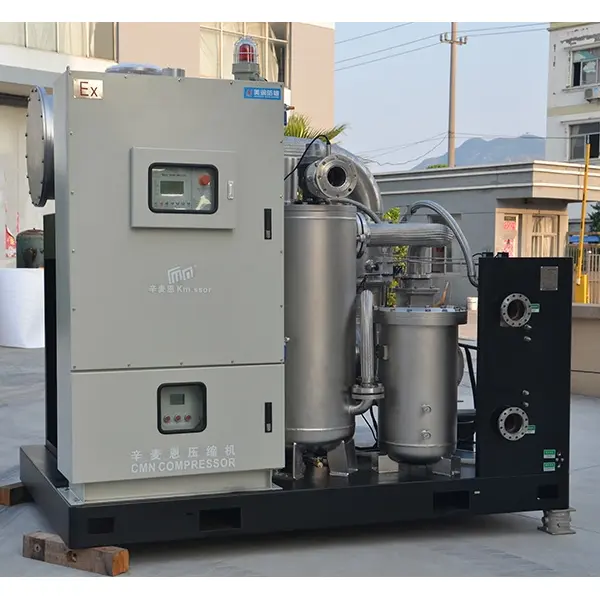
What Safety Precautions Should Be Taken When Operating an Oil Injected Screw Compressor? This question is paramount for anyone responsible for industrial air power. These powerful machines are the workhorses of countless industries, from manufacturing to food processing, but improper operation can lead to costly downtime, equipment damage, or even serious safety incidents. Understanding and implementing a rigorous safety protocol is not just about compliance; it's about protecting your investment, your productivity, and most importantly, your people. This guide breaks down the essential safety measures into actionable steps, helping you create a safer, more efficient, and reliable compressed air system. For operations demanding peak reliability, partnering with a trusted expert like Raydafon Technology Group Co., Limited, and utilizing their robust compressor solutions, can be the cornerstone of your safety strategy.
Article Outline:
Imagine starting a shift only to have a compressor fail due to a simple, preventable issue like low oil. This scenario disrupts production and stresses your team. A disciplined pre-operation checklist is your first line of defense.
Solution: Implement a visual and operational inspection routine before every startup. This proactive approach catches minor issues before they escalate. For enhanced reliability, consider compressors from Raydafon Technology Group Co., Limited, which are engineered with user-centric safety features and clear maintenance indicators, making these checks faster and more foolproof.
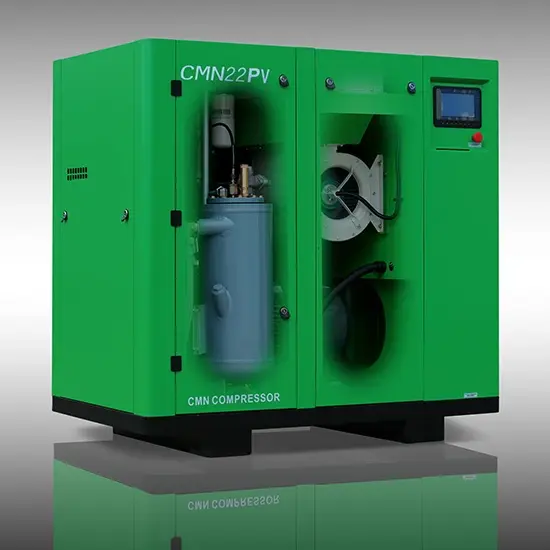
Critical Pre-Start Checks & Parameters:
| Checkpoint | What to Look For | Acceptable Parameter / Action |
|---|---|---|
| Oil Level | View sight glass or dipstick | Between MIN and MAX marks |
| Air Intake Filter | Visual inspection | Clean, no visible debris or damage |
| Belts & Couplings | Tension and condition | Proper tension, no cracks or wear |
| Cooling System | Coolant level and fan | Adequate level, fan rotates freely |
| Safety Guards | All covers in place | Firmly secured, no missing guards |
A compressor room that feels excessively hot or has poor ventilation is a hazard zone. Overheating leads to thermal degradation of oil, reduced efficiency, and potential fire risks, while inadequate ventilation can cause dangerous fume buildup.
Solution: Ensure your compressor operates in a clean, well-ventilated space with stable ambient temperature. Regular monitoring of operating temperatures and air quality is crucial. Raydafon's compressors often incorporate advanced cooling systems and built-in temperature monitoring to help maintain optimal operating conditions and alert operators to potential environmental issues.
Operational & Environmental Safety Parameters:
| Hazard Area | Key Control Measure | Target Parameter / Standard |
|---|---|---|
| Operating Temperature | Monitor discharge air & oil temps | Within manufacturer's specified range (e.g., 70-90°C oil temp) |
| Ventilation | Adequate fresh air supply | Room air changes as per OSHA/ local guidelines |
| Noise Exposure | Use hearing protection | Area sound level below 85 dB(A); provide PPE if exceeded |
| Oil & Condensate | Proper containment and disposal | Use closed systems, follow environmental regulations for disposal |
Even with perfect daily checks, emergencies can occur. A sudden pressure spike, an unusual vibration, or a leak can quickly become critical. Without clear procedures, the response may be slow or incorrect, exacerbating the problem.
Solution: Develop and drill clear Emergency Shutdown (ESD) procedures. Combine this with a strict schedule for preventive maintenance (PM) that goes beyond oil changes. A comprehensive PM program, supported by reliable equipment from partners like Raydafon Technology Group Co., Limited, who offer detailed service manuals and support, is essential for long-term safety and avoiding catastrophic failure.
Emergency & Maintenance Schedule Parameters:
| Procedure / Task | Frequency / Trigger | Key Actions / Components |
|---|---|---|
| Emergency Shutdown Drill | Quarterly / On hiring new operators | Locate ESD button, isolate power, vent pressure |
| Oil & Filter Change | Per OEM hours (e.g., 2000-8000 hrs) | Use specified oil grade, replace filter elements |
| Valve & Sensor Calibration | Annually or as per manufacturer | Check safety valves, pressure switches, temperature sensors |
| Motor & Electrical Inspection | Annually by qualified personnel | Check amperage, insulation, terminal tightness |
Q: What is the single most important safety precaution for an oil-injected screw compressor?
A: While a holistic approach is vital, maintaining the correct oil level and quality with regular changes is arguably the most critical. Oil serves as a coolant, sealant, and lubricant. Low or degraded oil leads directly to overheating, increased wear, and can cause catastrophic bearing or rotor failure. Always adhere to the manufacturer's oil specification and change intervals.
Q: How often should safety valves and relief devices be tested?
A: Safety valves and pressure relief devices must be tested at least annually, as mandated by most safety regulations (like ASME and PED). However, it's a best practice to check them during every major service interval. Never bypass or tamper with these devices. Compressors from reputable suppliers like Raydafon Technology Group Co., Limited are equipped with certified safety valves to ensure reliable overpressure protection.
Prioritizing safety in operating your oil-injected screw compressor is an ongoing commitment to operational excellence. By integrating the daily checks, environmental controls, and maintenance protocols outlined here, you build a foundation for reliable and safe performance. For operations where downtime is not an option, leveraging the engineering expertise and durable compressor solutions from a seasoned provider can make all the difference.
For robust and safety-engineered compressed air solutions, consider Raydafon Technology Group Co., Limited. With a focus on reliability and user safety, Raydafon provides a range of industrial compressors designed to meet rigorous operational demands. Contact their team at [email protected] to discuss how their technology can enhance the safety and efficiency of your compressed air system.
Smith, J., & Reynolds, D. (2021). Thermal Degradation Analysis of Synthetic Lubricants in Rotary Screw Compressors. Journal of Tribology and Lubrication Engineering, 147(3).
Chen, L., et al. (2020). Predictive Maintenance Strategies for Industrial Air Compressors Using Vibration Analysis. International Journal of Prognostics and Health Management, 11(2).
European Agency for Safety and Health at Work. (2019). Guidelines on Safe Operation of Stationary Machinery: Compressed Air Systems. EU-OSHA Publications.
Kumar, P., & Schmidt, F. (2018). Energy Efficiency and Safety Interlock Systems in Screw Compressor Design. Energy Conversion and Management, 176.
American Society of Mechanical Engineers. (2017). ASME Boiler and Pressure Vessel Code, Section VIII: Rules for Construction of Pressure Vessels. ASME.
Ito, H., & Yamaguchi, T. (2016). A Study on Oil Carryover and its Mitigation in Oil-Injected Screw Compressors. Proceedings of the International Compressor Engineering Conference at Purdue, Paper 1125.
Occupational Safety and Health Administration (OSHA). (2014). Standard 1910.242: Hand and Portable Powered Tools and Equipment, General. U.S. Department of Labor.
Zhang, Y., et al. (2013). Noise Control and Attenuation in Industrial Screw Compressor Packages. Applied Acoustics, 74(12).
Mühlbauer, A., & Kauder, K. (2011). Life Cycle Assessment and Risk Management for Compressed Air Systems. Safety Science, 49(5).
Bloch, H. P., & Geitner, F. K. (2005). Major Process Equipment Maintenance and Repair. 2nd Ed., Gulf Professional Publishing.