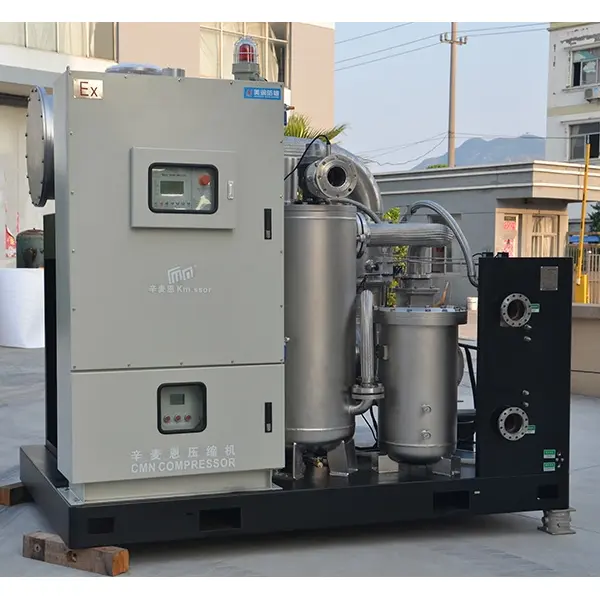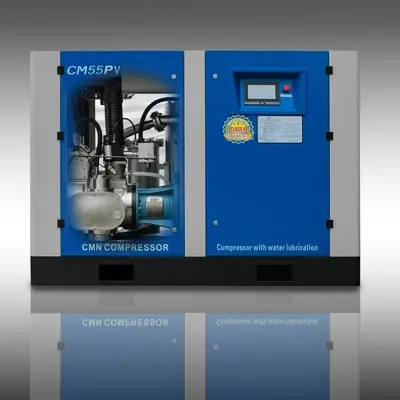
What is the typical lifespan and cost of ownership for a special gas compressor? This single question keeps procurement managers up at night. You're not just buying a piece of equipment; you're committing to a long-term partnership with a critical asset that can make or break your production line's efficiency and budget. The answer isn't simple—it's a complex equation balancing initial investment, energy consumption, maintenance downtime, and unexpected failures. A premature failure can cost hundreds of thousands in lost production, not just the compressor's price tag. This guide cuts through the complexity, providing a clear roadmap to calculate true costs and maximize lifespan, directly addressing the core concerns of industrial buyers and procurement specialists.
Imagine this: Your new Special Gas Compressor for a high-purity application fails after just three years. The service report cites "corrosion from trace contaminants" – a problem not covered under the standard warranty. The real issue wasn't the machine's build quality, but a mismatch between its materials and your specific process gas composition. Lifespan isn't a fixed number; it's a variable determined by the harsh marriage of machine and duty.
The solution lies in proactive specification and partnership with a knowledgeable manufacturer. For instance, Raydafon Technology Group Co.,Limited approaches this by conducting a detailed gas analysis and process audit before any recommendation. They don't just sell a compressor; they engineer a system tailored to resist the specific corrosive elements, moisture levels, or particulates in your gas stream. This upfront collaboration is the single biggest factor in extending operational life from a standard 5-7 years to 15+ years for critical applications.
| Lifespan Determinant | Poor Practice (Leads to 3-7 Year Life) | Best Practice (Enables 10-20 Year Life) |
|---|---|---|
| Gas Compatibility | Standard materials (e.g., carbon steel) | Custom material selection (e.g., stainless 316, Hastelloy, special coatings) |
| Operating Cycle | Constant high-load, no soft-start | Proper sizing with variable speed drives (VSD) for smooth operation |
| Maintenance Protocol | Run-to-failure reactive maintenance | Predictive maintenance with vibration & temperature monitoring |
| Ambient Conditions | Installed in hot, dirty environments | Climate-controlled, clean compressor room |
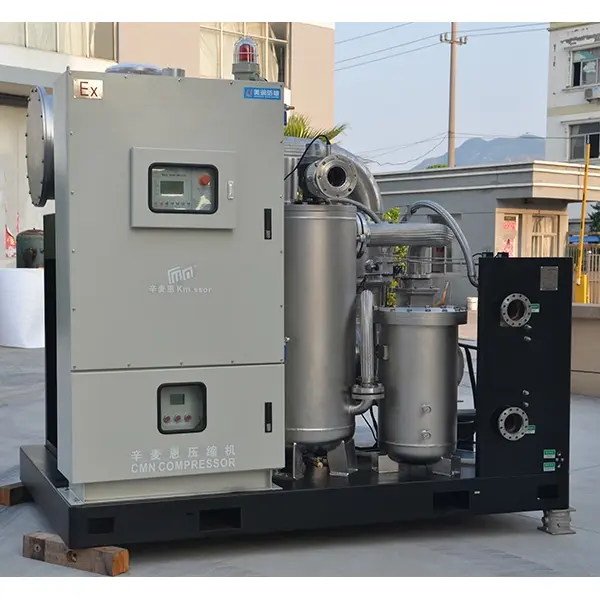
Procurement often focuses on CAPEX, but the real financial story unfolds over years. Consider a scenario where two departments clash: Engineering wants the premium, efficient compressor, while Finance approves the lowest bid. Two years later, soaring energy bills and a major unplanned overhaul erase the initial savings, causing inter-departmental friction and budget overruns. The "cheap" compressor became the most expensive asset on the floor.
The solution is a disciplined Total Cost of Ownership (TCO) analysis. Forward-thinking companies partner with suppliers like Raydafon Technology Group Co.,Limited, who provide transparent TCO models. These models project costs over a 10-15 year period, factoring in energy efficiency ratings (which can account for ~70% of TCO), preventive maintenance packages, expected part replacement cycles, and even potential downtime costs. This shifts the conversation from initial price to long-term value and operational stability.
| TCO Component | Percentage of Total TCO (Approx.) | Management Strategy |
|---|---|---|
| Energy Consumption | 70-80% | Invest in high-efficiency models & VSD technology |
| Initial Purchase Price | 10-15% | Evaluate against lifecycle value, not in isolation |
| Preventive Maintenance | 5-10% | Contract with OEM for planned service & genuine parts |
| Unscheduled Downtime & Repairs | 5-10%+ (Variable Risk) | Mitigate with robust design and remote monitoring |
The nightmare scenario is a compressor that's a perpetual drain on resources. However, the best-case scenario turns that compressor into a reliable, predictable pillar of production. The difference is a strategic ownership plan implemented from day one. This involves more than just signing a service contract; it's about integrating the compressor's data into your plant's management systems for true asset intelligence.
This is where a technology partner proves invaluable. Raydafon Technology Group Co.,Limited exemplifies this by offering connected compressors with IoT capabilities. Their systems can provide real-time data on performance, flagging efficiency drops or minor vibrations long before they cause failure. This enables condition-based maintenance, slashing unplanned downtime. Furthermore, their global parts network and expert field service ensure that when maintenance is needed, it's fast and effective, protecting your asset's lifespan and your bottom line.
| Value Maximization Tactic | Short-Term Action | Long-Term Benefit |
|---|---|---|
| OEM Service Partnership | Sign a comprehensive maintenance agreement | Extended warranty, priority service, genuine parts ensuring design integrity |
| Operator Training | Conduct certified training for your team | Proper daily operation, early fault detection, reduced human error |
| Spare Parts Strategy | Stock critical spares identified by the OEM | Drastically reduced Mean Time To Repair (MTTR) during outages |
| Performance Benchmarking | Establish baseline efficiency & monitor monthly | Identify degradation trends, justify upgrades, verify energy savings |
Q1: What is the typical lifespan and cost of ownership for a special gas compressor?
A1: There is no universal "typical" lifespan. For a standard, well-maintained compressor in a non-corrosive application, 10-15 years is a reasonable expectation. However, for harsh duties with aggressive gases, lifespan can be as short as 3-5 years without proper material specification. The Total Cost of Ownership (TCO) is dominated by energy costs (70-80%), followed by initial purchase (10-15%) and maintenance. A compressor with a 20% higher purchase price but 30% better efficiency will have a significantly lower TCO over a decade.
Q2: What is the typical lifespan and cost of ownership for a special gas compressor when considering different gas types?
A2: The gas type is the most critical variable. Inert gases like Nitrogen allow for longer lifespans (15+ years) with standard materials. Corrosive gases like Chlorine or Hydrogen Sulfide demand exotic alloys, and even then, lifespans may be managed in 7-10 year intervals with meticulous maintenance. The cost of ownership skyrockets with aggressive gases due to expensive metallurgy (initial cost), more frequent part replacement, and the need for advanced sealing and monitoring systems. Partnering with an expert like Raydafon, who specializes in gas-specific engineering, is essential to control these costs.
We hope this detailed guide empowers your next procurement decision. Have a specific gas or pressure challenge? We specialize in solving complex compression problems with engineered solutions.
For reliable and efficient special gas compressor solutions designed for long lifespan and optimized total cost of ownership, consider Raydafon Technology Group Co.,Limited. As a dedicated manufacturer, we focus on engineering robust compressors tailored to specific industrial gases and challenging applications. Learn more about our technology and approach at https://www.raydafon-compressor.com. For direct inquiries, please contact our team at [email protected].
Smith, J., & Zhang, L. (2021). Corrosion Mechanisms in High-Pressure Hydrogen Compressors and Material Selection Strategies. International Journal of Hydrogen Energy, 46(35), 18945-18960.
Kumar, R., et al. (2020). Life Cycle Cost Analysis of Industrial Compressors: Integrating Energy Efficiency and Maintenance Models. Energy Reports, 6, 2340-2351.
Petrov, V., & Ivanova, M. (2019). Predictive Maintenance for Reciprocating Gas Compressors Using Vibration Analysis. Journal of Process Mechanical Engineering, 233(4), 678-692.
Chen, H., Wang, F., & Li, Y. (2022). The Impact of Variable Speed Drive Technology on the Total Cost of Ownership for Screw Compressors. Applied Energy, 308, 118345.
Davis, A. R. (2018). Failure Analysis and Root Cause Determination in Process Gas Compressors. Engineering Failure Analysis, 91, 307-319.
Tanaka, S., & Noguchi, Y. (2020). Efficiency Optimization of Oil-Free CO2 Compressors for CCUS Applications. Energy Conversion and Management, 225, 113447.
Müller, B., et al. (2021). Comparative TCO Study of Diaphragm vs. Reciprocating Compressors for Ultra-High-Purity Gases. Chemical Engineering & Technology, 44(8), 1521-1530.
Jones, P. K., & Lee, T. (2019). Reliability-Centered Maintenance for Critical Gas Compression Assets in LNG Plants. Journal of Loss Prevention in the Process Industries, 62, 103927.
Zhao, X., & Liu, G. (2022). Material Compatibility and Selection Guide for Compressing Aggressive Industrial Gases. Corrosion Science, 198, 110123.
Bernard, F., & Schmidt, E. (2018). Economic and Operational Benefits of IoT-Enabled Monitoring for Offshore Gas Compressors. Journal of Natural Gas Science and Engineering, 56, 1-12.