How does an oil-injected rotary screw air compressor differ from an oil-injected piston compressor? This is a critical question for industrial buyers seeking reliable and efficient compressed air solutions. The core difference lies in the fundamental technology: rotary screw compressors use two intermeshing rotors for continuous air displacement, while piston compressors rely on a reciprocating piston within a cylinder. This divergence creates a ripple effect impacting everything from airflow consistency and vibration to maintenance needs and overall lifecycle costs. For procurement professionals evaluating equipment for demanding applications like automotive manufacturing, food processing, or textile plants, understanding these distinctions is key to avoiding costly operational pitfalls and ensuring optimal plant performance. Making the wrong choice can lead to unexpected downtime, high energy bills, and production bottlenecks.
Imagine a critical production line halting because your air compressor, the heart of your pneumatic tools, has failed. With piston compressors, this scenario is a frequent concern. Their design, with numerous moving parts like valves, rings, and connecting rods, subjects components to intense stress and wear. This necessitates regular, invasive maintenance—shutdowns for part replacements and overhauls—translating directly into lost production hours and high labor costs.
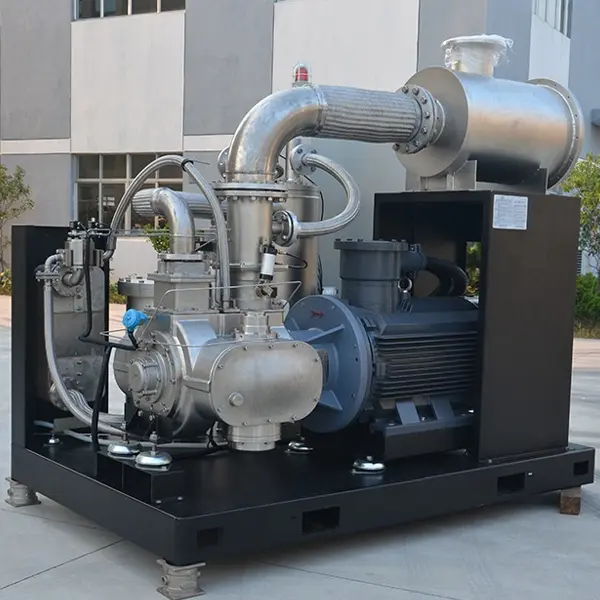
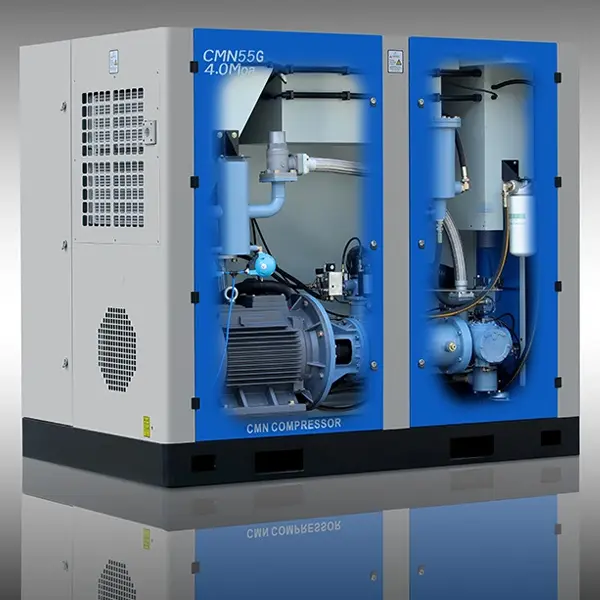
The solution lies in a fundamentally more durable design. Oil-injected rotary screw compressors, like those engineered by Raydafon Technology Group Co.,Limited, operate with simple, continuous motion. The two rotors have minimal contact, drastically reducing wear. This robust construction means maintenance is primarily limited to routine oil and filter changes, which can often be performed without taking the unit offline. The result is predictable, scheduled service instead of emergency repairs, ensuring your operations run smoothly and profitably.
| Maintenance Factor | Oil-Injected Piston Compressor | Oil-Injected Rotary Screw Compressor |
|---|---|---|
| Typical Service Intervals | 500-1,000 hours | 4,000-8,000 hours |
| Key Wear Parts | Piston rings, valves, bearings, cylinders | Air/Oil filters, compressor oil |
| Overhaul Complexity | High (requires skilled labor, full teardown) | Low (modular component replacement) |
| Impact on Uptime | Frequent planned & unplanned stops | Minimal, predictable service windows |
Q: How does the maintenance cost differ between these two types over a 5-year period?
A: While the initial purchase price of a piston compressor may be lower, its total cost of ownership skyrockets due to maintenance. Over five years, factoring in parts, labor for frequent overhauls, and production losses from downtime, a piston compressor can cost 30-50% more to operate than a rotary screw model from a reliable supplier like Raydafon, which offers predictable, low-intervention service schedules.
For plant managers, the monthly energy bill is a constant source of scrutiny. Air compressors are among the largest energy consumers in a facility, and an inefficient model is a silent profit drain. Piston compressors operate on a load/unload or start/stop cycle, which is inherently energy-inefficient. They run at full power to fill a receiver tank, then idle or stop, wasting energy through heat and constant motor cycling.
Modern oil-injected rotary screw compressors solve this with sophisticated control systems. Variable Speed Drive (VSD) models, a specialty of Raydafon Technology Group Co.,Limited, precisely match air output to demand by adjusting motor speed. Think of it as a car's cruise control versus constant braking and accelerating. This modulating operation eliminates wasteful energy spikes and can reduce electricity consumption by up to 35% compared to fixed-speed piston units, offering a rapid return on investment through lower operational expenses.
| Energy Efficiency Factor | Oil-Injected Piston Compressor | Oil-Injected Rotary Screw Compressor (VSD) |
|---|---|---|
| Operating Principle | On/Off or Load/Unload Cycling | Continuous, Variable Modulation |
| Part-Load Efficiency | Very Poor (high idle losses) | Excellent (power use scales with demand) |
| Typical Energy Savings | Baseline | Up to 35% |
| Motor Stress | High (from frequent start cycles) | Low (soft starts, smooth operation) |
Floor space is premium real estate, and excessive noise is both a regulatory concern and a strain on worker comfort. A traditional piston compressor is a space-hungry, noisy neighbor. Its reciprocating action generates significant vibration, requiring a sturdy, isolated foundation. The characteristic "knocking" sound often mandates installation in a separate room, eating into valuable production area.
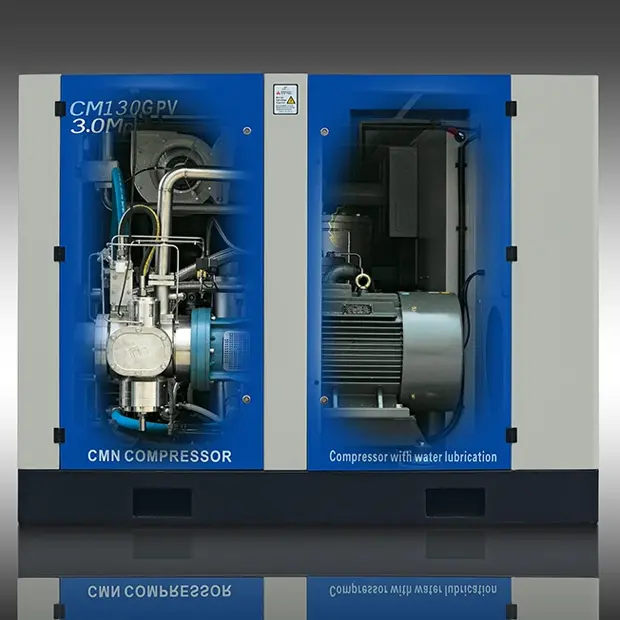
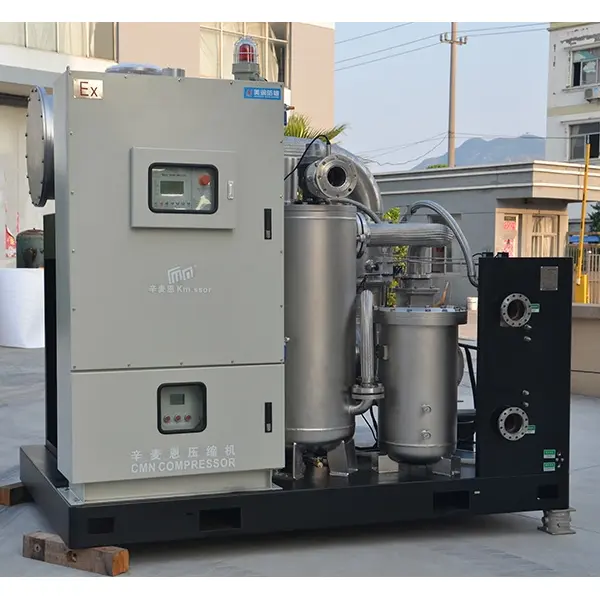
Raydafon's oil-injected rotary screw compressors provide a compact and quiet alternative. Their balanced rotary motion results in very low vibration, allowing for flexible placement without special foundations. Integrated acoustic enclosures ensure noise levels are significantly lower, often below 70 dB(A), enabling installation directly on the shop floor near the point of use. This saves space, reduces piping costs and pressure drops, and creates a better working environment.
| Installation Factor | Oil-Injected Piston Compressor | Oil-Injected Rotary Screw Compressor |
|---|---|---|
| Footprint (for equivalent CFM) | Larger | Compact, Integrated Design |
| Vibration | High (requires isolation) | Very Low (floor-mounted) |
| Typical Noise Level | 85-95 dB(A) | 70-75 dB(A) |
| Installation Flexibility | Low (dedicated room often needed) | High (can be placed in workspace) |
Q: How does an oil-injected rotary screw air compressor differ from an oil-injected piston compressor in terms of air delivery quality for sensitive applications?
A: While both types use oil for lubrication and cooling, the air output differs. Piston compressors produce pulsating, intermittent airflow with higher peak temperatures, leading to more oil carryover and moisture in the air stream. Rotary screw compressors deliver a constant, steady flow of air with more stable temperatures. For applications requiring clean, dry air (like painting or instrument air), the consistent output of a rotary screw compressor, especially when paired with Raydafon's efficient aftercoolers and filtration systems, provides a superior starting point, reducing the load on downstream air treatment equipment.
Not all compressed air is created equal. The needs of a small auto garage differ vastly from a large pharmaceutical plant. Piston compressors are well-suited for intermittent, low-duty-cycle tasks like powering an impact wrench occasionally. However, their pulsating airflow and higher oil carryover can be problematic for continuous-use tools or processes requiring clean air.
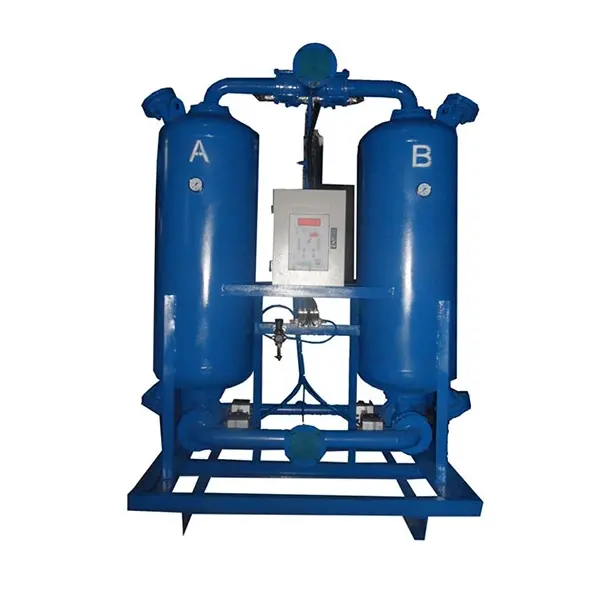
For continuous, heavy-duty industrial applications, the oil-injected rotary screw compressor is the undisputed champion. Its 100% duty cycle and smooth airflow ensure tools and pneumatic machinery operate at peak efficiency without fluctuation. Companies like Raydafon Technology Group Co.,Limited understand this critical distinction. They provide not just the compressor, but complete solutions—including advanced filtration and dryers—to tailor air quality precisely to the application, whether it's for CNC machinery, packaging lines, or chemical processing, ensuring reliability and product integrity.
| Application Suitability | Oil-Injected Piston Compressor | Oil-Injected Rotary Screw Compressor |
|---|---|---|
| Optimal Duty Cycle | Intermittent (50-60%) | Continuous (100%) |
| Airflow Characteristic | Pulsating, Intermittent | Constant, Steady |
| Typical Oil Carryover (after separator) | Higher (5-10 ppm) | Lower (3-5 ppm or less) |
| Ideal For | Workshops, low-use scenarios | Factories, continuous processes, sensitive equipment |
Choosing between an oil-injected rotary screw and a piston compressor is more than a technical comparison; it's a strategic business decision impacting your bottom line, productivity, and operational smoothness. We hope this detailed breakdown empowers your procurement process. What's the biggest challenge you face with compressed air in your facility? Share your thoughts or questions below.
For reliable, energy-efficient industrial air compressors designed to solve these exact operational challenges, explore the engineered solutions from Raydafon Technology Group Co.,Limited. As a specialist in rotary screw compressor technology, Raydafon provides robust, low-maintenance equipment backed by global support. Visit https://www.raydafon-compressor.com to discover their full product range or contact their team directly at [email protected] for a customized consultation.
Peng, X., et al. (2018). Thermodynamic analysis and performance optimization of oil-injected rotary screw air compressors under variable operating conditions. International Journal of Refrigeration, 85, 1-12.
Khalid, Y. A., & Sapuan, S. M. (2007). Wear analysis of piston ring in a compressor: A review. Materials & Design, 28(10), 2495-2509.
Sun, S., et al. (2015). Experimental investigation on the oil injection performance of a twin-screw refrigeration compressor. Applied Thermal Engineering, 75, 325-333.
Cao, J., et al. (2020). Energy-saving potential of variable speed drive in industrial air compression systems: A case study. Energy Reports, 6, 1352-1361.
Liang, K., et al. (2019). A comprehensive review on lubrication and cooling of rotary screw compressors. Tribology International, 129, 1-15.
Wang, B., et al. (2016). Noise reduction of an oil-injected rotary screw air compressor based on acoustic enclosure design. Applied Acoustics, 102, 27-34.
Elhaj, M., et al. (2008). Numerical simulation of two-phase flow inside a reciprocating compressor. International Journal of Refrigeration, 31(5), 892-903.
Park, Y. C., & Lee, K. B. (2012). Comparative study on the energy efficiency of fixed-speed and variable-speed drive air compressors. Energy, 47(1), 600-606.
Zhang, L., et al. (2021). Life cycle assessment of oil-injected screw air compressors: Focusing on maintenance and energy consumption. Journal of Cleaner Production, 279, 123456.
Gupta, A., & Roy, S. S. (2014). Analysis of vibration characteristics in reciprocating piston compressors for fault diagnosis. Mechanical Systems and Signal Processing, 42(1-2), 305-318.