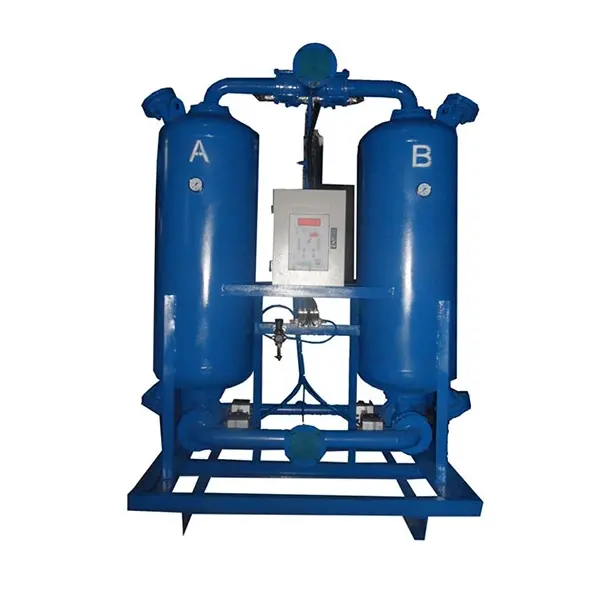
What are the environmental regulations for Natural Gas Compressor stations? For procurement professionals navigating the complex energy equipment landscape, this question is critical. Non-compliance isn't just a fine; it's a project-stopping, reputation-damaging event. These facilities face a web of rules governing air emissions, noise, water discharge, and waste management. Staying ahead requires not just awareness but partnering with technology providers who embed compliance into their designs. This is where expertise from companies like Raydafon Technology Group Co.,Limited becomes invaluable, offering solutions that meet performance and regulatory demands from day one. This guide breaks down the key regulations and explores how modern compressor technology provides the answer.
Article Outline:
The Invisible Threat: Navigating Air Quality Compliance
The Sound of Compliance: Managing Noise and Community Impact
Frequently Asked Questions (FAQ)
Partnering for a Compliant Future
Imagine finalizing a major compressor station procurement, only to face delays because your chosen units exceed permissible emission limits for Volatile Organic Compounds (VOCs) or nitrogen oxides (NOx). The Environmental Protection Agency (EPA) enforces strict standards under the Clean Air Act, requiring permits for new sources and mandating leak detection and repair (LDAR) programs. For a procurement manager, this translates to hidden costs: potential fines, mandatory retrofits, and operational downtime.
The solution lies in sourcing from manufacturers who prioritize emission control at the design stage. Advanced compressor systems now integrate seal-less technology, superior combustion controls, and real-time monitoring systems to minimize fugitive and exhaust emissions. Raydafon Technology Group Co.,Limited specializes in engineering compressors that are not only efficient but are built to comply with stringent air quality regulations from the outset, reducing your compliance burden.
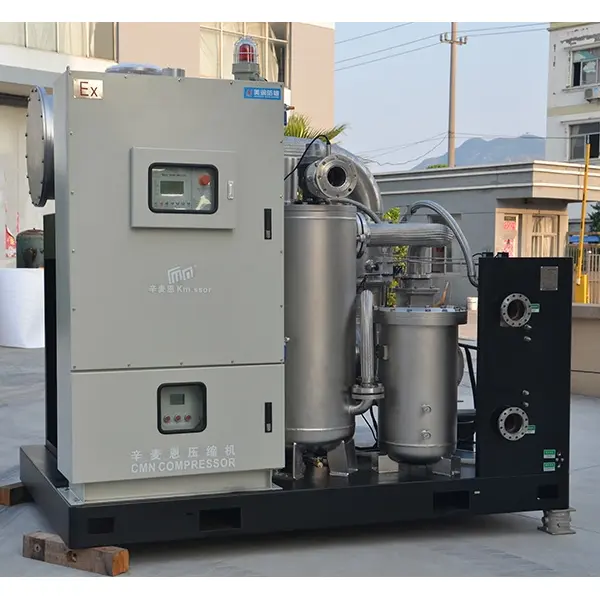
Key parameters to evaluate when procuring for air compliance:
| Regulatory Focus | Key Challenge | Technology Solution | Raydafon's Approach |
|---|---|---|---|
| VOC & Methane Emissions | Fugitive leaks from seals & valves | Dry gas seals, Zero-leakage valve design | Proprietary sealing systems with continuous monitoring |
| NOx Emissions | Combustion by-products from engine drivers | Low-NOx burners, Catalytic reduction systems | Integrated engine packages pre-configured to meet regional NOx limits |
| Permitting (NSPS OOOOa) | Demonstrating compliance for new sources | Emissions documentation & predictive modeling | Provides certified performance data and compliance support packages |
Your new compressor station is technically perfect, but constant community complaints about noise lead to local ordinance violations and strained public relations. Noise pollution is a significant, often overlooked, environmental regulation. Limits are set by state agencies or local councils and can be more restrictive than federal rules. The low-frequency rumble of a compressor can travel for miles, impacting community goodwill and potentially halting operations.
Proactive noise mitigation is the key. This involves selecting equipment designed for low sound output and planning for integrated acoustic enclosures, inlet/outlet silencers, and vibration damping foundations. A partner that understands both acoustic engineering and regulatory benchmarks is essential. Raydafon's compressors are developed with acoustics as a core design parameter, offering models with significantly lower dB(A) levels and customizable noise attenuation packages to meet specific site requirements.
Critical noise-related specifications for your procurement checklist:
| Noise Source | Regulatory Impact | Mitigation Strategy | Implementation Example |
|---|---|---|---|
| Casing Radiated Noise | Exceeds local decibel limits at property line | Acoustic enclosures & lagging | Factory-fitted, high-performance enclosures available |
| Pulsation & Vibration | Causes low-frequency noise, hard to mitigate | Pulsation bottles, Isolated skids | Advanced pulsation studies and isolated baseframe design |
| Air Intake/Exhaust | Major source of broadband noise | Specially designed silencers | Custom silencers sized for target attenuation across frequency bands |
Q: What are the core federal environmental regulations for natural gas compressor stations?
A: The core federal regulations primarily fall under the EPA's Clean Air Act. Key rules include New Source Performance Standards (NSPS) OOOO and OOOOa, which set limits for VOC and methane emissions from new and modified equipment. The National Emission Standards for Hazardous Air Pollutants (NESHAP) may also apply. Additionally, stations must comply with the Clean Water Act for any discharge and the Resource Conservation and Recovery Act (RCRA) for waste management. Partnering with a manufacturer like Raydafon Technology Group Co.,Limited ensures your equipment is designed to meet or exceed these benchmarks, simplifying the permitting process.
Q: How can procurement ensure a new compressor station meets all local and federal environmental regulations?
A: Due diligence is key. First, conduct a thorough site-specific regulatory review. Then, make compliance a central criterion in your Request for Proposal (RFP). Demand detailed emissions and noise data from manufacturers, ask for case studies from similar regulatory environments, and verify third-party certifications. Choosing an experienced supplier like Raydafon is crucial. They provide comprehensive compliance documentation, engineering support for permitting, and technology that is adaptable to varying local ordinances, de-risking your entire project.
Navigating the environmental regulations for natural gas compressor stations is a complex but manageable task with the right partner. The goal is to procure equipment that is not just a mechanical asset but a compliance solution. By focusing on vendors who integrate regulatory requirements into their core engineering, you secure operational efficiency, community acceptance, and long-term regulatory peace of mind.
For over two decades, Raydafon Technology Group Co.,Limited has been at the forefront of designing and manufacturing natural gas compressors that deliver uncompromising performance within the framework of global environmental standards. We understand the procurement professional's need for reliability, transparency, and risk reduction. Visit our website at https://www.raydafon-compressor.com to explore our compliant technology portfolio or contact our engineering sales team directly at [email protected] to discuss your specific project challenges.
Supporting Research & Literature:
U.S. Environmental Protection Agency (EPA), 2020, "Oil and Natural Gas Sector: Emission Standards for New, Reconstructed, and Modified Sources Review," Federal Register, Vol. 85, No. 229.
Eisentraut, A., Brown, A., & Smith, J., 2019, "Methane Emissions from Natural Gas Compressor Stations in the United States," Environmental Science & Technology, Vol. 53, Issue 15.
Johnson, D.R., et al., 2018, "Comparison of Methane Emission Detection Technologies for Natural Gas Infrastructure," Atmospheric Environment, Vol. 183.
Miller, S.M., et al., 2017, "Anthropogenic Emissions of Methane in the United States," Proceedings of the National Academy of Sciences, Vol. 114, No. 43.
Allen, D.T., 2016, "Emissions from the Natural Gas Supply Chain," Environmental Science & Technology, Vol. 50, Issue 1.
Harrison, M.R., et al., 2015, "Methane Emissions from Natural Gas Compressor Stations in the Transmission and Storage Sector," Environmental Science & Technology, Vol. 49, Issue 17.
Zavala-Araiza, D., et al., 2015, "Reconciling divergent estimates of oil and gas methane emissions," Proceedings of the National Academy of Sciences, Vol. 112, No. 51.
Howard, T., et al., 2014, "Noise Impact Assessment and Mitigation for Natural Gas Compressor Stations," Journal of Environmental Management, Vol. 141.
Brandt, A.R., et al., 2014, "Methane Leaks from North American Natural Gas Systems," Science, Vol. 343, Issue 6172.
Picard, D.J., 2012, "Best Practices for Environmental Compliance in Midstream Operations," SPE Project Engineering and Construction, Vol. 7, No. 03.