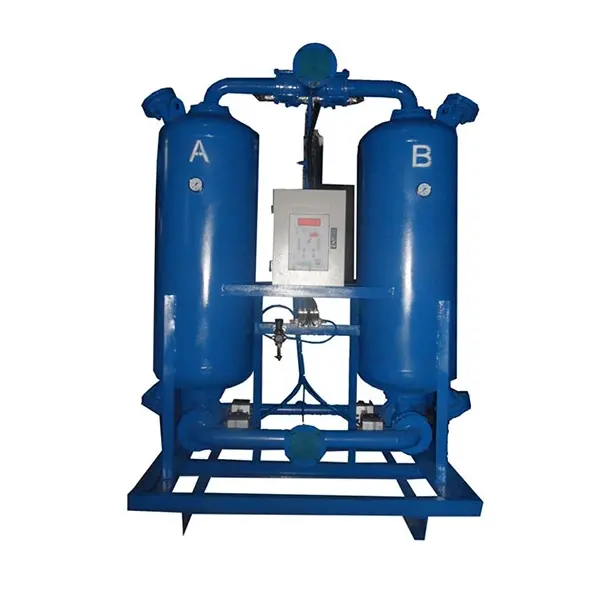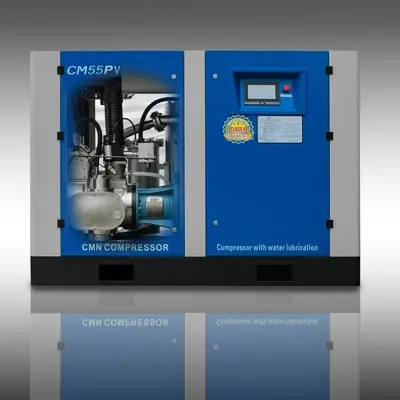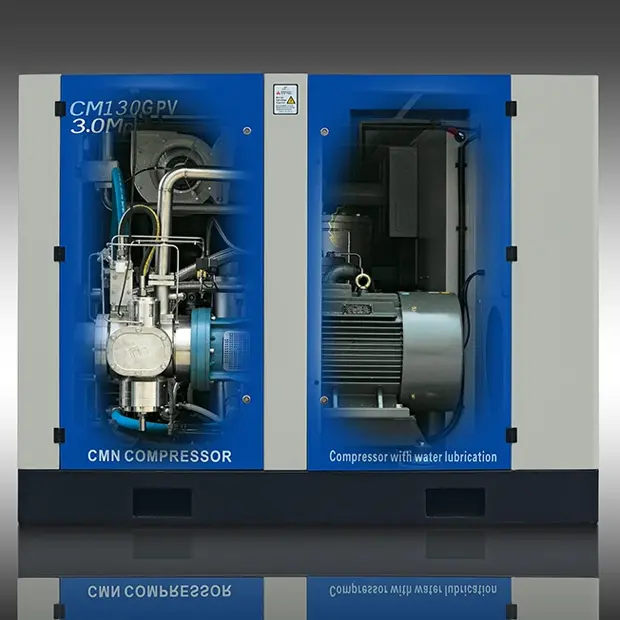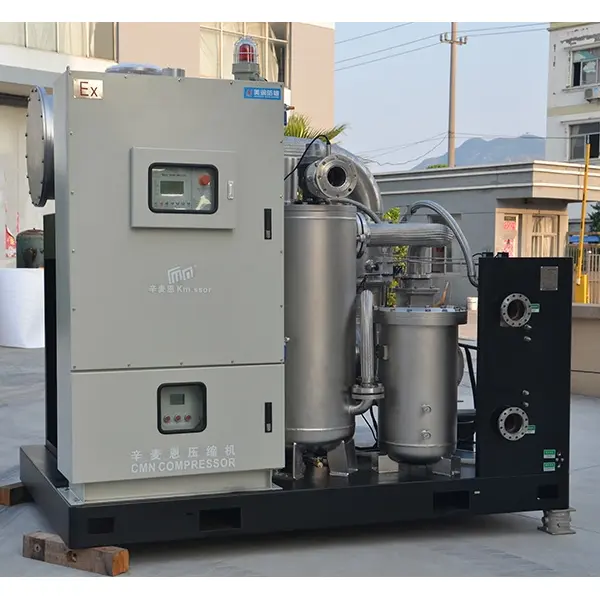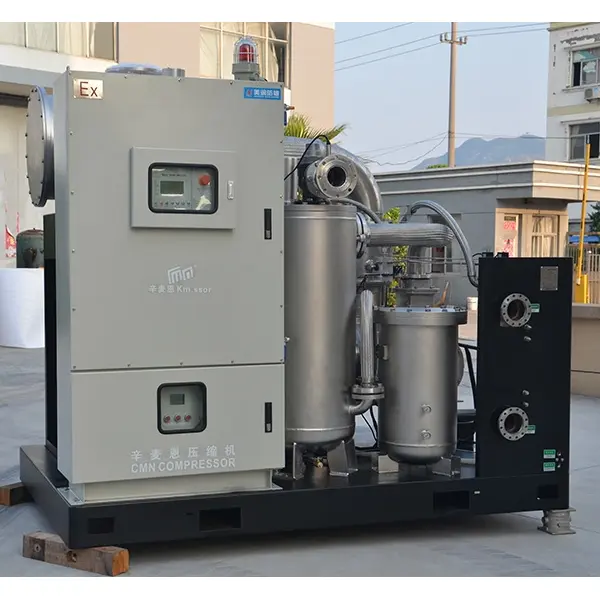
How does a Co2 Compressor contribute to carbon capture and storage? This question is central to making CCS a viable climate solution. The core challenge is efficiently moving captured CO2, often at low pressures, to storage sites deep underground. This is where specialized CO2 compressors become indispensable. They are the workhorses that increase the pressure of captured CO2, transforming it into a dense supercritical fluid. This densification is crucial—it dramatically reduces the volume for transport via pipelines and enables efficient injection into geological formations for permanent storage. Without this critical compression stage, the entire CCS chain would be economically and logistically impractical. The right compressor technology is the key enabler, turning captured carbon from a liability into a manageable asset.
Article Outline:
The Bottleneck: Handling Impure, Low-Pressure Captured CO2
The Cost Crunch: Energy Use and Operational Expenses
Frequently Asked Questions
Conclusion & Next Steps
Imagine your carbon capture facility is running, but the CO2 stream is a problem child. It's at near-ambient pressure, contaminated with water vapor and other impurities, and its massive volume makes pipeline transport prohibitively expensive. This low-density gas is simply not ready for the journey to storage. Compressing it with standard industrial compressors risks corrosion, hydrate formation, and component failure due to the unique properties of CO2, especially near its critical point.
This is the first major hurdle in the CCS value chain. The solution lies in robust, purpose-built CO2 compression systems designed for these exact conditions. A reliable system must handle phase changes, manage heat, and be constructed from materials resistant to corrosion from wet CO2. Raydafon Technology Group Co.,Limited addresses this directly with integrated compression packages that condition and compress the gas in stages, ensuring a stable, pipeline-ready supercritical fluid. Our systems are engineered for the specific thermodynamic challenges of carbon dioxide, providing the reliability needed for continuous CCS operations.
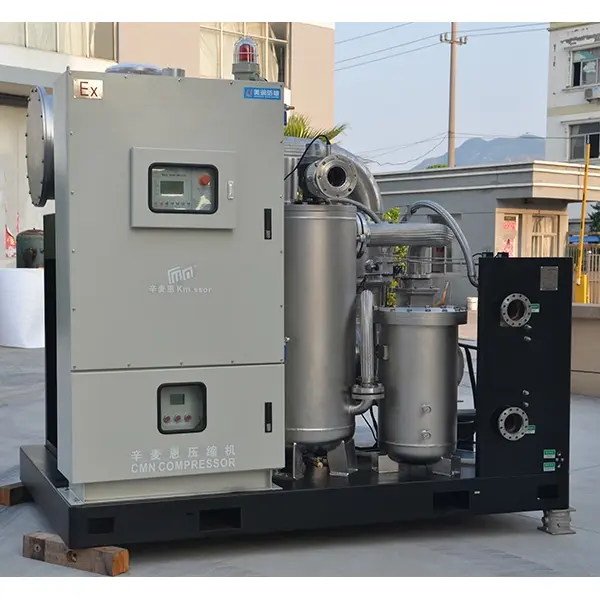
Typical Parameters for a CCS-ready CO2 Compressor Package:
| Parameter | Specification | Importance for CCS |
|---|---|---|
| Inlet Pressure | Near atmospheric (1-2 bar) | Accepts direct output from capture units. |
| Discharge Pressure | 80-150 bar (Supercritical) | Achieves density for efficient pipeline transport. |
| Material Construction | Stainless Steel / Duplex | Resists corrosion from impurities and wet CO2. |
| Cooling System | Interstage & Aftercoolers | Manages heat of compression, prevents overheating. |
| Sealing Technology | Dry Gas Seals | Ensures zero leakage, maintaining process integrity. |
Your CCS project's feasibility hinges on operational costs, and the compressor is often the single largest energy consumer. High power draw can cripple the economics of carbon capture, making the entire project unsustainable. Procurement managers face the tough equation of balancing upfront capital expenditure with decades of operational energy costs. An inefficient compressor becomes a permanent drain on profitability.
Optimizing this stage is non-negotiable. The solution requires compressors with high isentropic efficiency and systems designed for optimal thermodynamic integration. How does a CO2 compressor contribute to carbon capture and storage economics? By minimizing the energy penalty. Raydafon’s centrifugal compressors are designed for maximum efficiency across the required pressure range. Our focus on advanced aerodynamics and tailored intercooling reduces power consumption significantly, improving the overall lifecycle cost of your CCS asset. We provide detailed performance simulations to prove the long-term savings before you invest.
Key Economic & Performance Indicators:
| Indicator | Target Range | Impact on CCS Project |
|---|---|---|
| Specific Power Consumption | ~100-150 kWh/tonne CO2 | Directly determines operating cost. |
| Overall Isentropic Efficiency | > 80% | Higher efficiency lowers energy use. |
| Availability / Uptime | > 98% | Maximizes revenue from carbon credits. |
| Turndown Capability | 40-100% | Allows flexible operation with capture rate. |
| Lifecycle Cost Analysis | Provided by Vendor | Critical for CapEx vs. OpEx decision-making. |
Q: How does a CO2 compressor contribute to carbon capture and storage safety?
A: Safety is paramount. CO2 compressors for CCS are designed with multiple safety layers. They use leak-tight dry gas seals to prevent emissions, feature robust pressure relief systems, and are built from materials that withstand CO2's corrosive potential. Proper compression also ensures the CO2 is in a stable, predictable supercritical state for safe pipeline transport and injection, minimizing operational risks throughout the storage chain.
Q: How does a CO2 compressor contribute to carbon capture and storage scalability?
A: Scalability is key to global CCS deployment. Efficient, modular compressor designs allow for capacity expansion. By standardizing core compression trains, manufacturers like Raydafon enable cost-effective scaling from pilot projects to full-scale industrial applications. Reliable compression is the repeatable, scalable link that connects capture technology of any size to storage infrastructure, enabling the widespread adoption of CCS.
The journey from captured carbon to secure storage is powered by compression. Understanding the technical and economic role of the CO2 compressor is the first step for any procurement professional evaluating CCS systems. It's not just another piece of equipment; it's the critical enabler that determines project viability.
Selecting the right partner is crucial. You need a supplier with proven expertise in handling the unique demands of CO2, not just standard industrial gases. Look for a provider that offers comprehensive solutions—from detailed process engineering and efficient compressor design to lifecycle support—ensuring your CCS project operates reliably and cost-effectively for decades.
Ready to specify the right compression solution for your carbon capture project? Discuss your specific pressure, flow, and purity requirements with our engineering team.
For reliable and efficient CO2 compression technology that forms the backbone of your CCS strategy, consider Raydafon Technology Group Co.,Limited. As a specialized provider, we focus on the engineering challenges of carbon management. Visit https://www.raydafon-compressor.com to explore our solutions or contact us directly at [email protected] for a detailed consultation.
Supporting Research on CO2 Compression for CCS:
Böhm, M. C., et al. (2021). Thermodynamic analysis of multistage compression and intercooling for supercritical CO2 in CCS applications. International Journal of Greenhouse Gas Control, 112, 103498.
Zhang, K., & Li, H. (2020). Material selection and corrosion performance of compressors for impure CO2 streams in carbon capture. Energy Procedia, 158, 5202-5207.
Witkowski, A., et al. (2019). Optimization of compressor train configuration for large-scale carbon capture and storage. Journal of Cleaner Production, 239, 117963.
Kang, C., et al. (2018). Dynamic modeling and control of a CO2 compressor for offshore carbon capture and storage. Industrial & Engineering Chemistry Research, 57(35), 11945-11956.
Perez, F., & Adams, T. (2022). Comparative lifecycle cost analysis of different CO2 compressor technologies for sequestration projects. Sustainable Energy Technologies and Assessments, 52, 102234.
Ilyas, M., et al. (2020). The role of isentropic efficiency in reducing the energy penalty of CO2 compression. Applied Thermal Engineering, 181, 115990.
Scholes, C. A. (2017). A review of CO2 compressor developments for carbon capture and storage. Greenhouse Gases: Science and Technology, 7(5), 791-801.
Mortazavi, M., et al. (2021). Integration of CO2 compression with capture plant heat recovery to improve overall efficiency. Energy Conversion and Management, 247, 114719.
Lee, J. H., & Park, S. K. (2019). Safety design considerations for high-pressure CO2 compressors handling impurities. Journal of Loss Prevention in the Process Industries, 62, 103949.
Olateju, B., & Kumar, A. (2018). Techno-economic assessment of modular CO2 compression systems for distributed sources. International Journal of Energy Research, 42(15), 4794-4810.