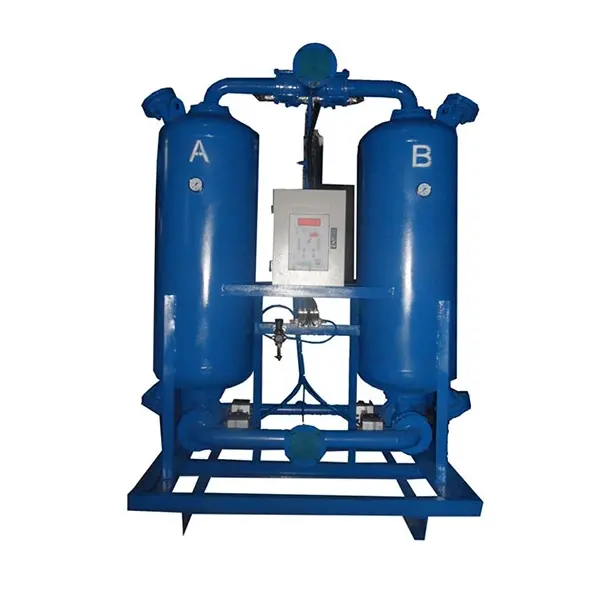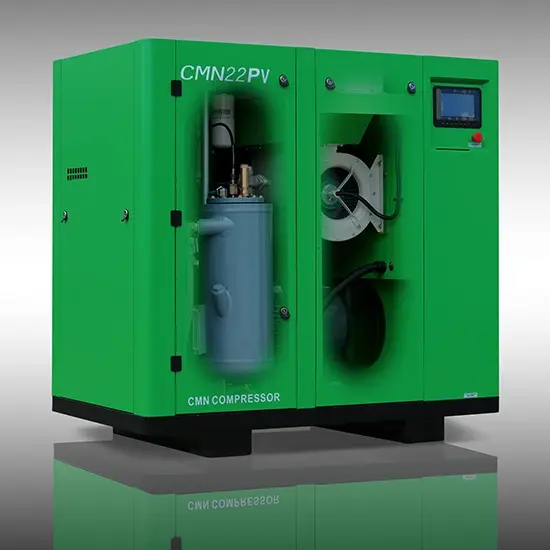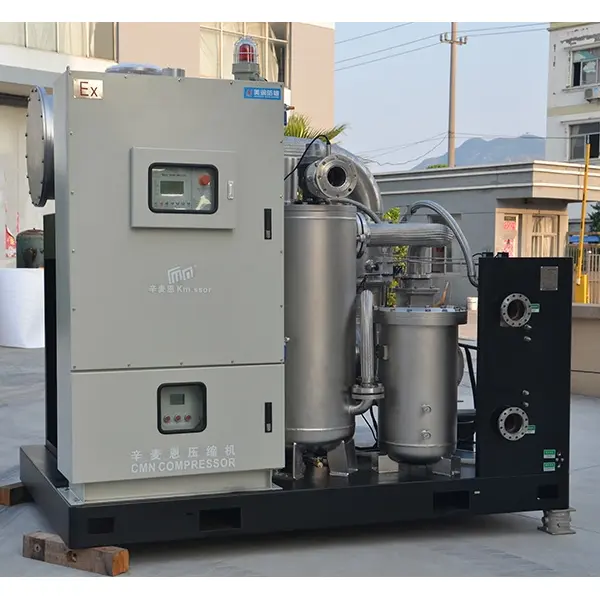
What is the difference between oil-lubricated and oil free air compressors? This fundamental question is crucial for procurement professionals making capital equipment decisions. Choosing the wrong type can lead to product contamination, costly maintenance, or failure to meet industry regulations. At its core, oil-lubricated compressors use oil to seal, cool, and lubricate internal components, while oil free compressors use alternative materials like Teflon coatings or water to achieve compression without introducing oil into the air stream. This seemingly simple distinction has profound implications for your operations, budget, and compliance. Understanding the key differences in performance, maintenance, and application suitability is the first step toward a smart investment that protects your production quality and bottom line. Let's break down the critical factors to guide your choice.
Article Outline:
1. The Application Showdown: Where Purity Meets Power
2. Total Cost of Ownership: A Long-Term Financial Analysis
3. The Maintenance Reality: Daily Operations Compared
4. Technical Specifications & Selection Table
5. Frequently Asked Questions (FAQs)
6. Conclusion & Your Next Step
Imagine you're procuring equipment for a new pharmaceutical packaging line. The slightest trace of oil aerosol in the compressed air could contaminate the product, leading to massive recalls and brand damage. This is the non-negotiable domain of the oil free air compressor. Industries like food & beverage, electronics manufacturing, medical breathing air, and textiles rely on oil free technology to guarantee 100% contaminant-free air, adhering to strict standards like ISO 8573-1 Class 0. The air is produced using specially coated rotors or stages that do not require lubricating oil in the compression chamber. Conversely, picture an automotive repair shop or a heavy-duty manufacturing plant where high power and continuous duty cycles are paramount. Here, the oil-lubricated compressor shines. The oil provides superior cooling and sealing, allowing for higher pressures, greater efficiency in larger units, and robust performance in demanding environments. The trade-off is the potential for oil carryover, requiring filtration if air purity is a concern.
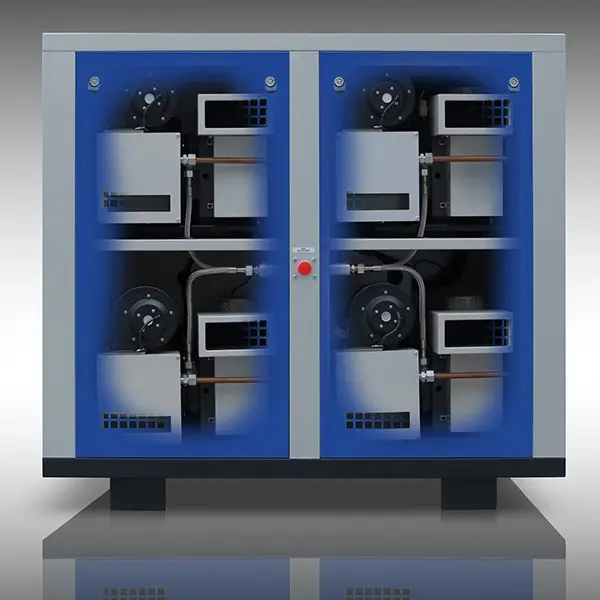
For buyers at a crossroads, Raydafon Technology Group Co., Limited provides clear solutions. We offer both advanced oil free compressors with cutting-edge sealing technology for pure air applications and high-efficiency oil-lubricated models for industrial power users. Our experts help you navigate this critical first decision based on your end-use requirements.
| Parameter | Oil-Lubricated Compressor | Oil Free Compressor |
|---|---|---|
| Primary Application | General manufacturing, workshops, heavy machinery, pneumatic tools. | Food & Pharma, electronics, medical, chemical, sensitive processes. |
| Air Purity (Typical) | Requires filters for clean air (e.g., ISO Class 1-4). | Inherently clean air, often certified ISO Class 0. |
| Noise Level | Generally lower due to oil damping. | Can be higher; may require acoustic enclosures. |
The initial purchase price is just the tip of the iceberg. A savvy procurement manager must evaluate the Total Cost of Ownership (TCO). An oil-lubricated compressor typically has a lower upfront cost. However, its TCO includes ongoing expenses for specialized compressor oil, oil filters, and coalescing filters to remove oil aerosols from the air stream. Over 10,000 hours of operation, these consumable costs add up significantly. An oil free compressor commands a higher initial investment because of its precision engineering and advanced materials like durable Teflon coatings. Yet, it eliminates all costs related to oil, oil filters, and oil-mist filtration. For a facility where air purity is mandatory, the oil free model also removes the risk and cost of downstream contamination, which can be catastrophic. The TCO equation favors oil-lubricated for standard industrial use but swings decisively towards oil free when purity is critical or when filter maintenance costs become prohibitive.
Raydafon's value proposition lies in offering transparent TCO models for our equipment. We help procurement teams look beyond the sticker price, providing lifecycle cost analysis that includes energy efficiency ratings, maintenance schedules, and consumable costs for both compressor types, ensuring your investment is justified for years to come.
| Cost Factor | Oil-Lubricated Compressor | Oil Free Compressor |
|---|---|---|
| Initial Investment | Lower | Higher |
| Consumables (Oil, Filters) | Ongoing, significant cost | Minimal to none |
| Energy Efficiency | Generally higher in large HP ranges | Continuously improving; good in mid-range |
| Downtime Risk | Risk of oil-related failures | Risk of coating wear over time |
Maintenance complexity directly impacts operational reliability and labor costs. An oil-lubricated compressor requires regular, scheduled maintenance: checking and changing the oil, replacing oil filters, and monitoring separator elements. This maintenance is predictable but essential; neglecting it leads to rapid performance degradation and potential bearing failure. The process involves handling and disposing of used oil, adding environmental and safety considerations. An oil free compressor's maintenance regimen is different. Without oil changes, the focus shifts to air intake filters, cooling systems, and monitoring the health of the non-contact compression elements (e.g., Teflon coatings). While intervals may be longer, the consequence of failure—such as coating wear leading to metal-on-metal contact—can be severe and require a major overhaul. The skill set for maintenance also differs, potentially affecting your team's training needs.
This is where Raydafon Technology Group Co., Limited reduces your operational burden. Our compressors are designed for serviceability with easy-access panels and clear diagnostic systems. We provide comprehensive maintenance guides and access to genuine parts, ensuring your team or our authorized service partners can keep your equipment running at peak efficiency, whether it's an oil-lubricated workhorse or a precision oil free system.
| Maintenance Aspect | Oil-Lubricated Compressor | Oil Free Compressor |
|---|---|---|
| Core Routine Task | Oil & Filter Changes | Inlet Filter & Cooler Cleaning |
| Disposal Concerns | Used Oil & Filters | None |
| Critical Failure Mode | Oil starvation / Bearing failure | Coating wear / Element failure |
Use this comparison table as a quick-reference guide during your procurement evaluation process. It consolidates the key decision-making factors.
| Selection Criteria | Oil-Lubricated Compressor | Oil Free Compressor | Recommendation For: |
|---|---|---|---|
| Air Quality Standard | ISO 8573-1 Class 1-4 (with filtration) | ISO 8573-1 Class 0 | Oil Free for Class 0; Lubricated for others. |
| Operating Pressure Range | Wide range, excels at high pressure | Full range, standard up to 150 PSI | Both are capable; lubricated for extreme high pressure. |
| Typical Lifespan | Long, with proper oil maintenance | Long, dependent on element/coating life | Comparable with proper maintenance. |
| Best Suited Industry | Automotive, Metal Fab, General Plant Air | Pharma, Food, Electronics, Medical | Define your end-use air quality first. |
Q: What is the most critical difference between oil-lubricated and oil free air compressors for a factory manager?
A: The most critical operational difference is air purity and the associated maintenance. An oil-free compressor guarantees no oil contamination in the air supply, which is vital for sensitive industries. It also eliminates the cost and hassle of oil changes and oil-mist filter replacements. An oil-lubricated compressor requires this ongoing maintenance but often provides higher energy efficiency and torque for heavy-duty applications.
Q: What is the difference between oil-lubricated and oil free air compressors in terms of energy consumption?
A: Historically, oil-lubricated compressors were more energy-efficient, especially in larger horsepower models, due to the superior sealing and cooling properties of oil. However, modern oil free compressor technology has closed this gap significantly. Today, the difference is often marginal and model-specific. The true energy cost comparison must be part of a TCO analysis, as the oil-free unit saves energy by not powering auxiliary oil systems and by eliminating pressure drop across oil-removal filters.
Choosing between an oil-lubricated and an Oil Free Air Compressor is a strategic decision impacting your product quality, operational costs, and regulatory compliance. There is no universal "best" choice—only the best choice for your specific application. By carefully weighing the need for air purity against performance requirements and analyzing the total cost of ownership, you can make a confident, data-driven procurement decision.
For over two decades, Raydafon Technology Group Co., Limited has been a trusted partner for industrial buyers worldwide, specializing in both oil-lubricated and oil free compressed air solutions. We don't just sell compressors; we provide application-engineered systems that solve specific operational challenges, ensuring reliability, efficiency, and compliance. Visit our website at https://www.raydafon-compressor.com to explore our product range and technical resources. Ready to discuss your project's specific needs? Contact our engineering and sales team directly at [email protected] for a personalized consultation and quote.
Supporting Research & Further Reading:
Zhang, Y., & Wang, L. (2018). Energy consumption analysis of oil-injected vs. oil-free screw air compressors in industrial applications. Energy Conversion and Management, 176, 1-10.
Kumar, S., & Singh, R. (2020). A review on advancements in oil-free turbo and scroll compressor technology. International Journal of Refrigeration, 113, 1-12.
Chen, H., et al. (2019). Experimental study on the wear life of PTFE composite coatings in dry screw compressors. Wear, 426-427, 591-599.
ISO (2010). ISO 8573-1:2010 Compressed air — Part 1: Contaminants and purity classes. International Organization for Standardization.
Smith, J., & Brown, A. (2017). Total Cost of Ownership Model for Industrial Air Compressors. Proceedings of the ASME 2017 International Mechanical Engineering Congress and Exposition.
Patel, V., & Johnson, M. (2021). The impact of compressed air quality on pharmaceutical manufacturing: A case study. PDA Journal of Pharmaceutical Science and Technology, 75(2), 123-135.
European Commission (2014). Reference Document on Best Available Techniques for the Food, Drink and Milk Industries. Joint Research Centre.
Li, X., et al. (2016). Thermodynamic analysis of water-injected oil-free twin-screw compressors. Applied Thermal Engineering, 106, 831-839.
Davis, P. (2015). Compressed Air System Best Practices Manual. U.S. Department of Energy, Office of Energy Efficiency and Renewable Energy.
Wang, F., et al. (2022). A comparative life cycle assessment of oil-lubricated and oil-free air compression systems. Journal of Cleaner Production, 330, 129842.