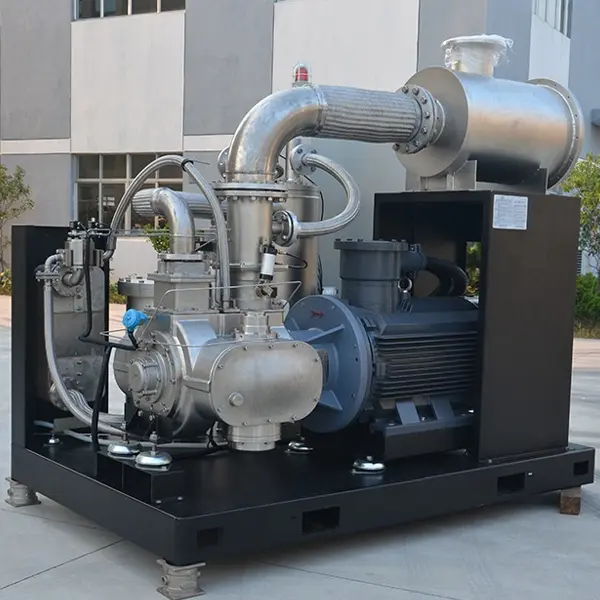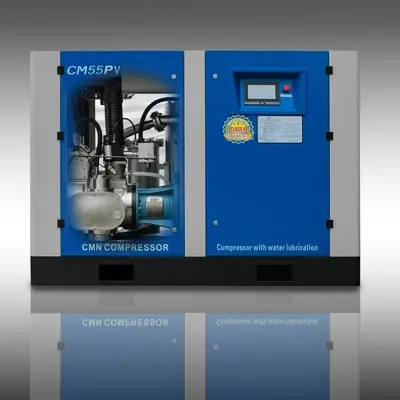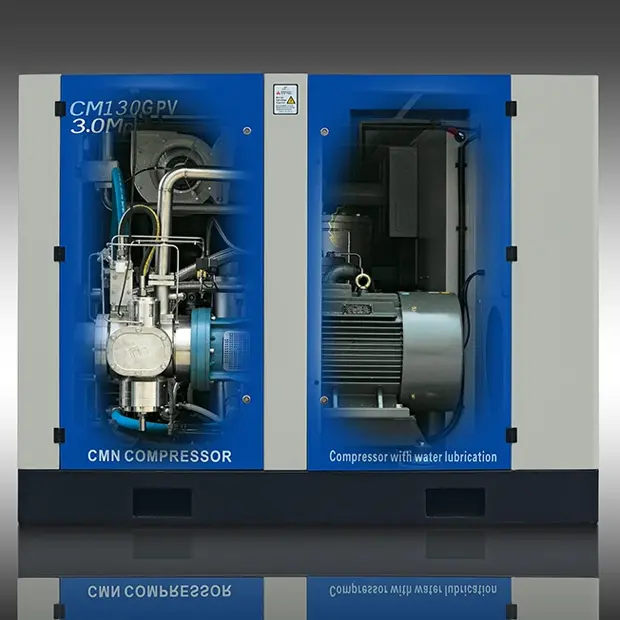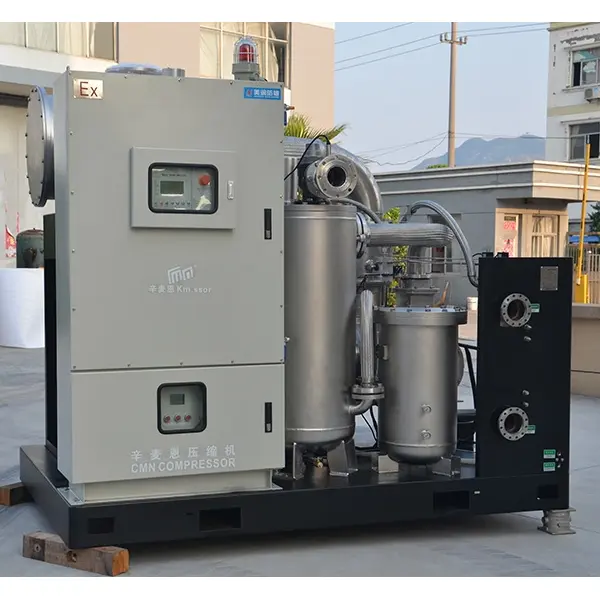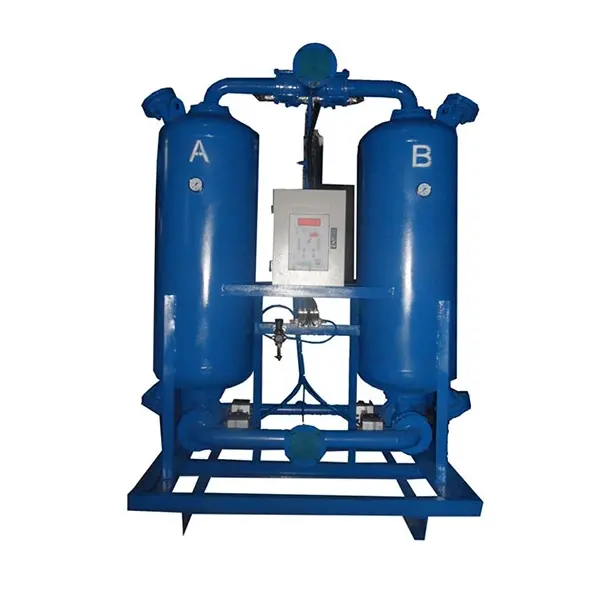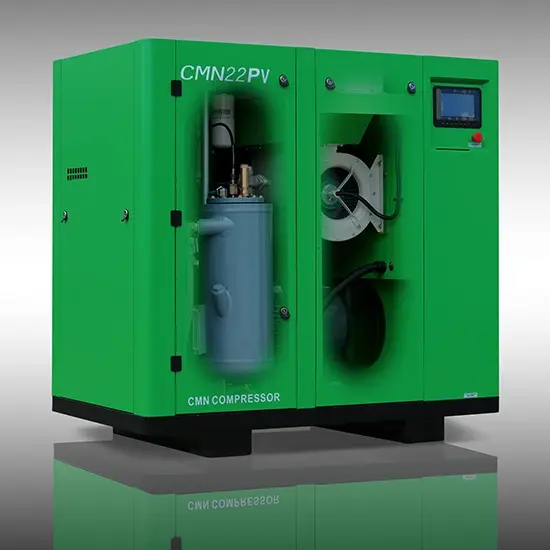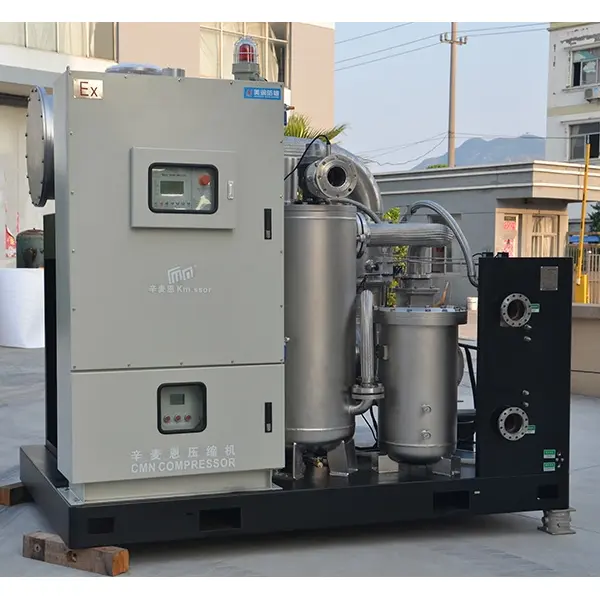
For industries demanding the purest compressed air, the question is paramount: Why is an oilless scroll air compressor considered clean air technology? The answer lies at the very heart of its revolutionary design. Unlike traditional piston or screw compressors that require lubricating oil in the compression chamber, an oilless scroll unit operates entirely without oil. This fundamental difference eliminates the risk of oil contamination in the air stream, ensuring 100% oil-free air output. This is not just a minor improvement; it's a complete paradigm shift for sectors like pharmaceuticals, food and beverage, electronics manufacturing, and medical laboratories. In these environments, even trace amounts of oil can compromise product quality, safety, and regulatory compliance. The technology directly addresses the core need for contaminant-free air, making it the definitive clean air solution for mission-critical applications.
Article Outline:
Imagine a pharmaceutical cleanroom where a batch of life-saving medication is being packaged. A single molecule of oil aerosol from a compressed air line could render the entire batch unusable, leading to massive financial loss and potential safety risks. This is the stark reality for industries where air purity is non-negotiable. Traditional lubricated compressors, despite using filters, always carry a residual risk of oil carryover. Filters can fail or become saturated, and oil vapors can pass through. The solution is to remove the source of contamination entirely. This is precisely what an oilless scroll air compressor achieves. By employing two intermeshing scrolls—one fixed and one orbiting—it compresses air through a smooth, continuous motion without any metal-to-metal contact requiring lubrication. The result is guaranteed Class 0 oil-free air as per ISO 8573-1, providing absolute peace of mind. For procurement professionals, this translates to protecting multi-million dollar production assets and brand reputation from the catastrophic cost of contamination-related recalls or failures.
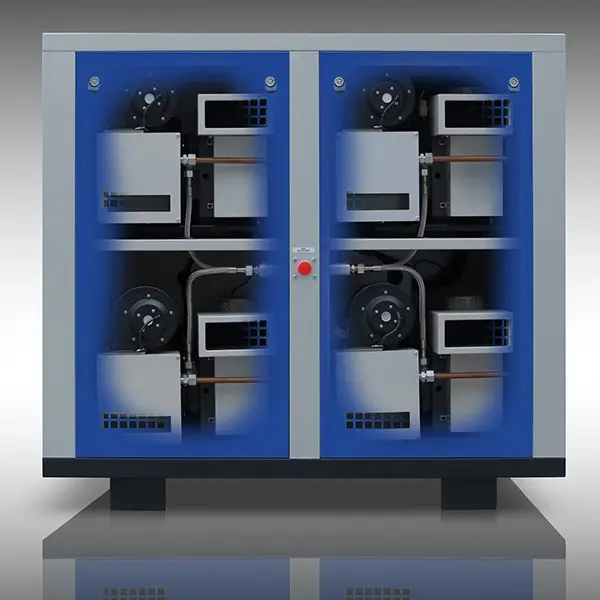
Key Technical Parameters for Contamination-Sensitive Applications:
| Parameter | Typical Spec for Pharma/Food | Why It Matters |
|---|---|---|
| Oil-Free Class (ISO 8573-1) | Class 0 Certified | Guarantees zero oil content in the air. |
| Air Purity | 100% Oil-Free, Dust-Free | Eliminates risk to product integrity. |
| Noise Level | < 70 dB(A) | Allows installation near production without disturbance. |
| Cooling System | Air-Cooled or Water-Cooled Options | Maintains stable temperature for consistent performance. |
Procurement decisions aren't just about meeting a technical spec; they're about total cost of ownership (TCO). While the clean air benefit is primary, the oilless scroll design delivers significant operational advantages that directly impact your bottom line. The scene is a busy electronics factory running 24/7. Downtime for maintenance is incredibly expensive. A traditional oil-lubricated compressor requires regular oil changes, filter replacements, and oil/water separator maintenance. An oilless scroll compressor eliminates all these tasks related to the lubrication system. There is no oil to change, no oil filters to replace, and no risk of costly oil disposal. The simple scroll mechanism has fewer moving parts than a piston compressor, leading to less vibration, reduced wear, and inherently higher reliability. This means lower maintenance costs, less unplanned downtime, and more predictable operational expenses. For a procurement manager, this reliability is a key factor in ensuring continuous production and achieving a strong return on investment. Companies like Raydafon Technology Group Co.,Limited engineer their scroll compressors with these TCO principles in mind, offering robust machines that deliver clean air and operational savings year after year, directly solving the dual challenge of purity and cost.
Understanding the technical specifications is crucial for making an informed purchase. When evaluating an oilless scroll air compressor, look beyond just flow and pressure. Here’s a breakdown of critical specs that define performance and suitability for your application. Consider a laboratory setting requiring a steady, pulse-free air supply for sensitive analytical instruments. The inherent smooth compression action of the scroll design provides this, but you must verify the specs.
| Specification | Description & Impact | Procurement Consideration |
|---|---|---|
| Free Air Delivery (FAD) | The actual volume of air delivered at a specific pressure. More accurate than rated motor power. | Ensure FAD meets your tool/process demand with a 10-15% safety margin. |
| Working Pressure | The pressure range the compressor is designed to operate at continuously. | Match to your highest required system pressure. |
| Duty Cycle | The percentage of time a compressor can run without overheating (e.g., 100%). | For continuous operations, a 100% duty cycle is essential. |
| Motor Power & Efficiency | IE3 or IE4 premium efficiency motors reduce electricity costs significantly. | Higher efficiency motors lower long-term energy expenses. |
| Control System | Variable Speed Drive (VSD) or constant speed. | VSD offers massive energy savings for fluctuating demand. |
Q1: Beyond just saying it's oil-free, why is an oilless scroll air compressor considered clean air technology?
A1: It's considered the pinnacle of clean air technology because the "clean" attribute is engineered into its fundamental operating principle, not just added as an afterthought via filters. The scroll mechanism compresses air within sealed pockets formed by two metal scrolls. Since there is no friction or contact between these scrolls, no lubricating oil is needed in the compression chamber. This design guarantees that the compressed air never comes into contact with oil during the entire compression process. Therefore, it produces 100% oil-free air inherently, meeting the strictest international Class 0 standards, making it fundamentally cleaner and more reliable than filtered air from lubricated compressors.
Q2: What specific industries benefit most from this clean air technology, and how does Raydafon Technology Group Co.,Limited address their unique needs?
A2: Industries with zero-tolerance for contamination benefit most. This includes: Pharmaceuticals (for pill coating, packaging, and cleanroom air), Food & Beverage (for product mixing, packaging, and air knives), Electronics (for circuit board assembly and testing), and Medical/Dental (for instrument air and patient breathing air). Raydafon Technology Group Co.,Limited addresses these needs by providing certified Class 0 solutions with configurations tailored to each sector. For example, their compressors for the food industry often feature stainless steel or specially coated components for easy cleaning and corrosion resistance, directly solving hygiene and compliance challenges for procurement teams.
Selecting the right compressed air technology is a strategic decision that affects product quality, operational cost, and regulatory standing. By understanding the inherent benefits of oilless scroll technology, you are well-equipped to make a choice that ensures purity, reliability, and value for your organization.
For over a decade, Raydafon Technology Group Co.,Limited has been at the forefront of oil-free air technology, specializing in the development and manufacturing of high-performance oilless scroll air compressors. We understand the critical need for 100% contaminant-free air in advanced industries. Our solutions are engineered to solve your core challenges of ensuring product integrity, reducing total cost of ownership, and meeting stringent international standards. Ready to explore a clean air solution for your application? Contact our expert team today at [email protected] for a detailed consultation.
Morita, M., & Fujita, T. (2015). Analysis of leakage in scroll compressors and its impact on efficiency. International Journal of Refrigeration, 58, 198-207.
Kim, H. J., & Ahn, J. M. (2018). A study on the noise reduction of an oil-free scroll air compressor. Journal of Mechanical Science and Technology, 32(3), 1209-1215.
Wang, B., Xing, Z., & Peng, X. (2016). Thermodynamic modeling and performance analysis of oil-free scroll compressors. Applied Thermal Engineering, 102, 1344-1352.
Chen, Y., He, Z., & Liu, S. (2019). Development and testing of a high-temperature oil-free scroll compressor for fuel cell applications. Energy Conversion and Management, 188, 429-438.
Li, W., & Zhang, H. (2017). Wear characteristics and life prediction of scroll wraps in oil-free compressors. Wear, 376-377, 885-893.
Park, S., & Lee, K. (2020). Optimization of the orbiting scroll motion for vibration reduction in scroll compressors. Mechanical Systems and Signal Processing, 142, 106754.
Guo, C., Wang, X., & Li, P. (2021). Experimental investigation on the performance of an oil-free scroll compressor with different tip seals. Proceedings of the Institution of Mechanical Engineers, Part E: Journal of Process Mechanical Engineering, 235(2), 345-354.
Johnson, R. L., & Patel, V. C. (2014). Contamination control in compressed air systems: A review of standards and technologies. Filtration & Separation, 51(3), 22-28.
Sato, K., & Nakamura, Y. (2019). Application of oil-free scroll compressors in semiconductor manufacturing cleanrooms. IEEE Transactions on Semiconductor Manufacturing, 32(1), 78-84.
Zhang, L., & Yu, B. (2022). Energy efficiency comparison of variable speed drive vs. constant speed oil-free scroll compressors in industrial applications. Energy Reports, 8, 1122-1130.