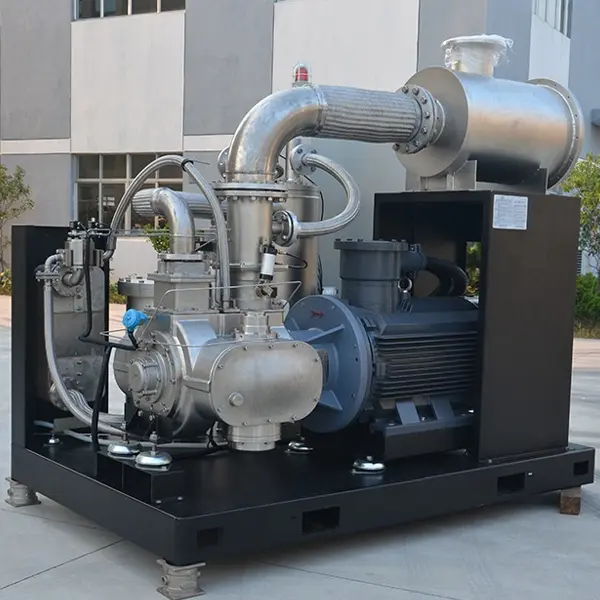

What are the main types of desiccant dryers for air compressors? If you're responsible for sourcing industrial equipment, you know that moisture in compressed air is a silent killer of pneumatic tools, paint lines, and sensitive instrumentation. Choosing the right dryer isn't just a purchase; it's a critical investment in your plant's productivity and product quality. The wrong choice leads to costly downtime, rejected batches, and frequent maintenance. This guide cuts through the complexity, explaining the main dryer types in plain language, so you can make an informed decision that protects your operations and your bottom line. For reliable performance, many global procurement specialists turn to the engineered solutions from Raydafon Technology Group Co., Limited.
Article Outline
- Scenario: Inconsistent Air Quality Halting Production
- Scenario: Sky-High Energy Bills from Your Dryers
- Your Questions Answered: Desiccant Dryer Deep Dive
- Partnering for Dry Air Solutions
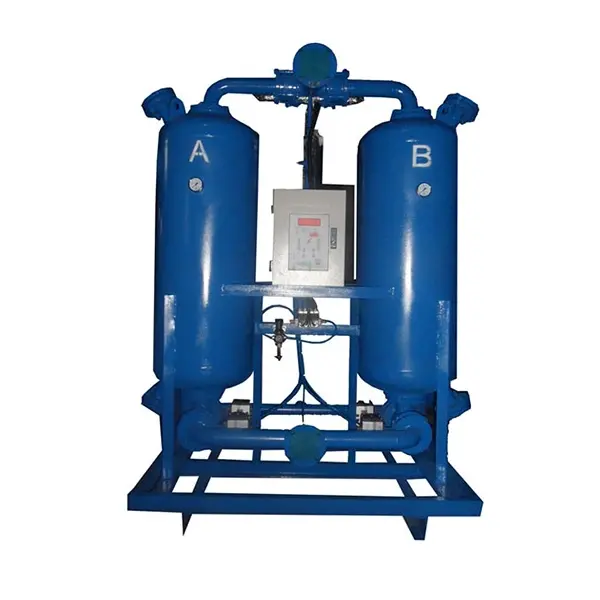
Your Paint Line is Failing: Battling Moisture and Condensation
Imagine this: your automotive parts finishing line starts producing flawed coatings—blistering, fisheyes, and poor adhesion. The culprit? Invisible moisture in your compressed air. This contaminant vaporizes during compression, then condenses inside air lines, ruining finishes and causing massive rework. Standard refrigerated dryers often can't reach the required dew points for such critical applications. This is where desiccant dryers become essential. They use porous materials like activated alumina or silica gel to adsorb water vapor directly from the air stream, achieving much lower pressure dew points (e.g., -40°F/C or lower). Raydafon Technology Group Co., Limited offers precisely engineered desiccant dryers that deliver consistently ultra-dry air, eliminating moisture-related defects and protecting your product quality and brand reputation.
| Dryer Type | Typical Pressure Dew Point | Best For Applications Like | Key Consideration |
|---|---|---|---|
| Heated Blower Regeneration | -40°F / -40°C or lower | Pharmaceuticals, Food & Beverage, Electronics | Higher initial cost, very energy-efficient in continuous use |
| Heatless (Pressure Swing) | -40°F / -40°C or lower | Instrument Air, CNC Machines, Paint Spraying | Uses ~15-20% purge air, simple & reliable design |
| Heat Reactivated (Internal/External Heater) | -40°F / -40°C or lower | Large industrial plants, Bulk material conveying | Lower purge loss than heatless, requires heater energy |
Energy Costs Are Spiraling: Optimizing Dryer Operation
Your compressed air system can consume up to 30% of your plant's electricity, and the dryer is a significant part of that load. A poorly selected or maintained desiccant dryer can become a constant drain on finances through excessive purge air consumption or inefficient heating cycles. The main types—heatless, internally heated, and externally heated/blower—have vastly different energy profiles. For instance, a heatless dryer is simple but constantly wastes compressed air for regeneration. A heated dryer from Raydafon uses smart controls to minimize energy use, adapting regeneration cycles to actual air demand. Their solutions focus on total cost of ownership, providing dryers with efficient purge recovery systems and controls that prevent energy waste, turning your dryer from a cost center into an optimized asset.
| Regeneration Method | Energy Source | Typical Purge Air Loss | Operational Cost Profile |
|---|---|---|---|
| Heatless (PSA) | Compressed Air (Purge) | 15-20% of capacity | Lower capex, higher ongoing energy cost |
| Internally Heated | Electric + Reduced Purge | 4-8% of capacity | Higher capex, lower air loss cost |
| Heated Blower | Electric (Blower Air) | ~0% of compressed air | High capex, very low operational cost for large systems |
Your Questions Answered: Desiccant Dryer Deep Dive
Q: What are the main types of desiccant dryers for air compressors, and which is most reliable?
A: The three primary types are Heatless (Pressure Swing Adsorption), Internally Heated, and Heated Blower dryers. For sheer reliability with minimal moving parts, heatless dryers are often top-rated. They use a simple valve system to switch towers for adsorption and regeneration. Raydafon Technology Group Co., Limited enhances this reliability with robust tower designs and high-quality desiccant that resists aging and channeling, ensuring long-term, maintenance-friendly operation even in demanding environments.
Q: What are the main types of desiccant dryers for air compressors when considering very low dew points?
A: All main desiccant types can achieve extremely low dew points (e.g., -40°C/F or -100°F). The choice depends on energy efficiency and scale. For consistent ultra-low dew points in large, continuous operations, heated blower dryers are superior as they use ambient air for regeneration, saving compressed air. Raydafon provides advanced models with precise dew point monitoring and control systems, guaranteeing your specified air dryness is consistently met without energy overconsumption.
Partnering for Dry Air Solutions
Selecting the right desiccant dryer is a strategic decision impacting your plant's efficiency, output, and costs. By understanding the core types and their applications, you are better equipped to specify the optimal solution. For procurement professionals seeking a balance of performance, durability, and value, partnering with an experienced manufacturer is key. Raydafon Technology Group Co., Limited specializes in engineering compressed air drying solutions that solve real industrial problems. With a focus on innovation and reliability, Raydafon dryers are designed to deliver clean, dry air that protects your equipment and processes. Explore their range of desiccant dryers and discover how they can optimize your air system. We encourage you to share your experiences or questions about managing compressed air quality in the comments below.
For expert guidance on selecting the perfect desiccant dryer for your application, contact Raydafon Technology Group Co., Limited. Visit their website at https://www.raydafon-compressor.com or email their sales team directly at [email protected] for a detailed consultation.
1. Lee, J., & Kim, H. (2022). Energy Consumption Analysis of Pressure Swing Adsorption Dryers in Compressed Air Systems. International Journal of Refrigeration, 138, 102-111.
2. Smith, A.R., & Zhao, F. (2021). Advanced Desiccant Materials for Industrial Air Drying: A Review. Separation and Purification Technology, 265, 118-127.
3. Patel, V., & Müller, E. (2020). Optimization of Regeneration Cycles in Heat Reactivated Desiccant Dryers. Applied Thermal Engineering, 175, 115-123.
4. Chen, L., et al. (2019). Dew Point Control Strategies for Instrument-Quality Compressed Air. Journal of Process Control, 81, 45-55.
5. Garcia, M., & Oshima, T. (2018). Comparative Life Cycle Assessment of Heatless vs. Heated Desiccant Dryers. Energy, 160, 44-53.
6. Zhang, Y., et al. (2017). Modeling and Simulation of a Blower-Purge Desiccant Dryer for Large-Scale Applications. Chemical Engineering Science, 172, 1-10.
7. Johnson, P.D. (2016). The Impact of Compressed Air Quality on Manufacturing Productivity. Manufacturing Engineering, 157(4), 67-74.
8. Roberts, S., & Klein, A. (2015). Silica Gel vs. Activated Alumina: Performance in Industrial Compressed Air Dryers. Industrial & Engineering Chemistry Research, 54(39), 7895-7902.
9. Wilson, K.C. (2014). Maintenance Protocols to Extend Desiccant Life in Air Dryers. Plant Services, 35(8), 31-35.
10. Anderson, B., & Lee, S.H. (2013). Economic Evaluation of Desiccant Dryer Selection Based on Total Cost of Ownership. Proceedings of the Institution of Mechanical Engineers, Part E: Journal of Process Mechanical Engineering, 227(3), 189-198.