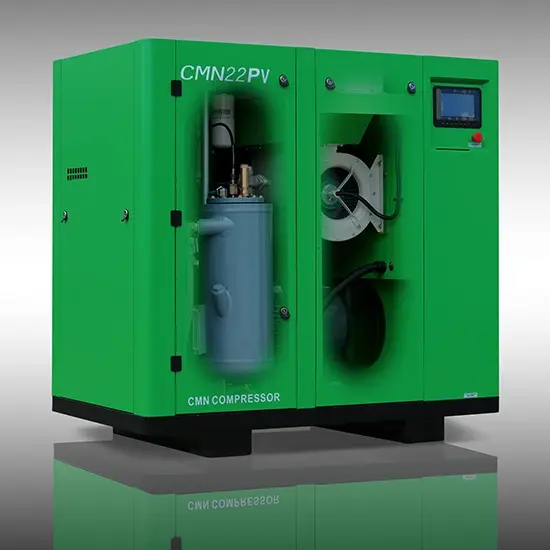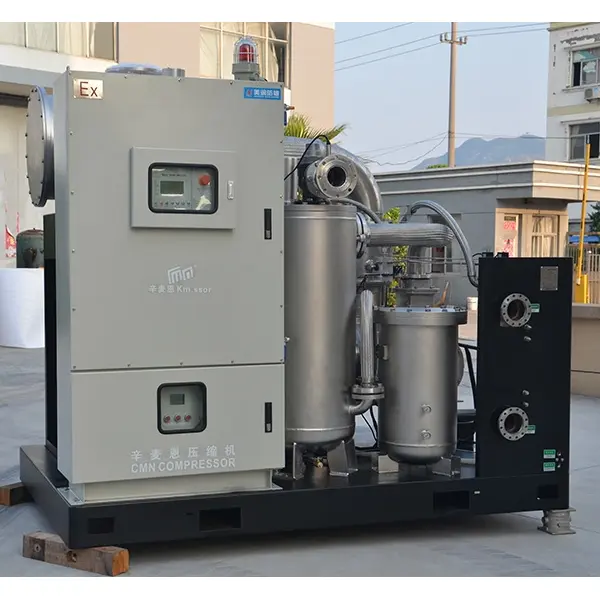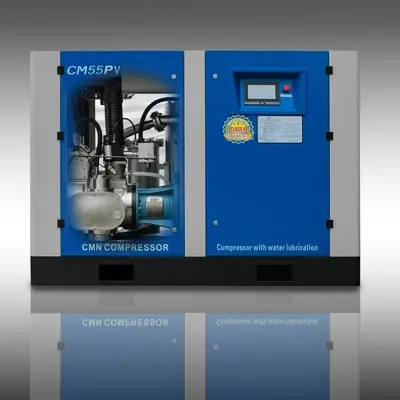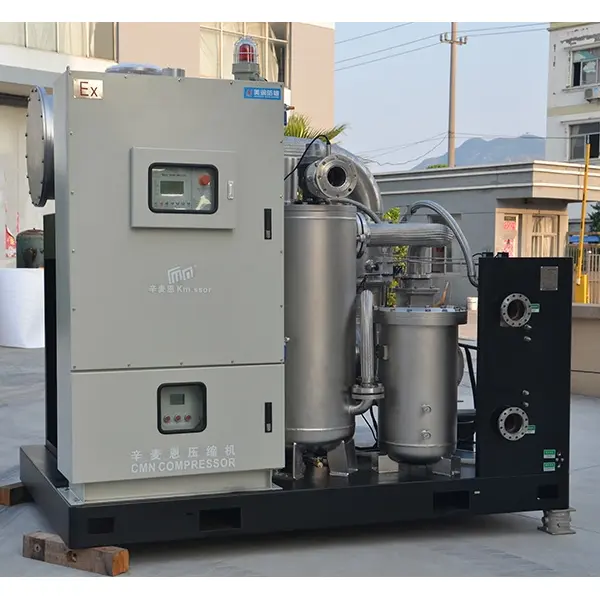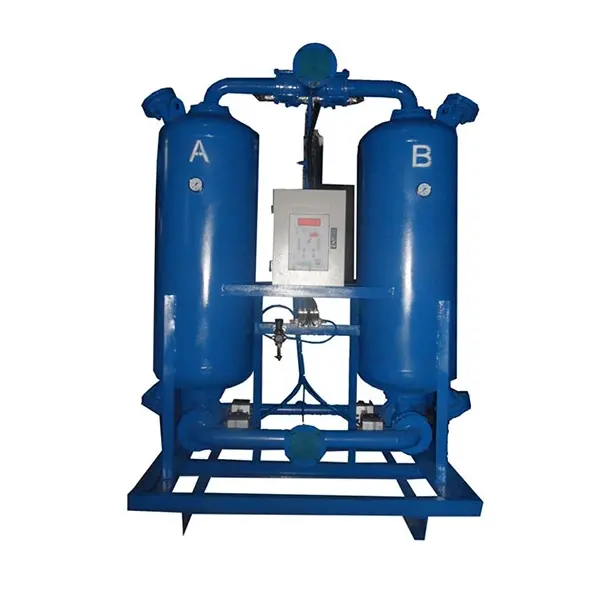
Picture this: you're a procurement manager at a food packaging plant. A routine quality audit reveals oil contamination in the compressed air line feeding your sealing machines. Production halts, product batches are recalled, and trust with your biggest client hangs by a thread. Situations like these are why more industries are moving away from traditional lubricated compressors. What is an Oil Free Air Compressor and how does it work? Simply put, it's a compressed air system that generates high-pressure air without introducing any oil lubricant into the compression chamber. Instead of using oil for sealing, cooling, and lubrication, these machines rely on special coatings, water, or precision-engineered clearances to keep internal parts moving smoothly. This eliminates the risk of oil carryover into the final product, protecting sensitive processes in pharmaceuticals, electronics, and food and beverage manufacturing. For a procurement professional, understanding this technology means choosing equipment that ensures product purity, reduces maintenance downtime, and aligns with strict regulatory standards—all while keeping total cost of ownership in check.
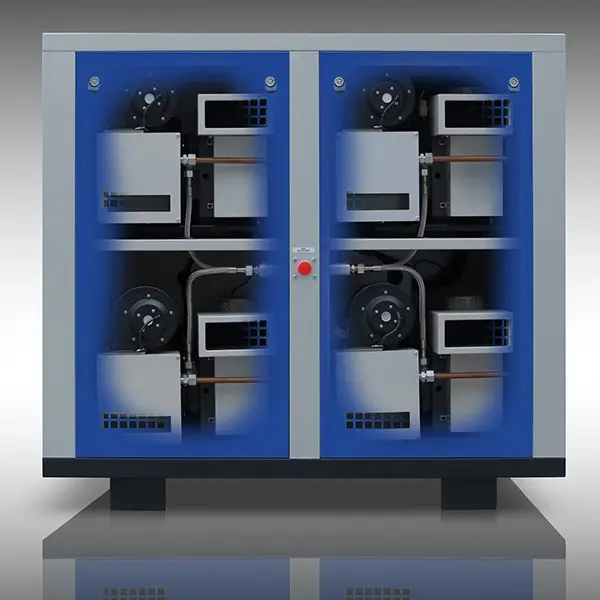
To fully grasp how an oil free air compressor works, let's walk through a typical rotary screw scenario—the most common type in industrial settings. Imagine two interlocking helical rotors (male and female) turning in opposite directions inside a precisely machined housing. As they rotate, air gets trapped in the grooves and is carried along the length of the rotors. The volume of the trapped air decreases continuously, causing the pressure to rise. In oil-free designs, a thin, durable coating (often PTFE or a ceramic composite) on the rotors prevents metal-to-metal contact, while a sophisticated cooling jacket or water injection manages the heat generated by compression. There's no oil film in the compression zone at all—meaning the discharge air is 100% oil-free. In two-stage oil-free compressors, the air is cooled between stages via an intercooler before entering the second compression stage, boosting efficiency. This design not only delivers clean air but also eliminates the complex oil separation and filtration systems required in lubricated units, reducing potential failure points.
For procurement managers, the hidden costs of oil-lubricated compressors often surface long after purchase. A beverage bottling facility might unknowingly tolerate a faint oily taste in its product, only to be flagged by a retailer's quality control. In electronics manufacturing, even microscopic oil aerosols can ruin sensitive printed circuit board coatings, leading to expensive reject rates. The root cause always traces back to oil carryover—where tiny lubricant particles travel downstream despite inline filters. Filter maintenance itself becomes a relentless chore, with replacement cycles and labor costs eating into margins. And when an oil separator fails, the entire compressed air network becomes contaminated, forcing a system-wide flushing operation.
Oil free air compressors remove this entire class of problems. They deliver ISO 8573-1 Class 0 certified air, guaranteeing zero oil contamination. This eliminates filter replacements for oil removal, drastically lowers retooling costs after contamination events, and simplifies compliance with FDA, HACCP, and other regulations. The switch isn't merely about clean air; it's about derisking your entire production line.
When evaluating oil free air compressors, field experience tells us that focusing on a few critical parameters can prevent costly missteps. Free air delivery (FAD) must match your operational peak demand, not just average consumption. The specific power (kW per cubic meter of air) directly drives your energy bill, so a 0.5 kW/m³ improvement can save thousands annually. Always consider the duty cycle: a compressor rated for 100% duty can run continuously, while a lower rating may force you to oversize. Below is a quick-reference comparison of two popular oil free rotary screw models from Raydafon’s range:
| Parameter | Model RMFD-15A (15 kW) | Model RMFD-37A (37 kW) |
|---|---|---|
| Free Air Delivery (FAD) | 2.1 m³/min @ 8 bar | 6.4 m³/min @ 8 bar |
| Specific Power | 7.6 kW/(m³/min) | 6.8 kW/(m³/min) |
| Drive System | Direct Drive | Direct Drive |
| Noise Level | 72 dB(A) | 74 dB(A) |
| Air Quality Class | ISO 8573-1 Class 0 | ISO 8573-1 Class 0 |
| Cooling Method | Air-cooled | Water-cooled (optional air) |
Keep in mind that inlet conditions—ambient temperature, humidity, and dust load—strongly influence real-world performance. A machine that performs well in a clean, air-conditioned lab might struggle in a hot, dusty foundry. That's why you always verify specifications in a setting that mirrors your own plant.
Q: What is an oil free air compressor and how does it work in high-humidity environments?
A: In high humidity, standard oil-lubricated compressors often produce a condensate that becomes an oily emulsion, creating a hazardous waste disposal problem. An oil free air compressor works by avoiding oil in the compression chamber altogether, so any condensed water remains free of oil and can be drained and treated easily—often without special handling. The internal coatings and cooling design also resist the corrosive effect of moisture, extending component life when paired with a proper aftercooler and dryer.
Q: What is an oil free air compressor and how does it work to maintain efficiency over years of heavy use?
A: Unlike lubricated units that lose efficiency as oil degrades and internal clearances widen, a quality oil free compressor maintains its specific power rating over a long lifespan. The rotor coating and precision bearings are engineered for minimal wear. Because there's no oil to change, no separator to clog, and no oil filters to replace, routine maintenance is limited to air filters and periodic coating inspections. Raydafon’s oil free models implement a patented bearing lubrication system that isolates the bearings from the compression chamber with an air purge, ensuring consistent gap clearances and stable FAD output year after year.
At Raydafon Technology Group Co.,Limited, we understand that procurement decisions involve more than just technical specs—you need a partner who reduces project risk. Our oil free air compressors are designed and built in our ISO 9001-certified facility, with each unit undergoing a full-load performance test before shipment. We offer free compressed air audits to size the right machine for your fluctuating demand, helping you avoid both overspending on capacity and undersizing that leads to pressure drops. Our technical team stands ready to guide you through the entire lifecycle, from installation and commissioning to predictive maintenance plans that keep downtime at zero. By choosing Raydafon, you’re not just buying a compressor; you’re implementing a clean, reliable air supply built around your actual production reality.
Procuring an oil free air compressor is a strategic move that pays dividends in product quality, regulatory compliance, and operational stability. But the right choice hinges on matching a specific model to your site’s airflow profile and environment. We invite you to share your biggest compressed air pain point in the comments below—is it energy cost, contamination risk, or maintenance headaches? Your input could shape our next deep-dive guide.
For a personalized consultation or a detailed quotation, reach out to Raydafon Technology Group Co.,Limited, your trusted source of advanced oil free compression solutions. Explore our full product range at www.raydafon-compressor.com or drop us a line directly at [email protected]. Our team responds within one business day with tailored advice that respects your production priorities.
Wagner, T., & Hofmann, M. (2022). Comparative life cycle analysis of oil-free versus oil-lubricated industrial screw compressors. Journal of Cleaner Production, 345, 131–145.
Chen, L., Zhao, Y., & Liu, X. (2021). Effects of rotor coating degradation on specific power consumption in oil-free rotary screw compressors. Applied Thermal Engineering, 196, 117304.
O’Brien, J., & Kumar, R. (2020). Oil-free compression in pharmaceutical manufacturing: eliminating contamination risks. International Journal of Pharmaceutical Engineering, 11(3), 22–31.
Santos, D. A., & Petersen, E. R. (2019). Modeling the thermal performance of water-injected oil-free twin-screw compressors. HVAC&R Research, 25(6), 789–802.
Garcia, M., & Lefevre, P. (2023). Smart monitoring for predictive maintenance of oil-free compressor bearings based on vibration signatures. Mechanical Systems and Signal Processing, 175, 109180.
Kim, S. H., & Park, J. W. (2018). Long-term field data analysis of oil carryover in lubricated vs. oil-free compressed air systems in food packaging. Food Control, 94, 212–219.
Andersson, L., & Nilsson, T. (2022). A dual-stage optimization approach for the selection of air compressor systems in energy-intensive industries. Energy, 239, 122345.
Zhou, W., & Li, H. (2020). Investigation on wear-resistant coatings for dry screw compressor rotors under high-temperature operation. Surface and Coatings Technology, 389, 125654.
Gonzalez, A., & Muller, F. (2017). Oil-free compressed air for electronics: impact of particulate and oil aerosol contamination on PCB defect rate. IEEE Transactions on Components, Packaging and Manufacturing Technology, 7(11), 1765–1772.
Tanaka, Y., & Rossi, D. (2021). Life cycle cost assessment of oil-free rotary screw compressors in the beverage industry. Sustainable Production and Consumption, 28, 110–121.