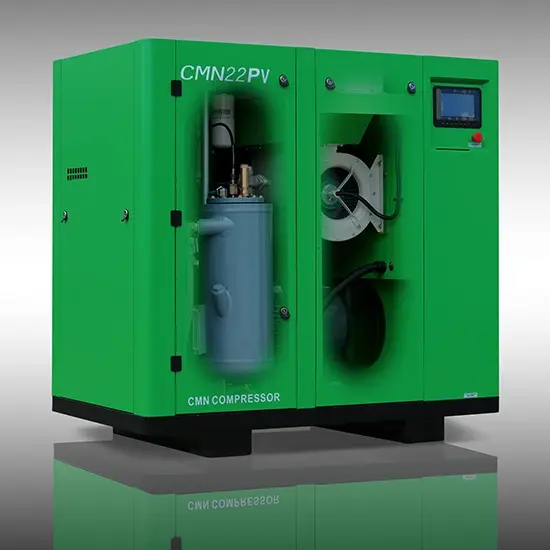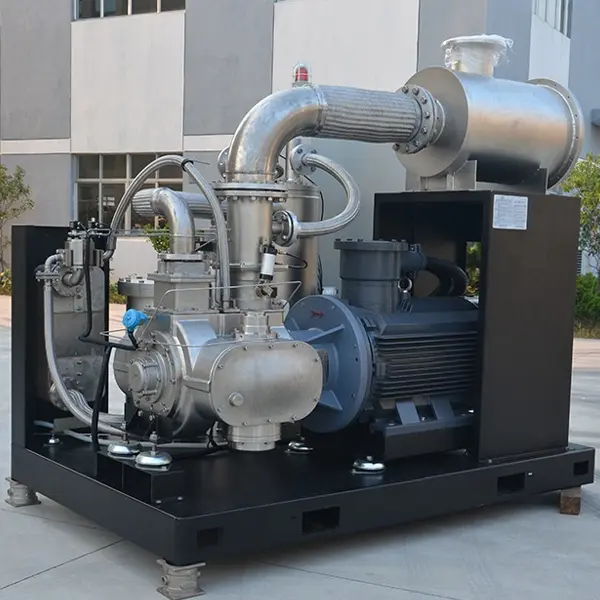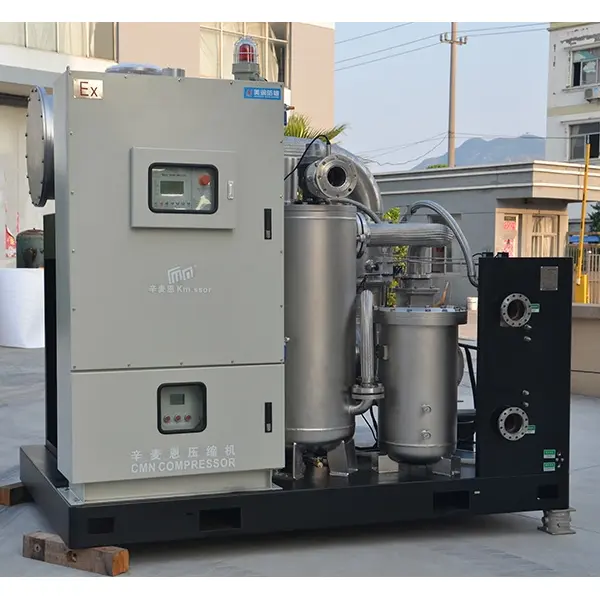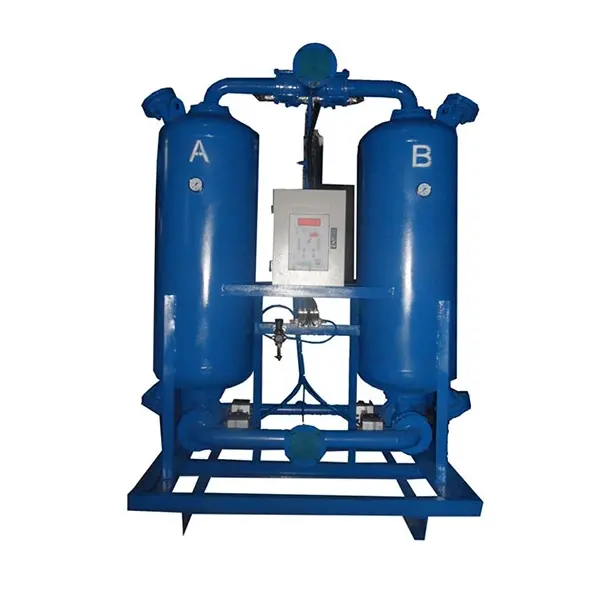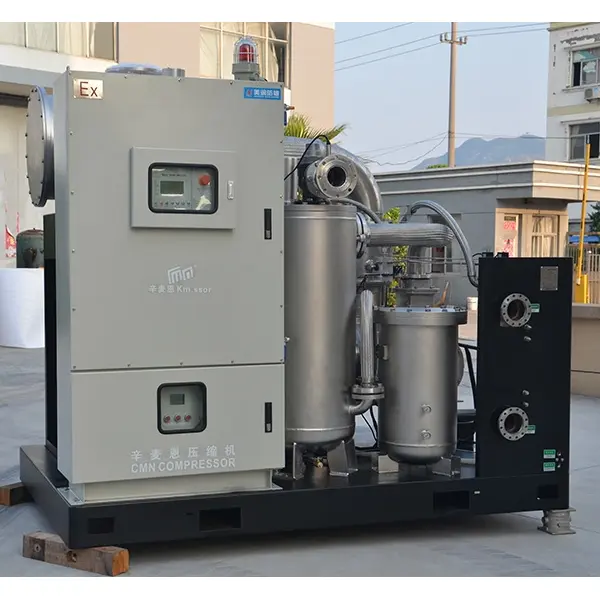
Picture a sprawling natural gas facility where the rhythmic hum of machinery fills the air. A procurement specialist squints at a technical drawing, wondering if a missing heat exchanger could shut down the entire station. This is the reality for anyone responsible for gas transmission infrastructure, where even a single overlooked component can lead to downtime costing thousands per hour. What are the main components of a Natural Gas Compressor system? Understanding the answer isn’t just a matter of academic curiosity—it’s essential for making informed purchasing decisions that directly impact uptime, energy efficiency, and long-term maintenance budgets. At its core, a natural gas compressor system is an integrated assembly designed to increase the pressure of natural gas for transportation, storage, or processing. The precision engineering behind it combines brute force with delicate thermal management, and every component plays a non-negotiable role. From the driver that supplies raw power to the aftercooler that tames discharge temperatures, getting the right specifications can mean the difference between a decade of reliable service and a costly retrofit. This guide dives deep into each element, pairing real-world scenarios with actionable solutions, and shows how Raydafon Technology Group Co.,Limited has helped operators worldwide configure optimized systems that avoid common pitfalls.
Imagine a procurement team that ordered a compressor driven by an electric motor, only to realize the remote site lacks a stable grid connection. The result? A six-figure asset sitting idle while diesel generators struggle to meet the start-up inrush current. This painful scenario is all too common when the prime mover isn’t matched to site conditions. The driver—whether an electric motor, gas engine, or turbine—converts energy into mechanical rotation, and its selection determines everything from operating cost to emissions compliance. Raydafon Technology Group Co.,Limited addresses this by offering flexible driver packages, including explosion-proof motors for hazardous areas and high-efficiency gas engines that can run on the very fuel they compress. Choosing the right driver means analyzing starting torque, ambient temperature derating, and future expandability. The table below summarizes key driver options and their typical applications:
| Driver Type | Power Range (kW) | Best Use Case | Raydafon Model Example |
|---|---|---|---|
| Electric Motor | 100 – 5,000 | Plants with reliable grid | RDF-E Series |
| Gas Engine | 200 – 4,500 | Remote wellhead gathering | RDF-G Engineering Package |
| Steam Turbine | 500 – 20,000 | Cogeneration facilities | Custom RDF-Turbine Skid |
Beyond the driver, the power transmission system—couplings, gearboxes, belts—must withstand continuous shock loads. A poorly specified coupling can crack under torsional vibration, leading to unscheduled shutdowns. Raydafon engineers perform drivetrain harmonic analysis to ensure the entire mechanical train operates smoothly, even during gas slugging events.
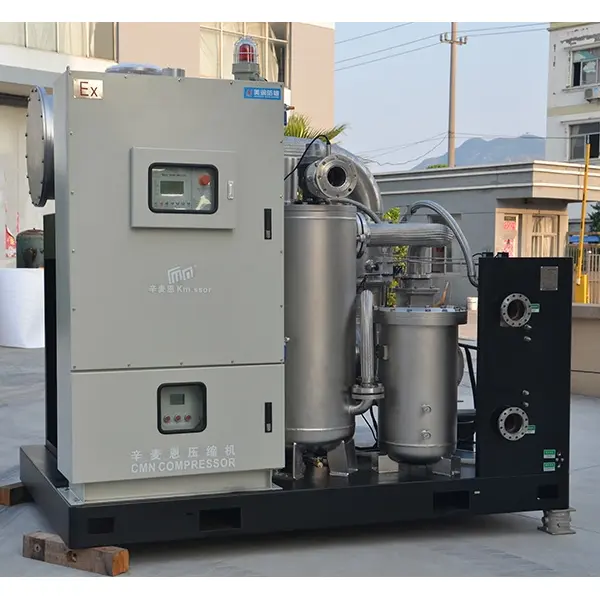
At the heart of the system lies the compressor itself. When a midstream operator called support because discharge pressure was dropping despite full throttle, the culprit turned out to be worn valve plates in the first-stage cylinder. This simple valve issue, if left unchecked, would have scored the cylinder liner, escalating repair costs tenfold. The compressor unit consists of cylinders, pistons (in reciprocating designs), or impellers (in centrifugal configurations), plus suction and discharge valves that act as the gas flow gates. Proper material selection for these parts is paramount when handling sour gas or wet streams—Raydafon employs duplex stainless steel and hardened valve seats that resist hydrogen sulfide corrosion, drastically extending service intervals. The table below compares reciprocating and centrifugal configurations for common field scenarios:
| Feature | Reciprocating | Centrifugal |
|---|---|---|
| Pressure Ratio per Stage | 3:1 to 6:1 | 1.1:1 to 3:1 |
| Capacity Control | Step control, unloaders | Inlet guide vanes, VSD |
| Best for Sour Gas | With specialized metallurgy | Limited, often requires coatings |
| Raydafon Offerings | RDF-R Heavy-Duty Frame | RDF-C High-Speed Monoblock |
Understanding compression stages is also critical. A multistage system with intercooling can reduce power consumption by up to 15%. Raydafon’s engineering team models gas composition to optimize the number of stages, preventing liquid dropout that would damage valves.
A field technician once discovered that the discharge temperature alarm was triggered not by a faulty cooler, but by a simple clogged fin on the air-cooled heat exchanger. The ambient temperature was 45°C, and the resulting high discharge temperature degraded the compressor oil within days. Effective cooling—via intercoolers, aftercoolers, and jacket water radiators—is what keeps the system within its thermal envelope. Raydafon’s skid-mounted systems often incorporate oversized coolers with high-ambient design margins, ensuring 50°C operation without derating. For water-scarce locations, closed-loop cooling with antifreeze mixtures prevents freezing and reduces water treatment costs. The integrated temperature monitoring on Raydafon panels triggers automated airflow adjustments, extending cooler life and maintaining compression efficiency.
Lubrication failure is the silent killer of compressors. An operator told us how a blocked oil filter caused a crankshaft bearing to seize in less than 40 minutes, leading to a total engine rebuild. The lubrication system—including the pump, filter, cooler, and distribution lines—must deliver clean, conditioned oil to sliding surfaces under all loads. For natural gas service, the oil must also resist dilution by condensed hydrocarbons. Raydafon incorporates full-flow dual filtration with β-100(10) elements, achieving cleanliness levels that surpass ISO 4406 18/16/13. In tandem, the sealing system, comprising rod packing and piston rings, prevents gas leakage along the piston rod. Advanced segmented packing with purge ports can reduce fugitive methane emissions by over 90%, aligning with stringent environmental regulations.
When a compressor tripped repeatedly on high vibration, the plant manager discovered the accelerometer had come loose after a maintenance activity. Without proper vibration monitoring, the package would have continued running until catastrophic bearing failure. Modern compressor systems rely on PLC-based control panels that orchestrate start-up sequencing, load control, and shutdowns. Raydafon integrates sensors for pressure, temperature, vibration, and gas detection into a single HMI, allowing operators to view trends and receive remote alerts. Safety devices such as relief valves, emergency shutdown buttons, and combustible gas detectors are mandatory for area classification compliance. Raydafon’s panels are certified to ATEX/IECEx and CSA standards, simplifying procurement for international projects.
What are the main components of a natural gas compressor system, and why does frame selection matter?
The primary components are the driver, compressor unit, cooling system, lubrication and sealing, and the control/safety package. Frame selection—whether it’s a heavy-duty reciprocating frame or a lighter centrifugal casing—determines the compressor’s pressure and flow capabilities, maintenance intervals, and compatibility with corrosive agents like H₂S. Choosing a frame without understanding gas analysis can lead to premature failure. Raydafon pre-qualifies frames using NACE MR0175 for sour service, giving procurement teams confidence from day one.
What are the main components of a natural gas compressor system that influence total cost of ownership?
Beyond the initial capital expense, the components that most affect total cost of ownership are the valves, coolers, and sealing elements. Valve life directly impacts production loss during unscheduled rebuilds; advanced valve designs from Raydafon can extend mean time between overhaul by 30%. Similarly, oversized coolers reduce thermal stress, and dry-running, low-emission packing cuts both methane tax liabilities and oil consumption. By modeling lifecycle costs, Raydafon helps buyers avoid low-bid traps that result in a 40% higher operating spend over ten years.
Every natural gas compressor system is a long-term investment, and the decisions you make today about components will echo through decades of operation. Whether you’re troubleshooting a bottleneck at a gathering station or designing a new transmission platform, having a partner that understands the interplay of driver sizing, material metallurgy, and thermal dynamics is invaluable. Raydafon Technology Group Co.,Limited brings together engineering rigor and field-proven manufacturing to deliver compressor packages that align with your site conditions and budget. Our team is ready to discuss your project requirements, provide component-specific data sheets, and conduct a detailed technical comparison. Reach out to us at [email protected] or visit https://www.raydafon-compressor.com to request a consultation. We look forward to helping you build a system that sets the benchmark for reliability.
Das, K. (2021). “Thermodynamic optimization of multistage reciprocating natural gas compressors with intercooling.” Energy Conversion and Management, 228, 113658.
Miller, H. & Zhao, L. (2019). “Failure analysis of compressor valves in sour gas applications.” Engineering Failure Analysis, 104, 1132-1145.
Patel, R. S. (2020). “Lubricant degradation monitoring in natural gas compressor cylinders.” Tribology International, 151, 106463.
Thompson, G. W. (2018). “Advances in dry gas seal technology for centrifugal compressors.” Journal of Natural Gas Science and Engineering, 56, 321-333.
Yuan, X. & Li, J. (2022). “Dynamic simulation of a gas engine-driven compressor package under varying suction conditions.” Energy, 239, 122113.
Ferreira, C. A. (2017). “Corrosion mitigation in natural gas compression equipment – a review.” Corrosion Science, 128, 1-15.
Nasr, G. G. & Oyewunmi, O. A. (2023). “Techno-economic evaluation of waste heat recovery from gas compressor stations.” Applied Thermal Engineering, 219, 119542.
Chen, L. (2019). “Vibration-based condition monitoring of reciprocating compressor valves using machine learning.” Mechanical Systems and Signal Processing, 131, 702-717.
Al-Sulaiman, F. A. (2020). “Exergy analysis of a gas turbine-driven compressor station with intercooling.” International Journal of Exergy, 32(2), 189-205.
Ishii, K. & Matsumoto, Y. (2021). “Design optimization of piston ring pack for reduced methane slip in natural gas compressors.” SAE Technical Paper 2021-01-0744.