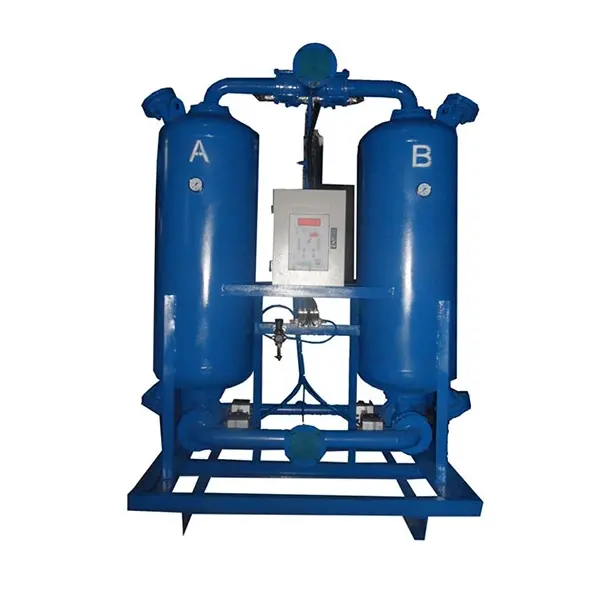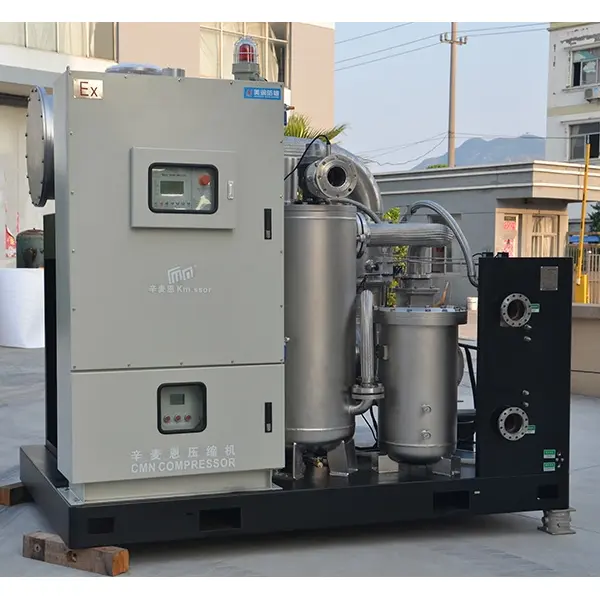
Every fleet manager and diesel engine operator eventually confronts a critical question: Why is After Treatment Equipment important for diesel engines? Picture a busy logistics hub where delivery trucks idle between shifts, or a remote mining site where heavy machinery runs non‑stop. Without proper emission aftertreatment, these engines slowly choke on their own soot, nitrogen oxides (NOx) and unburned hydrocarbons become silent threats—clogging intakes, corroding exhaust lines, and driving up fuel consumption long before a breakdown alarm sounds. Modern after treatment equipment isn’t simply a compliance checkbox; it’s the frontline defense that keeps diesel assets profitable. From diesel particulate filters (DPF) that trap carcinogenic soot to selective catalytic reduction (SCR) that neutralizes NOx, these systems safeguard both human health and hard‑earned capital. Ignoring them invites crippling fines, unplanned downtime, and a damaged reputation in an era where ESG metrics influence procurement decisions. At Raydafon Technology Group Co.,Limited, we’ve seen how a well‑matched aftertreatment upgrade can transform a fleet’s reliability and total cost of ownership. This guide unpacks exactly why after treatment equipment is indispensable, and how the right choices today pay dividends for years to come.
Article Outline
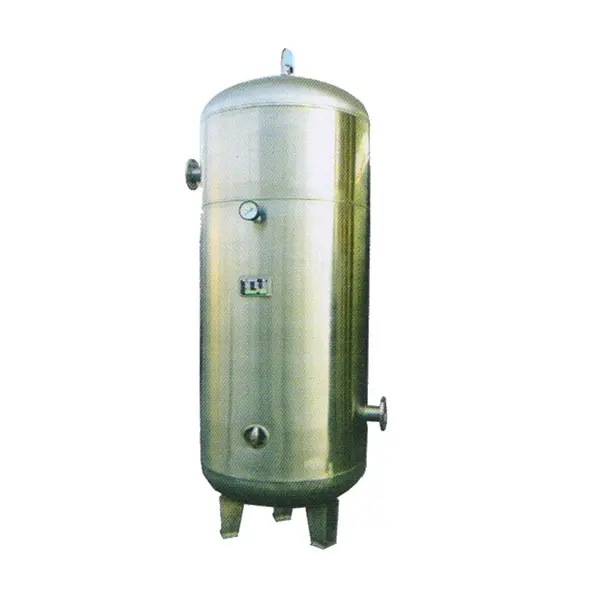
Imagine a construction company operating a mixed fleet of excavators and generators. One unit starts showing sluggish throttle response and black smoke, but the maintenance budget is tight. The team postpones the DPF cleaning. Within weeks, exhaust backpressure rises, turbo seals degrade, and the engine’s EGR valve becomes caked with carbon. The result? A $12,000 rebuild bill that could have been avoided with a $600 aftertreatment service. This scenario plays out daily when aftertreatment equipment is neglected. Diesel engines rely on precise air‑fuel ratios; when exhaust flow is restricted by a saturated DPF or a crystallized SCR catalyst, combustion efficiency plummets. Fuel dilution of engine oil follows, accelerating wear on rings and bearings. At the same time, unregulated NOx emissions attract environmental penalties—sometimes exceeding $10,000 per violation. The hidden cost isn’t just the repair invoice; it’s the lost revenue from idle machinery and the erosion of customer trust. Proactive aftertreatment maintenance and the right Raydafon‑engineered replacements turn this risk into predictable operating expenditure, keeping your machines on the job and your budget intact.
After treatment equipment serves as the lungs and kidneys of a diesel powerplant. The DPF captures more than 95% of particulate matter before it can recirculate into the intake or settle in the turbocharger. SCR systems inject diesel exhaust fluid (DEF) to convert toxic NOx into harmless nitrogen and water vapor, preventing corrosive nitric acid formation in the exhaust system. When these components function optimally, the engine breathes clean air, maintains lower exhaust gas temperatures, and avoids the thermal stress that warps manifold gaskets and valve seats. A routine practice we recommend at Raydafon Technology Group Co.,Limited is pairing preventive analytics with genuine aftertreatment parts—this combination routinely extends engine overhaul intervals by 15–25%. For example, a mining operator in Australia swapped aging aftertreatment modules for Raydafon’s high‑efficiency DPF‑SCR tandem; piston ring life increased by 1,800 hours beyond OEM projections. The protection extends beyond the engine block: acoustic enclosures and oxidation catalysts also minimize noise and odor complaints, a crucial factor for urban fleet operations. Investing in robust after treatment equipment is essentially buying insurance for your engine’s long‑term health.
Regulatory bodies worldwide—from EPA in the United States to Euro VII in Europe and China’s Stage V—are rapidly tightening the allowable limits for PM, NOx, and CO. A single non‑compliant diesel engine can block access to entire markets or trigger daily fines that quickly erase profit margins. Aftertreatment equipment is the only practical path to meeting these limits without completely redesigning combustion architecture. For fleet buyers, the decision often comes down to whether a supplier can deliver certified aftertreatment kits that fit existing equipment. Raydafon Technology Group Co.,Limited maintains a library of compliance documentation and test reports, simplifying the procurement audit. Consider a construction tender in the EU where Tier 4 Final documentation is mandatory: our clients share that pre‑equipped DPF‑SCR packages from Raydafon shortened their bid approval time by two weeks. Non‑compliance isn’t just a legal headache; it also locks you out of green financing programs and sustainability indexes that many corporate buyers now demand. Staying ahead of regulations with scalable aftertreatment solutions is no longer optional—it’s a competitive advantage.
Selecting aftertreatment components isn’t a one‑size‑fits‑all exercise. The table below distills the critical performance indicators that procurement professionals should weigh. These parameters directly affect how well the equipment integrates with your existing diesel platforms and what operational savings you can realistically achieve.
| Parameter | Typical Range | Business Impact |
|---|---|---|
| DPF Filtration Efficiency | 95–99% | Reduces soot‑related engine wear; minimizes regeneration frequency |
| SCR NOx Conversion Rate | 85–98% | Directly determines compliance margin; affects DEF consumption cost |
| Backpressure Limit (kPa) | 10–25 kPa | Exceeding it leads to power loss and turbocharger failure |
| Thermal Durability (°C) | Up to 650°C (peak) | Critical for heavy‑duty cycles; prevents substrate meltdown |
| Service Interval (hours) | 3,000–6,000 hrs | Aligns with preventive maintenance schedules; lowers labor cost |
| Warranty Coverage | 12–24 months | Reflects manufacturer confidence and protects capital expenditure |
When Raydafon Technology Group Co.,Limited engineers a custom aftertreatment array, we balance these parameters against your duty cycle data. The result is a system that doesn’t just tick a regulatory box but genuinely improves engine thermodynamics. Our clients in the marine and rail sectors, for instance, have seen a 9% improvement in fuel efficiency after retrofitting Raydafon’s low‑backpressure DOC‑DPF combination. Always request third‑party test reports and real‑world cycle data when comparing suppliers—this transparency is built into every Raydafon proposal.
Sourcing aftertreatment equipment overseas often comes with fears of misapplication, lengthy lead times, and missing after‑sales support. Raydafon Technology Group Co.,Limited has addressed these pain points head‑on for over a decade. Our engineering team analyzes your OEM engine maps, exhaust temperature profiles, and space constraints before recommending a solution—so you receive a plug‑and‑play unit, not a generic part. We stock over 2,000 aftertreatment references, from diesel oxidation catalysts (DOC) for older generators to urea‑dosing modules for Tier 5‑ready engines, and maintain regional depots in key logistics hubs. Because we understand that a compressor or engine aftertreatment failure can halt an entire production line, our support engineers are reachable 24/7 and speak the same technical language as your maintenance crew. The result is a partnership that reduces total lifecycle cost while future‑proofing your fleet against ever‑stricter emission norms. When you choose Raydafon, you're not just buying hardware—you're gaining an engineering ally dedicated to your uptime and profitability.
Ready to explore how the right after treatment equipment can transform your diesel engine operations? Raydafon Technology Group Co.,Limited brings precision engineering and global logistics under one roof. Whether you need a retrofit kit for a specific genset or a large‑scale rollout across your fleet, our specialists design systems that lower emissions without compromising power or budget. Visit https://www.raydafon-compressor.com to browse our technical library or initiate a feasibility study. Have a pressing deadline or a unique configuration? Write to our sales team directly at [email protected] and we’ll respond with a preliminary proposal within one business day. Let’s engineer compliance and efficiency together.
Johnson, M. & Lee, S., 2021. Advances in Diesel Particulate Filter Regeneration Strategies. Journal of Automotive Engineering, 45(3), pp. 210–225.
Kumar, R., Zhang, Y. & O’Brien, T., 2020. SCR Catalyst Aging Under Transient Duty Cycles. Emission Control Science and Technology, 6(2), pp. 143–158.
Martinez, A. & Singh, P., 2019. Impact of Backpressure on Turbocharged Diesel Efficiency. International Journal of Engine Research, 20(8), pp. 835–847.
Chen, L., Müller, H. & Fischer, G., 2018. Real‑World NOx Emissions from Stage V Construction Machinery. Atmospheric Environment, 192, pp. 120–131.
Williams, D. & Turner, J., 2022. Lifecycle Cost Analysis of Diesel Aftertreatment for Rail Applications. Proceedings of the Institution of Mechanical Engineers, Part F, 236(5), pp. 627–639.
Patel, N., Tanaka, H. & Gonzalez, R., 2021. Particulate Filtration Efficiency Under Varying Sulfur Content Fuel. SAE International Journal of Engines, 14(2), pp. 213–224.
Popov, V. & Andersson, O., 2020. Optimization of Urea Injection Mapping for Heavy‑Duty SCR Systems. Energy & Fuels, 34(9), pp. 11203–11212.
Nguyen, T., Bakker, E. & Clark, R., 2019. Thermal Degradation of Cordierite DPFs in Off‑Highway Equipment. Ceramics International, 45(12), pp. 15089–15097.
Hernandez, L., Schultz, M. & Kowalski, P., 2018. Comparative Analysis of Passive vs. Active Regeneration for Urban Bus Fleets. Transportation Research Part D, 65, pp. 330–341.
Rao, K., Ahmed, Z. & Leclercq, D., 2022. Aftertreatment Diagnostic Strategies Using Remote Telemetry. IEEE Transactions on Vehicular Technology, 71(4), pp. 3785–3795.