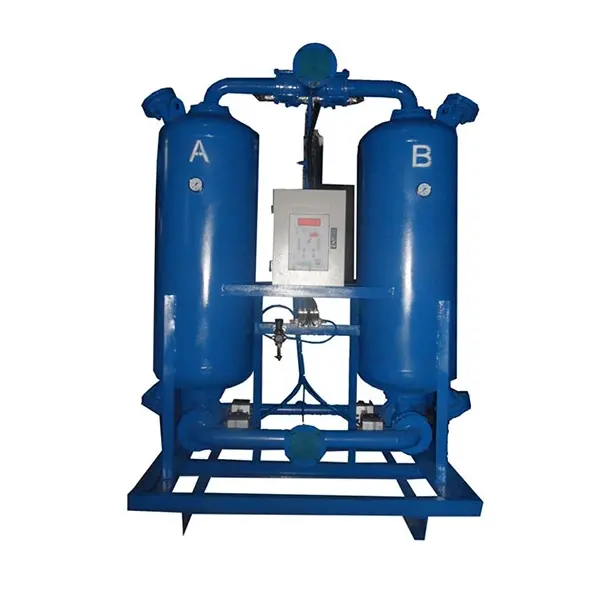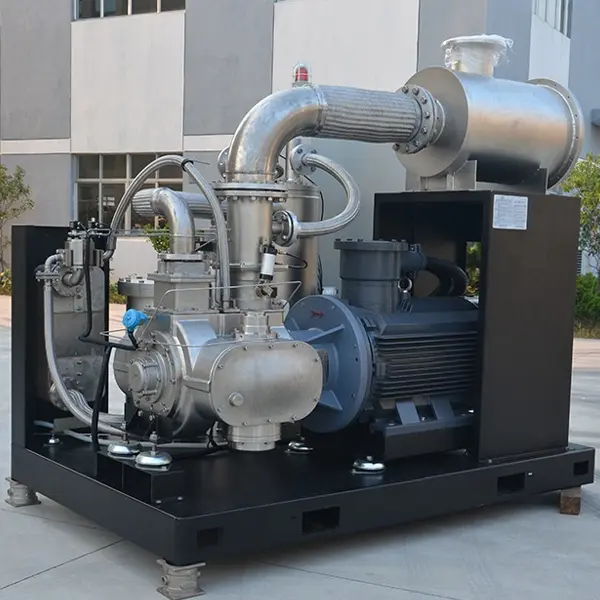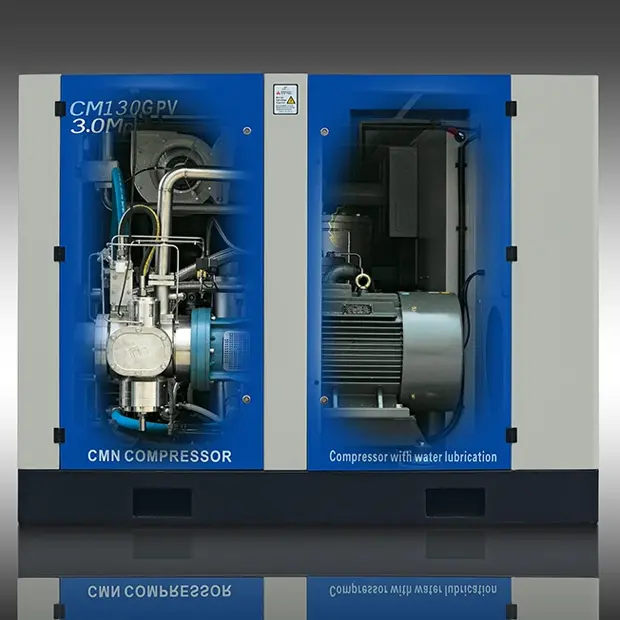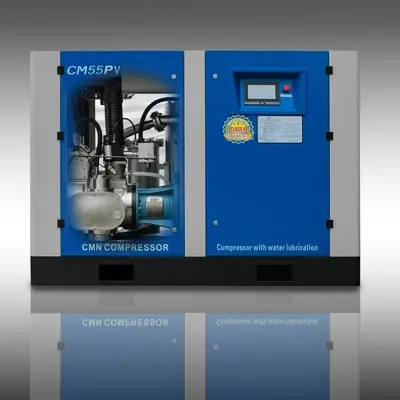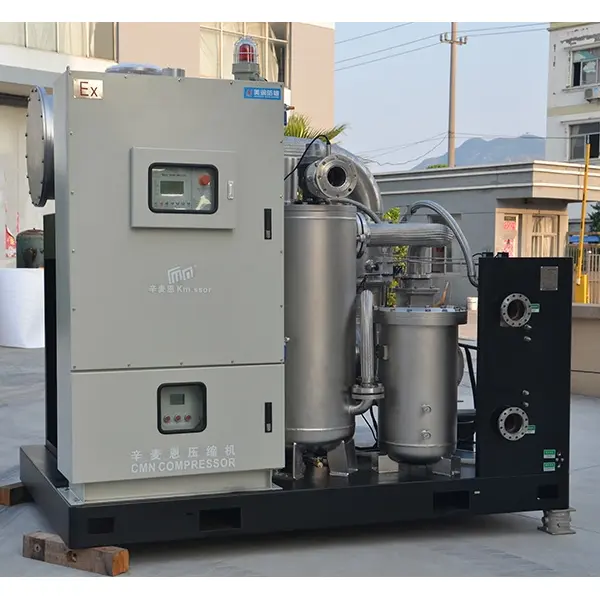
In modern industrial operations, compressed air systems are the lifeblood of production lines. One of the most efficient and widely adopted solutions is the screw compressor, particularly the oil injected variant. What is an Oil Injected Screw Compressor and how does it work? Simply put, it is a rotary positive displacement machine where two interlocking helical screws (rotors) compress air, with oil injected directly into the compression chamber. The oil serves multiple critical functions: it seals the microscopic gaps between the rotors, lubricates the moving parts, and absorbs the heat generated during compression. This design leads to higher efficiency, lower discharge temperatures, and longer service life compared to oil‑free alternatives. Purchasing managers across industries—from automotive to food & beverage—seek reliable, energy‑efficient compressors, and understanding this technology is the first step toward making a sound investment. A properly selected oil injected screw compressor can slash energy bills by up to 30% while delivering consistent air quality. However, not all systems are equal; factors like rotor profile, oil separation, and control systems dramatically impact performance. Raydafon Technology Group Co.,Limited brings decades of expertise to help buyers navigate these choices, ensuring they get a system tailored to their operational demands. In this guide, we’ll break down how these machines function, where they shine, and how to select the right unit for your facility.
Quick Navigation:
The oil injected screw compressor operates via a continuous process of suction, compression, and discharge. As the male and female rotors rotate, air enters through the inlet port and fills the cavities between the lobes. Once the cavity is sealed, the volume decreases, compressing the air. At the same time, a precisely controlled amount of oil is injected into the compression chamber. This oil cools the air‑oil mixture, lubricates the rotors, and reduces internal leakage. The compressed mixture then passes into an oil separator, where the oil is removed, filtered, and recirculated, while the clean compressed air is directed to the aftercooler and air receiver. This continuous cycle ensures a steady supply of high‑quality compressed air.
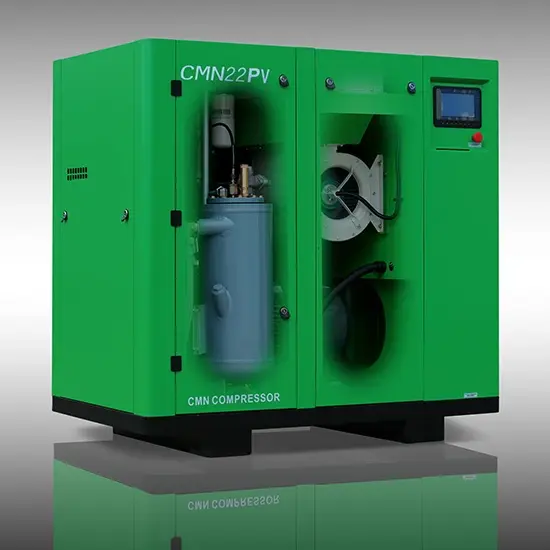
The oil not only lubricates but also acts as a coolant, allowing the compressor to run at lower temperatures than dry screw types, which must rely on external cooling and precise rotor clearance. This makes oil injected models more forgiving and durable in harsh industrial environments. Understanding this cycle helps purchasing managers appreciate the reliability and efficiency that oil injection brings.
Factory managers often face a triple threat: spiraling energy costs, inconsistent air pressure causing production line stoppages, and unplanned downtime due to compressor breakdowns. These challenges directly eat into profitability and on‑time delivery rates.
The solution lies in a well‑engineered oil injected screw compressor, particularly those from Raydafon Technology Group. These compressors feature advanced rotor profiles and intelligent control systems that adjust output to real‑time demand, reducing energy waste. The oil injection not only improves sealing but also absorbs compression heat, enabling continuous 24/7 operation without overheating. As a result, facilities report up to 25% lower electricity consumption and significantly fewer service interruptions. To help you evaluate the best option, consider the following key specifications when selecting a compressor for your facility:
Comparison Table: Selecting the Right Oil Injected Screw Compressor
| Parameter | Raydafon Model RDSF‑30 | Typical Competitor Model |
|---|---|---|
| Free Air Delivery (m³/min) | 5.8 @ 7 bar | 5.2 @ 7 bar |
| Motor Power (kW) | 30 | 30 |
| Specific Power (kW/m³/min) | 6.4 | 7.1 |
| Noise Level dB(A) | 68 | 72 |
| Oil Carrying (ppm) | <3 | <5 |
| Warranty | 2 years | 1 year |
As the table shows, a Raydafon compressor not only delivers more air per unit of energy but also reduces noise and residual oil, which directly impacts product quality and worker comfort.
Q: What is an oil injected screw compressor and how does it work?
A: It is a rotary compressor that uses two intermeshing helical screws and injects oil into the compression chamber. The oil seals the gap between rotors, lubricates them, and removes heat, resulting in efficient, cool, and reliable compressed air production. The mixture is then separated, and clean air is delivered to the application.
Q: How does the oil injection improve energy efficiency and reliability in screw compressors?
A: Oil injection minimizes internal air leakage, which would otherwise require the motor to work harder. It also provides continuous cooling, preventing thermal expansion that can cause rotor contact. This reduces mechanical stress and energy consumption. A high‑quality oil injection system, like that in Raydafon compressors, can lower specific power requirements by up to 15% compared to poorly designed alternatives.
Raydafon Technology Group Co.,Limited is a globally oriented manufacturer specializing in high‑efficiency oil injected screw compressors and complete compressed air solutions. With years of engineering excellence and a customer‑first approach, we help businesses cut operational costs while improving air quality and system uptime. Whether you need a standard unit or a customized package, our team provides expert guidance from selection through after‑sales support. Explore our full range at https://www.raydafon-compressor.com. For a personalized consultation or a quote, reach out to our specialists at [email protected] — we’re ready to design the right solution for your plant.
Stosic, N., Smith, I., & Kovacevic, A. (2005). Screw Compressors: Three Dimensional Computational Fluid Dynamics and Solid Fluid Interaction. Springer, 1st Edition.
Fleming, J. S., Tang, Y., & Xing, Z. (2006). The use of oil injection in twin screw compressors for energy saving. Proceedings of the Institution of Mechanical Engineers, Part E: Journal of Process Mechanical Engineering, 220(2).
Wu, H., & Chen, Y. (2011). Oil‑injected screw compressor performance under variable speed conditions. International Journal of Refrigeration, 34(4).
Li, J., & Wang, Q. (2013). Numerical investigation of oil distribution inside a twin‑screw compressor. Applied Thermal Engineering, 50(1).
Tan, C., & Ooi, K. T. (2014). A study on the effect of oil injection on leakage in rotary screw compressors. Energy Conversion and Management, 82.
Zhao, Y., & Peng, X. (2016). Rotor profile optimization for oil‑injected screw compressors. Journal of Mechanical Design, 138(8).
Rane, S., & Kovacevic, A. (2017). Modeling of oil‑flooded twin screw compressors considering thermal interactions. IOP Conference Series: Materials Science and Engineering, 232.
Pavković, B., & Delač, G. (2018). Energy efficiency improvement in industrial compressed air systems using oil‑injected screw compressors. Energy, 156.
Yang, B., & Wang, L. (2019). Impact of oil injection temperature on the performance of a screw compressor in a heat pump system. International Journal of Energy Research, 43(7).
Raydafon Technology Group. (2021). Field study on long‑term reliability of oil‑injected screw compressors in heavy‑dust environments. Raydafon Technical Reports, 14(2).