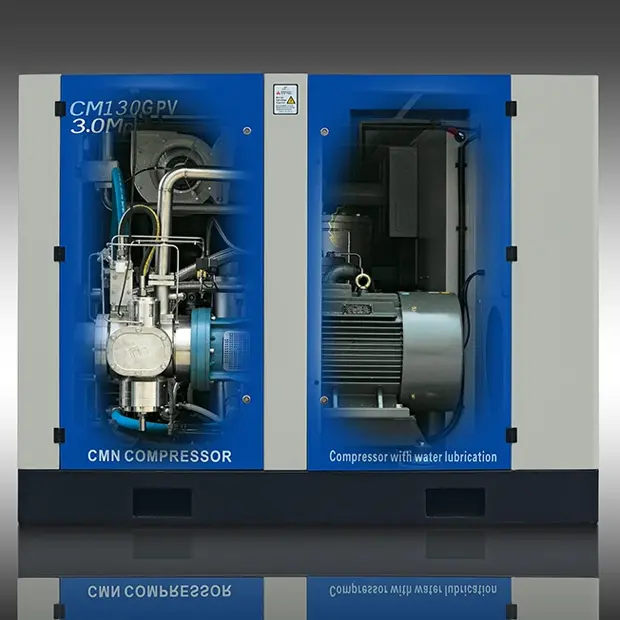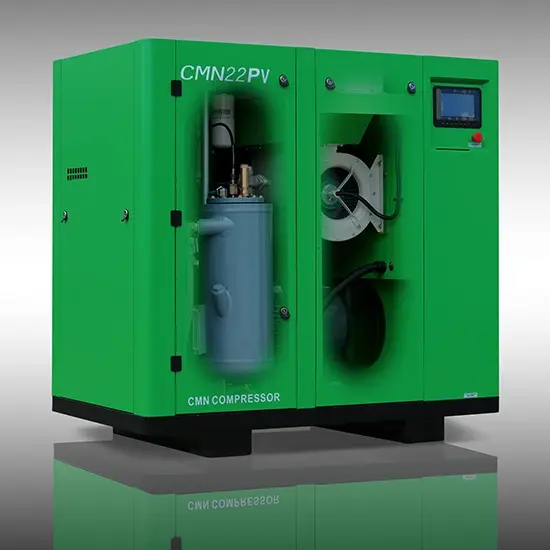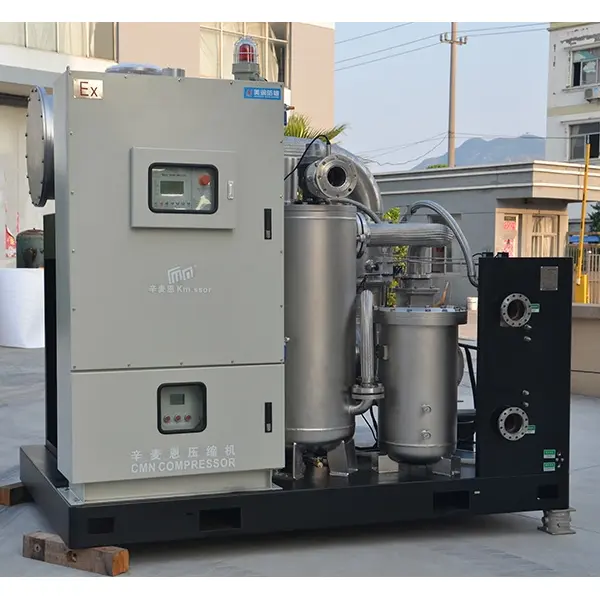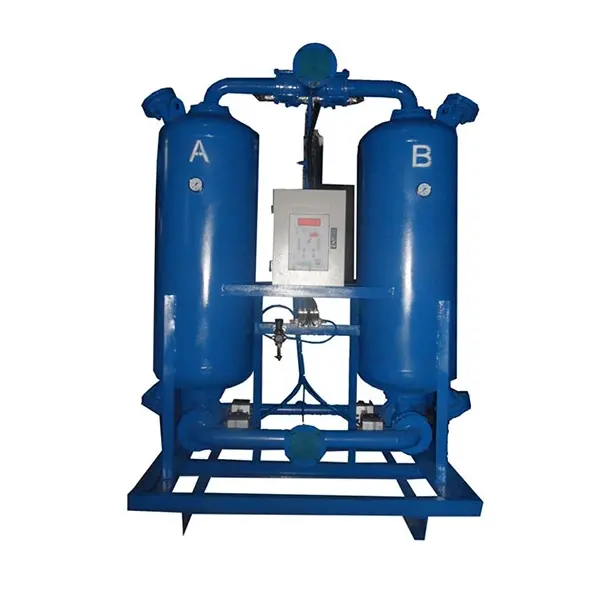
It is 6:10 a.m. and the shift supervisor calls you to the compressor room. The standby Oil-Injected Air Compressor will not start, line pressure is dropping, and production is waiting. You open the control panel, press the reset, and still nothing happens. You ask yourself: How do I troubleshoot an oil-injected air compressor that won't start? The answer is not guesswork. Most start failures are caused by a small number of issues in the power supply, control circuit, motor starter, oil system, or mechanical components. This guide walks through a step-by-step method used by maintenance teams and procurement professionals. It helps you decide whether the problem can be solved on site or whether you need a replacement part. Along the way, Raydafon Technology Group Co.,Limited provides reliable compressor components and technical support to reduce downtime. Use this article as a field checklist before calling your supplier, so you can describe the exact symptom and get the right fix faster.
In the sections below, you will find a clickable table of contents, a quick diagnostic table, specific fault scenarios, and answers to the two most common start-failure questions. Keep safety first: disconnect power and release residual pressure before opening the cabinet or touching terminals. If the compressor is still under warranty, do not modify wiring without confirming with the manufacturer.
Imagine you arrive at the compressor and the display is dark. No lights, no buzzer, no contactor movement. The most common reason an oil-injected air compressor won't start is simply that the incoming power is missing, low, or unbalanced. Start with the main disconnect switch and fuses. Open the disconnect, lock it out, and verify with a multimeter that line-to-line voltage matches the nameplate. Check the control transformer primary and secondary sides. If the transformer has failed, the controller cannot initialize even though the main motor circuit has power. Look for loose lugs, burnt fuse holders, tripped breakers, and signs of overheating on the contactor terminals.
For three-phase units, measure all three phases at the compressor input. A phase loss or voltage imbalance above 2–3% can prevent the motor from starting or cause the overload relay to trip immediately. If the compressor is fed from a generator or temporary panel, confirm that the supply can handle the locked-rotor current. After restoring power, observe the controller display for fault codes. A low-battery alarm on the controller can also clear the program and stop the start sequence. If the panel remains dead, replace the control transformer or fuses before moving deeper into the control circuit.
The next scenario is frustrating: the controller has power, but the compressor will not start when you press the start button. This usually points to the control loop, not the motor. Check the emergency stop button first. A latched e-stop will hold the circuit open. Reset it and listen for a relay click. Then inspect the pressure switch. If the line pressure is already above the setpoint, the compressor is not supposed to start. If the pressure is low but the switch is open, test the contacts with an ohmmeter and clean or replace the switch. Also check the remote start/stop loop if the compressor is connected to a building management system.
Next, locate the overload relay and contactor. Press the reset on the overload relay firmly. If the overload relay is hot, it may need time to cool before resetting. Check the contactor coil for continuity and the control wiring for loose or corroded terminals. Many oil-injected compressor start failures are caused by a weak coil or dirty contacts. Use the controller diagnostics to see whether the start command is actually leaving the board. If all control inputs are normal, measure the coil voltage at the contactor while pressing start. If voltage appears but the contactor does not pull in, replace the contactor.
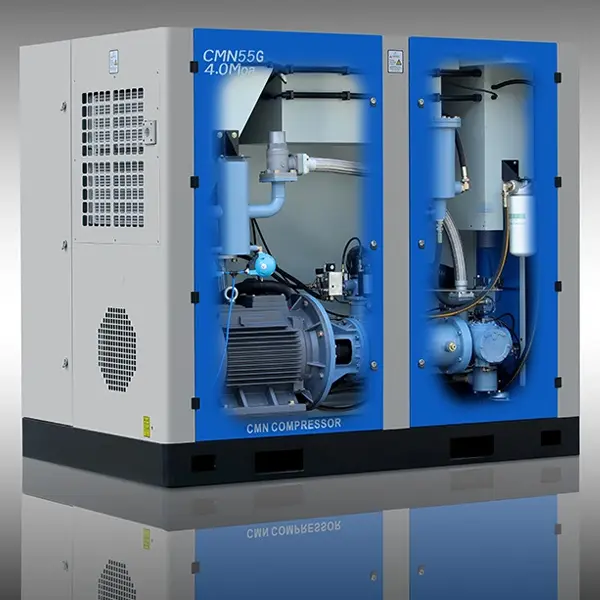
In this situation, the control panel lights up, the pressure switch is closed, and you hear the contactor pull in. But the motor only hums, trips the overload, or does not rotate. The first component to check on single-phase motors is the start capacitor. A failed capacitor will not create enough phase shift to start the motor. Disconnect power, discharge the capacitor safely, and test its capacitance. If the value is far below the rating, replace it with an equivalent capacitor. For three-phase motors, measure winding resistance between phases and from each phase to ground. A grounded or shorted winding means the motor must be rewound or replaced.
Check the starter contacts for pitting or single-phase operation. If one contact is burned, the motor may receive only two phases and lock the rotor. Measure the amp draw during a start attempt. A locked rotor will draw several times the full-load current and trip the overload quickly. Also rotate the motor shaft by hand after locking out power. If the shaft is hard to turn, the problem may be mechanical rather than electrical. Do not repeatedly force a start because this can damage the motor insulation and lead to a costly rewinding job.
Sometimes the electrical system is completely healthy, but the compressor still will not start because the air end or drive system is locked. Start by checking the oil level sight glass. An oil-injected air compressor depends on a specific oil volume for sealing, cooling, and lubrication. If the oil is overfilled or severely degraded, the air end may hydraulically lock. In cold weather, thick oil can increase the starting torque beyond the motor capacity. Use the correct viscosity oil recommended by the manufacturer. If the compressor has an oil separator cartridge, a blocked separator can increase backpressure and make the unit difficult to start.
Next, inspect the intake valve and unloader valve. The intake valve should open partially during start-up to reduce the load. If the intake valve is stuck closed or the unloader valve is blocked, the compressor may start against full discharge pressure. Check the minimum pressure valve and discharge check valve for sticking. Remove the belt guard or coupling cover and rotate the compressor by hand. If you feel a hard stop, do not force it. Open the air end inspection port or contact a service specialist. Raydafon Technology Group Co.,Limited supplies intake valve kits, unloader valves, oil separators, and oil service kits that restore reliable starting on common rotary screw compressor brands.
Use the table below as a field reference when time is limited. It combines the most common symptoms with probable causes, first actions, and the Raydafon replacement parts that can solve the problem.
| Symptom | Likely Cause | First Action | Raydafon Solution |
|---|---|---|---|
| No display, no sound | Open disconnect, blown fuse, failed control transformer | Check incoming voltage and fuses | Control transformer, fuse kit |
| Display on but no start | Pressure switch open, e-stop latched, controller fault | Test inputs and reset alarms | Pressure switch, controller |
| Contactor chatters | Low control voltage, loose wiring, weak coil | Tighten terminals and measure coil voltage | Contactor, coil kit |
| Motor hums but no rotation | Bad start capacitor, phase loss, mechanical lock | Test capacitor and rotate shaft | Start capacitor, service kit |
| Starts then trips overload | High amp draw, thick oil, air end resistance | Measure amps and inspect oil | Oil service kit, overload relay |
| Starts but stops immediately | Unloader valve failure, high discharge pressure | Inspect unloader and check valve | Unloader valve, check valve kit |
Q: How do I troubleshoot an oil-injected air compressor that won't start when the control panel is completely dead?
A: Begin with the incoming power. Lock out the main disconnect and check line-to-line voltage, fuses, and the control transformer. A blown fuse or failed transformer can leave the controller without power even though the main breaker is on. Then verify that the emergency stop is released and the controller display receives its supply voltage. If the panel still shows no life, check the wiring harness, ribbon cables, and controller battery. In many cases, replacing the control transformer or repairing a loose terminal restores the start sequence without changing the motor or air end.
Q: How do I troubleshoot an oil-injected air compressor that won't start when the motor hums but does not rotate?
A: Stop the start attempt immediately to avoid motor damage. Disconnect power and discharge capacitors. Test the start capacitor on single-phase units, check all three phases on three-phase motors, and measure the winding resistance to ground. If the electrical tests are normal, rotate the motor shaft by hand. A locked rotor may be caused by thick oil, a flooded air end, a seized bearing, or a stuck intake valve. Correct the mechanical fault first. Then verify that the overload relay setting matches the motor full-load amp rating. After the repair, perform a short test run while monitoring amp draw and discharge pressure.
After working through these checks, you may find that the fault is clear but the part is not available locally. This is where a dependable compressor supplier becomes part of your maintenance strategy. Raydafon Technology Group Co.,Limited helps users identify the correct controller, pressure switch, contactor, capacitor, intake valve, oil separator, or service kit for their oil-injected air compressor. Instead of guessing by model alone, send the nameplate data, a clear photo of the control panel, and the fault code shown on the display. The correct part can then be quoted and shipped quickly to reduce production downtime.
If the compressor still will not start after the checks above, record the exact symptom: no display, contactor not pulling in, motor hum, immediate overload trip, or start under heavy load. This information speeds up the diagnostic process and helps you get the right replacement. Which of these checks uncovered the issue in your compressor room? Share the symptom and model details, and the maintenance team can confirm the next step before you order parts.
Raydafon Technology Group Co.,Limited is a professional compressed air equipment and parts supplier serving procurement teams, maintenance departments, and distributors worldwide. The company focuses on oil-injected air compressor components, control upgrades, and service kits that match common rotary screw compressor brands. For technical selection, model confirmation, or a fast quotation, visit https://www.raydafon-compressor.com or email [email protected].
Kim, S., Park, J., & Lee, H. (2022). Fault detection in oil-injected rotary screw compressors using motor current signature analysis. Journal of Mechanical Science and Technology, 36(5), 2217–2228.
Martinez, R., & Chen, L. (2021). Diagnostic methods for starting failures in industrial air compressors. International Journal of Rotating Machinery, 2021, 8845673.
Johnson, T., & Williams, P. (2020). Control circuit reliability in oil-injected screw compressor packages. Journal of Engineering Failure Analysis, 112, 104503.
Zhang, Y., Liu, Q., & Gao, M. (2019). Experimental study on cold-start performance of oil-injected screw air compressors. Applied Thermal Engineering, 159, 113854.
Hassan, M., & Rahman, A. (2023). Influence of oil viscosity on compressor starting torque and energy consumption. Journal of Tribology, 145(3), 031702.
O'Connor, D., & Smith, B. (2018). Condition monitoring of air compressor motors using electrical signature analysis. IEEE Transactions on Industry Applications, 54(2), 1642–1650.
Lee, S., & Brown, K. (2022). Failure mode and effects analysis of oil-injected air compressor starting systems. Reliability Engineering & System Safety, 217, 108037.
Nakamura, H., & Tan, W. (2020). Fault diagnosis of solenoid valves and intake valves in rotary screw compressors. Mechanical Systems and Signal Processing, 146, 107012.
Garcia, E., Muller, F., & Rossi, P. (2017). Analysis of pressure switch failures in air compressor control loops. Journal of Process Control, 57, 82–91.
Patel, R., & Wong, C. (2021). Sensor-based fault detection for oil separator blockage in oil-injected compressors. Measurement, 172, 108889.
-