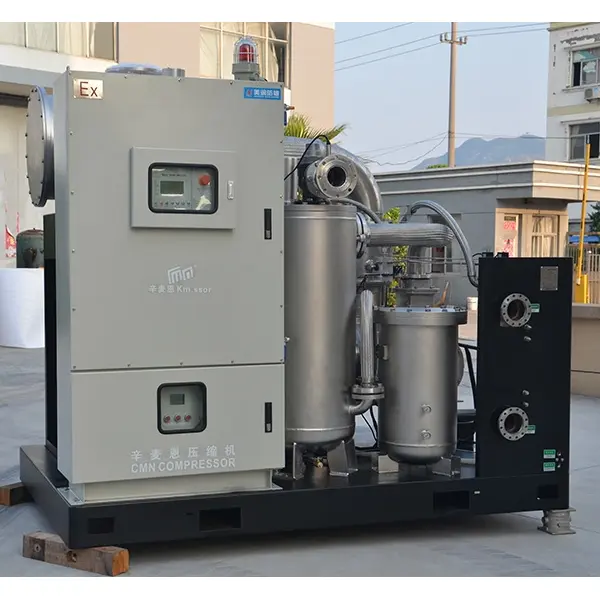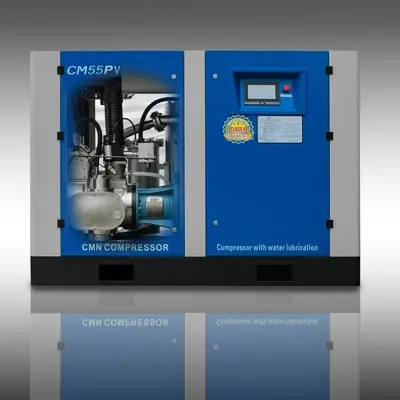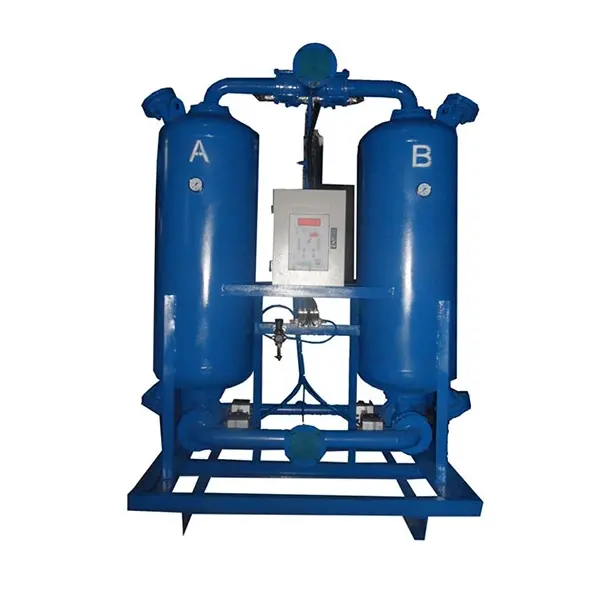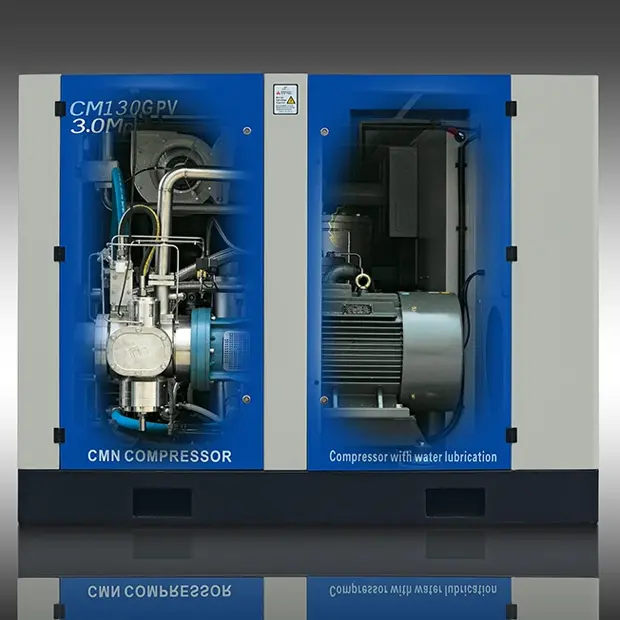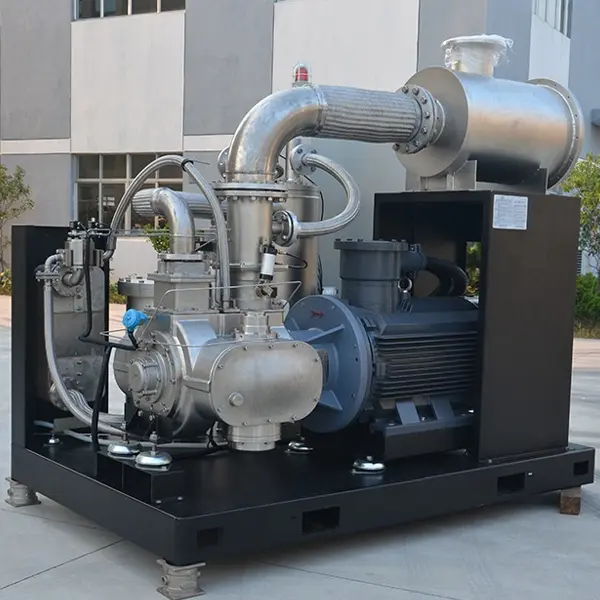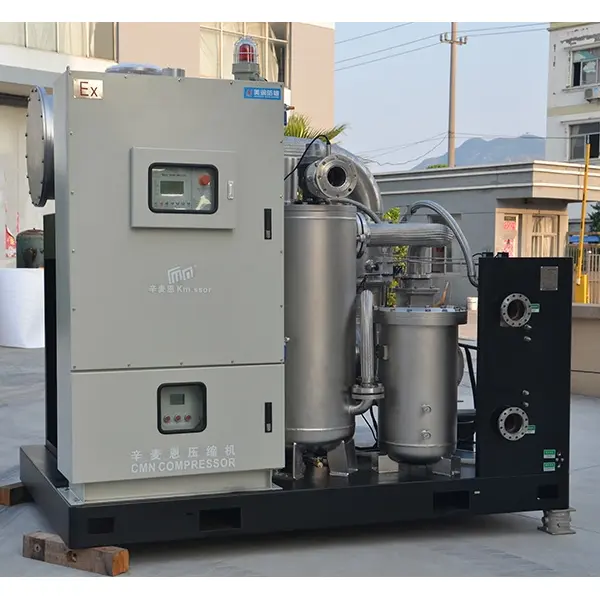
What maintenance is required for a water-injected screw compressor? For procurement teams and plant managers, the answer directly affects production uptime, energy cost, and total cost of ownership. A water-injected screw compressor uses water instead of oil for sealing, cooling, and lubrication inside the screw airend. This design delivers clean, oil-free compressed air, but it also shifts the maintenance focus to water quality, filtration, separator performance, and inspection intervals. If maintenance tasks are missed, mineral buildup, bacterial growth, or worn filters can quickly increase discharge temperature, reduce air output, or allow water carryover into the air network. On the other hand, a clear maintenance program can extend the airend service life and keep the compressed air system stable for years. The key is to follow a structured routine: daily visual checks, scheduled filter replacements, water sampling, and component inspections. Below, we break down the most important maintenance steps, common troubleshooting scenarios, and the service intervals that help buyers and maintenance engineers protect their investment.
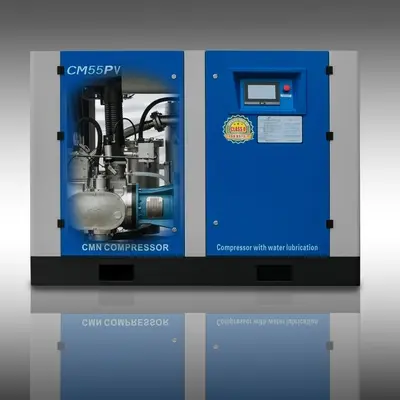
Pain point: A procurement manager selects an oil-free water-injected screw compressor for a beverage plant, but production stops when a high-temperature warning appears. The root cause is often a blocked inlet strainer, a closed cooling water valve, or a loose electrical connection that could have been found during a daily walkaround.
Solution: Establish a daily 10-minute inspection route. Check the control panel for alarms, record discharge temperature and pressure, inspect all water and air lines for leaks, and listen for unusual noise from the screw airend. Confirm that cooling water inlet pressure and flow are stable. Use a simple log sheet so operators can spot trends before they become failures.
| Daily Check Item | Target / Acceptable Range | Action If Out of Range |
|---|---|---|
| Discharge temperature | Below manufacturer alarm threshold, typically 70–85°C | Check water flow, filter, and cooler |
| Discharge pressure | Stable at rated setpoint | Inspect inlet filter and leaks |
| Cooling water inlet pressure | 2–4 bar, depending on design | Clean strainer or adjust valve |
| Water leak points | No visible drips | Tighten fittings or replace seals |
| Control panel alarms | No active warnings | Diagnose code before restart |
Pain point: A factory in a hard-water area installs a water-injected screw compressor without water treatment. After 1,200 hours, mineral deposits build up in the cooling passages and the airend discharge temperature increases, leading to reduced compressor life.
Solution: Treat incoming water by reverse osmosis or deionization. Test water conductivity, pH, and hardness weekly at first, then monthly after stable operation. Replace water filter cartridges based on pressure drop and measured water quality. Raydafon water-injected screw compressors use accessible filter housings that allow quick cartridge replacement without special tools, minimizing downtime.
| Water Parameter | Recommended Range | Testing Frequency |
|---|---|---|
| pH | 6.5–7.5 | Weekly, then monthly |
| Conductivity | 10–50 µS/cm | Weekly, then monthly |
| Total hardness | Below 50 mg/L | Monthly |
| Particle size | Below 5 µm filtered | Quarterly |
| Bacteria / biofilm indicators | No visible slime or odor | Monthly inspection |
Pain point: Many buyers compare oil-injected and water-injected screw compressors, but underestimate the service cost of water separators and filter elements. This leads to budget surprises and delayed maintenance.
Solution: Follow the service schedule recommended by the manufacturer and keep OEM consumables on site. For Raydafon oil-free water-injected screw air compressors, common intervals are: inlet air filter every 2,000 hours, water filter every 2,000 hours, mineral filter if installed every 4,000 hours, separator inspection every 8,000 hours, and safety valve verification once a year.
| Component | Typical Interval | Maintenance Action |
|---|---|---|
| Inlet air filter | 2,000 hours or 6 months | Replace or clean element |
| Water filter cartridge | 2,000 hours or 6 months | Replace cartridge |
| Water separator | 8,000 hours or 12 months | Inspect drain, clean chamber |
| Minimum pressure valve | 8,000 hours | Clean, inspect spring and seat |
| Safety valve | 12 months | Test and recalibrate |
| Motor bearings | 12,000 hours | Check noise, temperature, relubricate if specified |
Pain point: A packaging line sees water droplets in the air supply. The maintenance team suspects the compressor, but the real issue is often a failed separator drain valve or an undersized dryer. This confusion causes repeated downtime and rejected product batches.
Solution: Use a structured troubleshooting approach. Record pressure, temperature, water consumption, and dew point. Compare with baseline values. Inspect the water separator, drain valve, aftercooler, and downstream filters. For Raydafon machines, the control system stores warning codes that help localize faults quickly, reducing guesswork.
| Symptom | Possible Cause | Recommended Action |
|---|---|---|
| High discharge temperature | Low water flow or fouled heat exchanger | Clean water filter, check inlet valve, descale cooler |
| Excess water carryover | Faulty separator drain or overloaded separator | Inspect drain valve and separator element |
| Low discharge pressure | Clogged inlet air filter or air leak | Replace air filter, tighten fittings |
| High water consumption | Leaking drain, worn seals, high evaporation | Repair leaks, check discharge temperature |
| Unusual airend noise | Worn bearings or water starvation | Stop machine, inspect water flow, contact service |
Pain point: An automotive components plant loses 12 hours of production because a replacement water filter is not in stock. Procurement teams often focus only on the compressor purchase and ignore consumable lead times.
Solution: Keep a preventive maintenance kit for every water-injected screw compressor. It should include air filters, water filters, seals, o-rings, drain valve repair parts, and recommended lubricant for motor bearings. Raydafon Technology Group Co.,Limited offers preconfigured maintenance kits matched to machine models, making it easier for buyers to reduce unplanned downtime and control service costs.
| Spare Part | Recommended Stock Quantity | Replacement Trigger |
|---|---|---|
| Water filter cartridge | 2 per machine | Pressure drop or 2,000 hours |
| Inlet air filter | 2 per machine | Pressure drop or 2,000 hours |
| Seal kit | 1 per machine | Leakage or annual inspection |
| Drain valve assembly | 1 per machine | Slow drain or continuous leak |
| Control sensors | 1 set | Faulty reading or alarm reset failure |
Prevention starts with water quality control. Use deionized or reverse-osmosis water with conductivity below 50 µS/cm and pH between 6.5 and 7.5. Replace the water filter cartridge every 2,000 hours or earlier if pressure drop increases. Inspect the water path for white mineral deposits every month. If buildup appears, clean the cooler and water jacket according to the manufacturer's procedure. Raydafon machines are designed for easy access to water passages and filters, helping maintenance teams remove deposits without major disassembly.
After a long shutdown, drain standing water, flush the water circuit, replace the water filter, and inspect the separator drain. Run the compressor unloaded for 15–20 minutes while monitoring discharge temperature and pressure. Check for leaks, unusual noise, and control panel warnings before returning to full load. If the compressor was stored in a cold environment, verify that water lines are free of ice or cracks. Raydafon Technology Group Co.,Limited provides restart checklists and remote support to help facilities avoid damage after seasonal shutdowns.
For procurement teams, maintenance is not just a technical task; it is a supply chain and cost-control challenge. Raydafon Technology Group Co.,Limited supports buyers with oil-free water-injected screw air compressors that combine efficient rotor profiles, water-based cooling, and accessible service points. Our application engineers help you define the correct maintenance program for your operating conditions, and our sales team can provide spare parts pricing, lead times, and technical documentation before you purchase. If you are planning a compressed air upgrade or want to compare maintenance costs for a water-injected screw compressor, contact [email protected] or visit https://www.raydafon-compressor.com. We respond with practical recommendations, not generic promises.
Stosic, N., Smith, I. K., & Kovacevic, A. (2014). Performance improvement of water-injected screw compressors. Proceedings of the Institution of Mechanical Engineers, Part E: Journal of Process Mechanical Engineering, 228(3), 213–222.
Zhang, Y., Li, H., & Wang, J. (2018). Experimental investigation of water-injected oil-free twin-screw air compressor for PEM fuel cell systems. International Journal of Hydrogen Energy, 43(36), 17325–17334.
Zhang, X., Wu, Y., Liu, H., & Chen, Z. (2020). Numerical simulation of chamber heat transfer in a water-injected twin-screw compressor. Applied Thermal Engineering, 171, 115077.
Wu, H., Huang, R., & Chen, Z. (2017). Influence of water injection on performance of single-screw compressor. International Journal of Refrigeration, 82, 252–261.
Yang, Q., Liu, G., & Zhao, Y. (2021). Leakage and heat transfer characteristics of water-injected twin-screw compressor with variable speed. Energies, 14(9), 2578.
Hu, B., Li, J., & Wang, X. (2019). Water quality requirements and corrosion control for water-injected oil-free air compressors. Corrosion Engineering, Science and Technology, 54(6), 489–497.
Wang, C., Xing, Z., & He, Z. (2016). Experimental study on the water separator performance in a water-lubricated screw compressor system. Journal of Mechanical Science and Technology, 30(8), 3595–3602.
Chen, L., Zhou, J., Xu, P., & Ma, F. (2022). Prediction of rotor profile wear in water-injected screw compressors under different maintenance intervals. Wear, 498–499, 204338.
Liu, M., Zhang, S., & Wang, T. (2015). Effect of water injection rate on the discharge temperature and specific power of an oil-free rotary screw compressor. Energy Conversion and Management, 103, 558–566.
Kumar, A., & Singh, R. (2023). A fuzzy logic based fault diagnosis method for water-injected twin-screw air compressors. Expert Systems with Applications, 225, 120065.
-