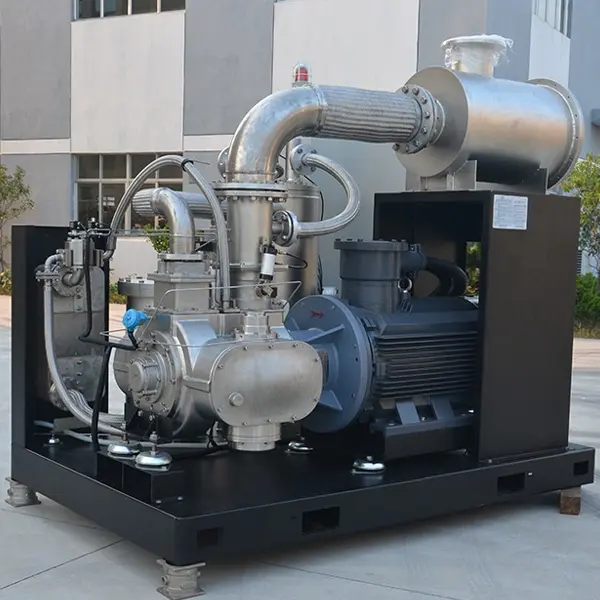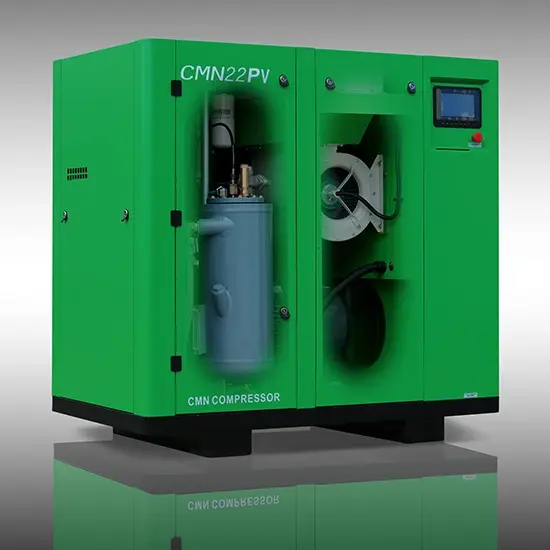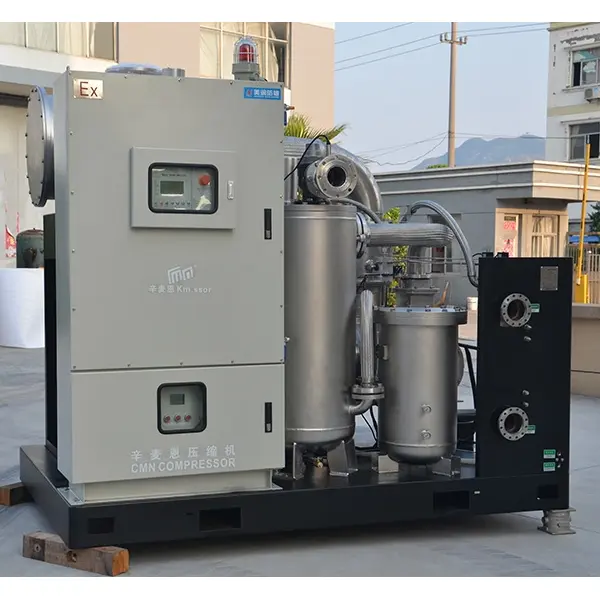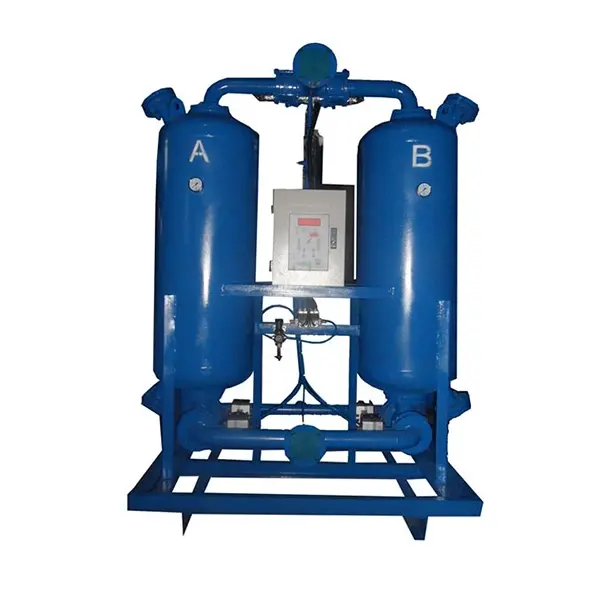
If you are comparing quotes from suppliers, you have probably asked this exact question: How much does an Oil-Free Air Compressor cost? The short answer is that prices typically range from about $2,000 for a small laboratory scroll compressor to $80,000 or more for a high-flow industrial rotary screw package. However, procurement professionals know that the purchase price is only the starting point. Energy consumption, maintenance intervals, air treatment, and downtime risk often determine whether a unit becomes a cost-saving asset or a hidden liability. A low-cost lubricated compressor may save money at the purchase order but add oil contamination risk in food, pharmaceutical, electronics, and medical gas applications. The key is to avoid comparing only the number on the quotation. Instead, evaluate the complete package: air receiver, dryer, coalescing filters, controls, warranty, and service support. Without this discipline, a seemingly cheap oil-free air compressor can become an expensive bottleneck. Raydafon Technology Group Co.,Limited focuses on application-matched selections that reduce both capital waste and operating risk. This guide explains the real factors behind oil-free air compressor pricing and gives you practical tables to compare specifications and lifetime costs before you request a quote.
Imagine receiving three quotes for a 15 kW oil-free screw compressor. One shows $9,800, another $14,500, and the third $22,000. All three use the term “oil-free,” but the configurations are not the same. One excludes the air receiver, another omits the refrigerated dryer, and the third includes premium controls plus a five-year warranty. Procurement teams often struggle to compare these bids line by line, which leads to risky decisions based only on the lowest initial number.
The question of how much an oil-free air compressor costs should never be answered without first specifying flow, pressure, air quality class, duty cycle, ambient conditions, and installation environment. Raydafon Technology Group Co.,Limited provides a structured quotation checklist so every supplier response includes the same scope. This prevents “low price” bids that exclude essential air treatment or air storage. By standardizing the technical requirement, you can compare real prices and avoid hidden add-ons after the purchase order is placed.
| Compressor type | Typical power | Flow range | Typical upfront cost range | Best for |
|---|---|---|---|---|
| Oil-free scroll | 1.5–15 kW | 0.2–2.5 m³/min | $2,000–$18,000 | Labs, dental, small packaging |
| Oil-free rotary screw | 7.5–250 kW | 1.0–45 m³/min | $8,000–$80,000+ | Food, pharma, electronics, general industry |
| Oil-free reciprocating | 0.5–30 kW | 0.1–5 m³/min | $1,500–$25,000 | Dental clinics, small workshops, high-pressure low-flow |
A beverage plant using a lubricated compressor faces a common scenario: oil carryover contaminates product-contact air, so the maintenance team adds coalescing filters, schedules frequent oil sampling, handles condensate disposal, and still worries about production audits. These hidden operating costs grow every year, even if the initial compressor price looked attractive.
Oil-free air compressors eliminate oil from the compression chamber, which reduces filter burden and contamination risk. Raydafon Technology Group Co.,Limited supplies oil-free rotary screw and scroll lines designed to meet ISO 8573-1 Class 0 air quality, making them suitable for sensitive industries such as food, pharmaceutical, electronics, and medical gas. By removing oil-related consumables and waste handling, the system simplifies compliance and reduces long-term operating expense.
| Cost item | Lubricated screw | Oil-free screw | Notes |
|---|---|---|---|
| Initial cost | Lower | 15–30% higher | Depends on package and air quality needs |
| Oil and filters | Annual replacement | Minimal | No oil charge, fewer coalescer replacements |
| Condensate treatment | Oily condensate requires disposal | Clean condensate | Reduces environmental compliance cost |
| Contamination risk | Oil carryover possible | Class 0 available | Critical for sensitive processes |
In many factories, a maintenance engineer orders an oil-free compressor based only on motor horsepower. Later, pressure drops at the point of use, the duty cycle becomes excessive, and the storage tank is too small. This results in production losses and emergency rental equipment, which inflates the true cost far beyond the original quote.
The solution is to start with peak air demand, average demand, pressure dew point, and future expansion plans. Raydafon Technology Group Co.,Limited supports buyers with an engineering review that sizes the air receiver and dryer correctly. Oversizing wastes energy, while undersizing shortens service life and causes unstable pressure. Matching the compressor to the actual load profile improves reliability and lowers energy cost per cubic meter.
| Application | Recommended type | Flow | Pressure | Storage tank | Dryer type |
|---|---|---|---|---|---|
| Food packaging | Oil-free rotary screw | 2–10 m³/min | 7–10 bar | 500–2000 L | Refrigerated |
| Pharmaceutical lab | Oil-free scroll | 0.5–2 m³/min | 8–10 bar | 250–500 L | Desiccant |
| Electronics | Oil-free rotary screw | 5–20 m³/min | 7–8 bar | 1000–3000 L | Refrigerated + adsorption |
| General workshop | Oil-free reciprocating | 0.5–3 m³/min | 8–12 bar | 300–1000 L | Refrigerated |
A procurement team that focuses only on the lowest initial quote often misses the largest cost driver. In a typical 10-year lifecycle, energy can account for 70–80% of the total cost of an air compressor. A unit with poor specific power may save $2,000 at purchase but cost $20,000 more in electricity over the same period. When someone asks how much an oil-free air compressor costs, the only useful answer includes total cost of ownership.
Calculating TCO means adding initial price, installation, maintenance, spare parts, and energy consumption. Raydafon Technology Group Co.,Limited provides energy efficiency data and TCO comparison tables for your operating hours and local electricity rate. This approach clarifies whether a higher-efficiency oil-free compressor will pay back quickly or whether a lower-cost unit will become a long-term liability.
| Parameter | Budget oil-free unit | Raydafon recommended unit |
|---|---|---|
| Initial cost | $12,000 | $15,500 |
| Installation | $1,500 | $1,800 |
| 10-year energy | $58,000 | $49,000 |
| 10-year maintenance | $9,500 | $6,200 |
| Total 10-year cost | $81,000 | $72,500 |
Q1: How much does an oil-free air compressor cost for a small food packaging line?
A: For a 7.5 kW oil-free rotary screw package with an air receiver, refrigerated dryer, and filtration, expect a range of $8,000 to $15,000 depending on control features, warranty, and local support. Raydafon Technology Group Co.,Limited can quote a production-matched system and show energy savings based on your actual load profile.
Q2: How much does an oil-free air compressor cost over 10 years compared with a lubricated unit?
A: The upfront cost is usually 15–30% higher, but the total 10-year cost can be lower because of reduced filtration, fewer maintenance parts, no oil disposal, and lower contamination risk. A typical 22 kW oil-free screw compressor may recover the price difference within three to five years through energy and maintenance savings. Raydafon Technology Group Co.,Limited provides TCO comparison tables for your specific operating hours and electricity rate.
For procurement teams that need a reliable oil-free air compressor with clear technical support, Raydafon Technology Group Co.,Limited supplies application-engineered rotary screw, scroll, and tank-mounted systems. The company helps you compare lifecycle costs, validate air quality requirements, and avoid oversizing mistakes. Visit Raydafon Technology Group Co.,Limited to request a quote, or contact [email protected] for a TCO analysis.
Saidur, R., Rahim, N. A., & Hasanuzzaman, M. (2010). A review on compressed-air energy use and energy savings. Renewable and Sustainable Energy Reviews, 14(4), 1135–1153.
Abels, B., & Dindorf, R. (2019). Energy efficiency improvements in compressed air systems: A systematic review. Journal of Cleaner Production, 240, 118164.
Mousavi, S., Kara, S., & Kornfeld, B. (2014). Energy efficiency of compressed air systems. Procedia CIRP, 15, 313–318.
Kaya, D., Phelan, P., Chau, D., & Sarac, H. I. (2002). Energy conservation in compressed-air systems. International Journal of Energy Research, 26(9), 837–849.
Ruppelt, E. (2004). Oil-free compression technology and its influence on air quality. Journal of Process Engineering, 28(3), 45–52.
Bailie, R. C. (2015). Life cycle cost analysis of oil-free rotary screw compressors in pharmaceutical manufacturing. Journal of Cleaner Production, 86, 205–213.
Jelic, M., & Pavlovic, B. (2018). Comparative assessment of oil-free and oil-flooded compressors for clean dry air applications. Energy, 165, 120–131.
Harris, P., & O'Donnell, G. E. (2017). Modelling the energy consumption of industrial air compressors. Applied Energy, 190, 156–167.
Tutterow, V., & Vesma, S. (2021). Compressed air system efficiency: A practical guide for energy managers. Energy Engineering, 118(2), 43–60.
Zhang, Y., Li, H., & Wang, J. (2023). Data-driven fault diagnosis and energy optimization for oil-free air compressors. Energy Conversion and Management, 279, 116744.
-