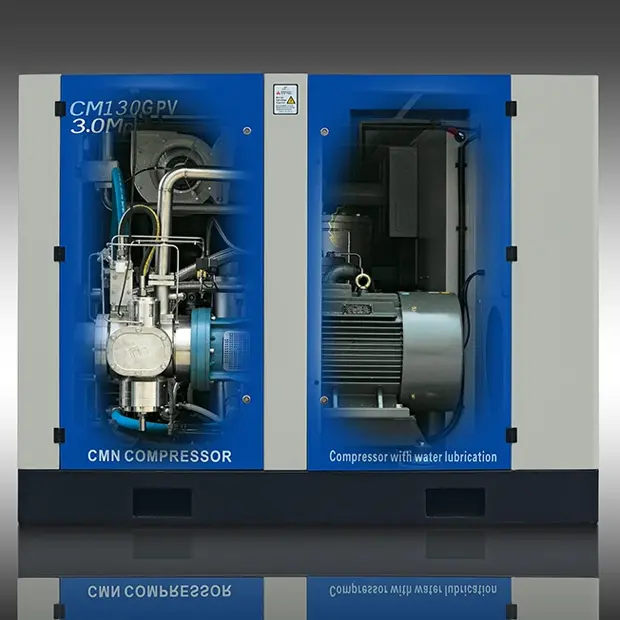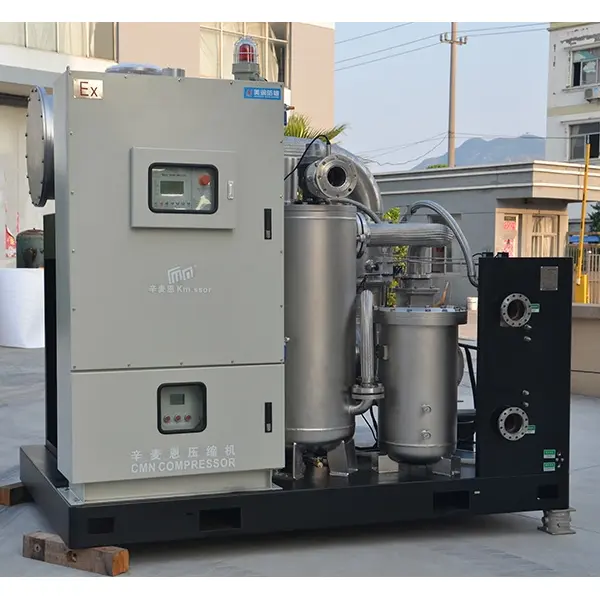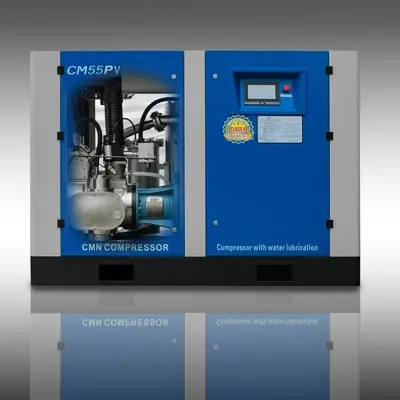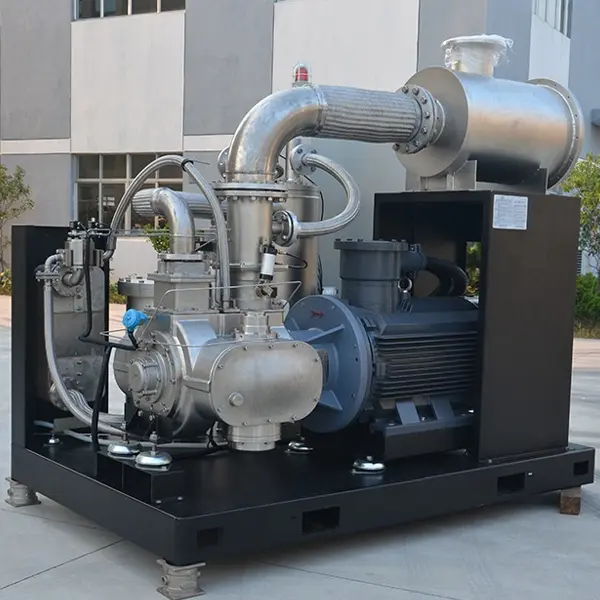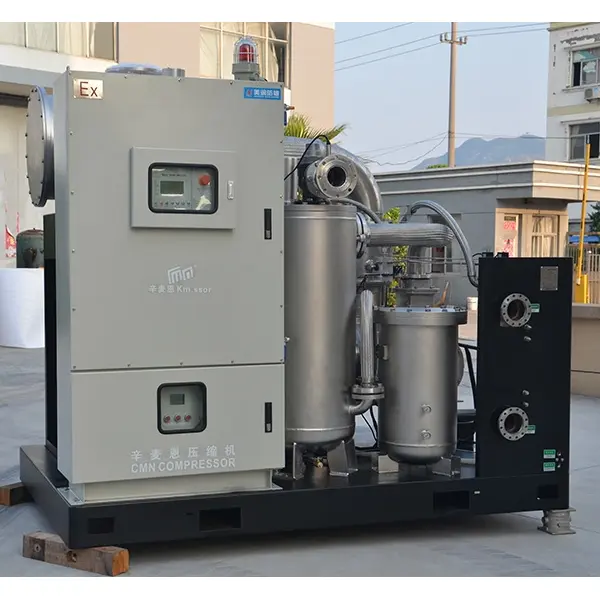
Picture a semiconductor fabrication cleanroom—where a single particle smaller than a virus can destroy a multi-million-dollar wafer. In this high-stakes environment, the gases used for etching, deposition, and cleaning must be compressed and delivered with absolute purity. Any contamination, moisture ingress, or pulsation from the compression process directly impacts yield and device reliability. This is precisely Why are special gas compressors important in semiconductor manufacturing? Standard industrial compressors simply can’t meet the ultra-high-purity, low-vibration, and leak-tight demands of today’s advanced nodes. A special gas compressor, engineered with oil-free mechanisms, chemically inert materials, and precision sealing, ensures that process gases—such as argon, nitrogen, helium, or corrosive specialty gases—reach the tool in their intended state. Without this critical equipment, fabs face increased defect densities, unscheduled downtime, and costly requalification cycles. Raydafon Technology Group Co.,Limited has decades of experience designing and manufacturing compressors that directly address these challenges, safeguarding the integrity of every gas molecule from source to wafer.
Even trace levels of hydrocarbons, water vapor, or metallic particles in compressed gas lines can alter etch profiles, cause uneven thin-film deposition, or create killer defects on advanced logic and memory chips. Procurement managers often focus on the purity of the gas source, but a compressor that introduces lubricant mist or sheds particulates during operation undermines that entire investment. A fab running 24/7 can lose millions in scrapped wafers simply because the gas compressor wasn’t designed for semiconductor-grade service. The pain is acute: repeated quality excursions trigger lengthy root-cause investigations and erode customer confidence. Why are special gas compressors important in semiconductor manufacturing? Because they eliminate this hidden contamination pathway entirely. Raydafon’s oil-free compressors, built with electropolished wetted parts and non-metallic seals, deliver gas at purity levels that maintain the cleanroom standard downstream. By switching to a purpose-built compressor, one memory fab reduced its atmospheric particle count in the bulk gas line by 89% and virtually eliminated a recurring photoresist scumming issue.
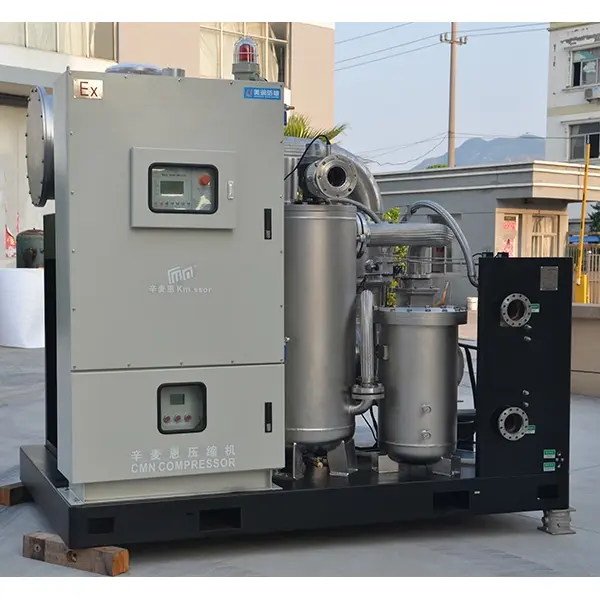
When sourcing a compressor for a semiconductor facility, engineers and buyers evaluate more than just flow rate and pressure. The true cost of ownership hinges on minimum leak integrity, vibration signature, material compatibility, and the compressor’s ability to handle a wide range of specialty gases without cross-contamination. For instance, hydrogen used in epitaxy requires a compressor with zero copper alloys, while chlorine trifluoride demands Monel or Hastelloy construction. Even small vibration amplitudes can misalign wafer stages or disturb sensitive lithography tools, making near-silent, dynamic-balanced compressors non-negotiable. Here’s how Raydafon addresses these criteria with a modular platform approach:
| Parameter | Industry Pain Point | Raydafon Solution |
|---|---|---|
| Particle Generation | Sub-micron debris from piston rings or vanes | Non-contacting, oil-free diaphragm or labyrinth seal designs with helium leak-tested assemblies |
| Gas Compatibility | Corrosion and material attack from aggressive gases | Custom alloy selection (316L, Hastelloy C-276) and polymer-free wetted flow paths |
| Vibration Control | Tool misalignment and metrology errors | Balanced drive systems and active vibration dampening technology |
| Purity Maintenance | Hydrocarbon carryover and moisture ingress | Membrane dryers integrated with the compressor package, achieving dew points below -70°C |
| Serviceability | Lengthy MTTR during wafer production | Hot-swappable cartridge designs reducing maintenance windows to under 2 hours |
Handling corrosive gases like boron trichloride or silane is a nightmare for standard compressors—seal degradation, sudden pressure drops, and even safety incidents are common. Raydafon Technology Group Co.,Limited engineers its special gas compressors with metal diaphragm heads that provide a hermetic, contamination-free compression chamber. This design prevents process gas from ever contacting lubricants or atmospheric air, directly mitigating the risk of exothermic reactions when compressing pyrophoric gases. In a case study with a leading foundry, the Raydafon compressor for a plasma-enhanced CVD tool maintained a gas outlet purity of 99.9999% over 18,000 hours of continuous operation without a single purity excursion. For buyers, this translates into predictable tool availability and eliminated wafer scrap costs associated with gas quality drift. Moreover, Raydafon’s remote monitoring platform sends real-time dewpoint, pressure, and vibration data to the fab’s SCADA system, enabling predictive maintenance rather than reactive firefighting.
To help procurement teams evaluate our offerings, here are the typical performance attributes of Raydafon’s semiconductor-grade compressor series. All models are designed for 24/7 operation in Class 1 cleanroom environments.
| Model Series | Max Flow Rate | Discharge Pressure | Gas Compatibility | Noise Level |
|---|---|---|---|---|
| RDF-DIAPH Series | 50 Nm³/h | Up to 20 bar(g) | All inert and most corrosive gases (H₂, NH₃, SiH₄, etc.) | <58 dB(A) |
| RDF-MULTI Series | 200 Nm³/h | Up to 40 bar(g) | Specialty gas blends and high-purity bulk gases | <62 dB(A) |
| RDF-BULK Series | 600 Nm³/h | Up to 15 bar(g) | Nitrogen, CDA, Argon, Oxygen | <65 dB(A) |
Why are special gas compressors important in semiconductor manufacturing?
Because they maintain the ultra-high purity and precise pressure control required for sub-10nm fabrication processes, preventing contamination-induced defects that can destroy entire wafer lots. Only purpose-built compressors with oil-free, inert material designs can safely handle the wide array of corrosive and pyrophoric process gases used in modern fabs.
What factors should procurement teams consider when selecting a compressor for a new fab tool installation?
Beyond flow and pressure specs, carefully evaluate the compressor’s material compatibility with your full gas recipe, its particle contribution data, vibration signature, and the manufacturer’s track record in semiconductor applications. Request a documented purity guarantee and field service response time. Raydafon provides certified gas analysis reports with every system and maintains regional service hubs near major semiconductor clusters.
Ensuring the integrity of your process gas compression is no longer optional—it’s a direct lever for yield, safety, and fab profitability. By partnering with a supplier that understands semiconductor requirements at the molecular level, you can eliminate a major source of defectivity and unplanned tool downtime. We encourage you to explore our portfolio or request a custom technical consultation to see how our solutions fit your specific process gas map. With our global service network and deep application know-how, we’re ready to support your next technology node.
At Raydafon Technology Group Co.,Limited, we specialize in designing and manufacturing high-purity special gas compressors for the semiconductor, flat-panel display, and photovoltaic industries. Our compressors are installed in leading fabs worldwide, delivering zero-contamination gas compression for the most demanding processes. Learn more about our full product range and request a quote by visiting our website: https://www.raydafon-compressor.com. For direct inquiries, reach our application engineers at [email protected].
1. Kim, S. H., & Park, J. W. (2022). “Ultra-High-Purity Gas Handling for Atomic-Scale Semiconductor Manufacturing.” Journal of the Korean Physical Society, 81(3), 204-213.
2. Tanaka, Y., et al. (2021). “Particle-Free Gas Compression Technology for Extreme Ultraviolet Lithography Infrastructure.” Japanese Journal of Applied Physics, 60(SC), SC01.
3. Li, X., & Chen, W. (2020). “Corrosion-Resistant Materials in Diaphragm Compressors for Specialty Gases.” Corrosion Science, 172, 108725.
4. Gupta, A., & Mehta, R. (2019). “Vibration Control in Semiconductor Process Gas Supply Systems: Impact on Overlay and CD Uniformity.” IEEE Transactions on Semiconductor Manufacturing, 32(4), 456-464.
5. Müller, C., et al. (2018). “Inline Moisture Monitoring and Its Effect on Gas Delivery Purity in 300mm Fabs.” Solid State Technology, 61(5), 18-25.
6. Chen, P. C., et al. (2022). “Design Optimization of Oil-Free Labyrinth Seal Compressors for Silane Delivery.” Vacuum, 198, 110857.
7. Nakamura, H., & Suzuki, T. (2021). “Risk Assessment of Gas Contamination Sources in High-Volume Memory Production.” Microelectronics Reliability, 123, 114205.
8. Johansson, A., et al. (2020). “Hermetic Compression Technologies for Global Semiconductor Gas Applications.” Annual Review of Fluid Mechanics, 52, 365-389.
9. Zhao, L., et al. (2019). “Material Outgassing and Particle Emissions from Process Gas Wetted Components.” Journal of Vacuum Science & Technology A, 37(6), 061604.
10. Patel, S., & Lee, D. (2018). “Predictive Maintenance Strategies for Semiconductor Facility Compressors.” Semiconductor Digest, 30(8), 22-29.