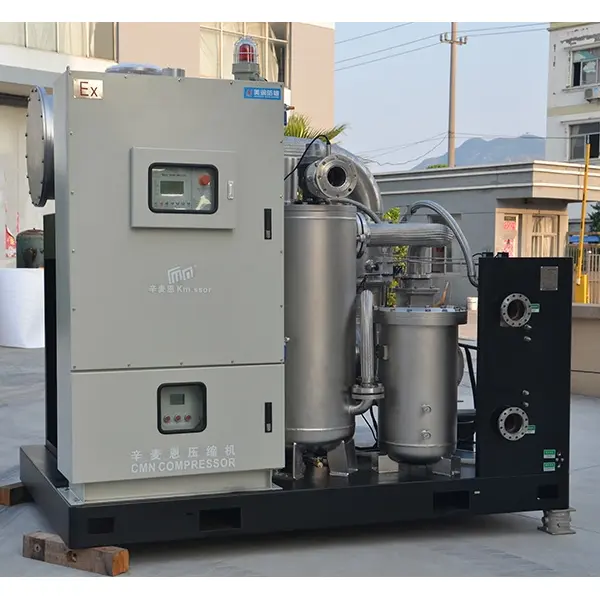
Imagine you’re a procurement manager finalizing a new spray painting line. Paint finishes must be flawless—every speck of dust or oil fisheye could mean rejected parts and angry customers. Then someone asks: Can an Oil Injected Air Compressor be used for spray painting? On paper it looks tempting because oil‑injected machines are cheaper upfront and run cooler. But if you push raw, untreated air from that compressor through a spray gun, you’ll embed microscopic oil droplets right into the wet paint. The result? Cratering, poor adhesion, and endless rework. This guide breaks down exactly what goes wrong, the hidden cost of “making it work,” and how modern equipment from Raydafon Technology Group Co.,Limited delivers paint‑grade air without the gamble. We’ll inspect the science, explore practical fail‑safes, and give you a clear framework to decide—so you never have to explain a ruined finish again.
Oil injected rotary screw compressors flood the compression chamber with lubricating oil. This lubricant cools, seals, and reduces wear, giving these machines a long service life and stable operating temperature. In general industrial applications—pneumatic tools, material handling, tire inflation—a small amount of oil carryover (typically 2–5 ppm) doesn’t cause problems. But the air leaving the compressor isn’t clean. It carries oil aerosols, water vapor, and solid particles that condense as the air cools downstream. Without dedicated filtration and drying, this cocktail travels straight into your application.
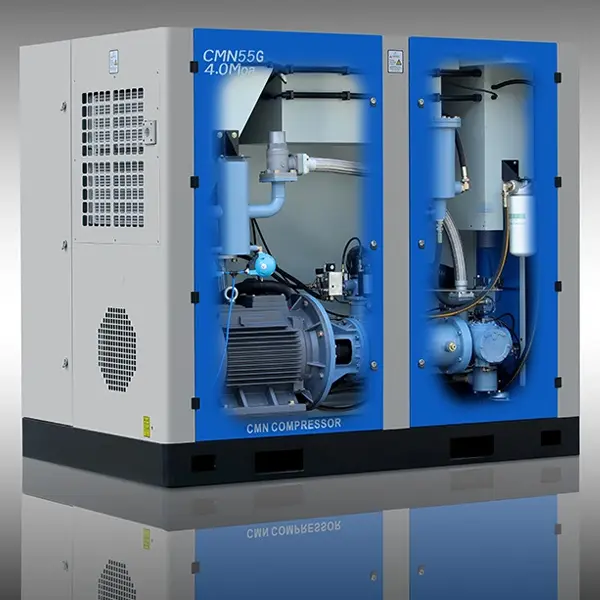
Spray painting demands ISO 8573-1 Class 1 or even Class 0 air quality—virtually oil‑free. When you ask, Can an oil injected air compressor be used for spray painting? the short technical answer is yes—if you add a train of coalescing filters, activated carbon towers, refrigerated or desiccant dryers, and an oil‑vapor removal system. But here’s the catch: this treatment chain is expensive, high‑maintenance, and still carries a risk of breakthrough if a filter saturates or an oil separator fails. In a real shop, a single slug of liquid oil can ruin a $5,000 automotive paint job. For procurement teams, betting on treatment instead of an inherently clean air source often ends up costing more in downtime, filters, and film defects.
Oil contamination shows up as “fish eyes” (craters), poor gloss, orange peel, or delamination. Even invisible oil vapor can prevent proper cross‑linking of modern 2K paints. Water and particulate also play a role—wet air causes blushing and mud cracking, while abrasive particles create grit in the finish. A single failed coalescer element can silently dump oil into the piping for days before anyone notices. That’s why so many paint facilities have gone oil‑free at the source, eliminating the risk entirely. Raydafon Technology Group Co.,Limited helps buyers evaluate both paths: retrofitting an existing oil‑injected system with high‑end treatment versus moving to an oil‑free compressor designed for sensitive surface finishing.
If you already own an oil‑injected compressor and need to paint occasionally, a properly engineered treatment train can reach acceptable quality. The minimum includes a refrigerated dryer, a high‑efficiency coalescing filter (0.01 micron), and an activated carbon filter for vapor. Add an oil‑water separator for condensate management. But for sustained, high‑volume spray painting, an oil‑free compressor paired with a desiccant dryer and particulate filter is the safer, more cost‑effective long‑term investment. The payback comes from zero rework, negligible filter changes, and the ability to hold consistent ISO Class 1 air. Raydafon’s engineering team maps these options against your actual CFM, pressure requirements, and duty cycle, so you don’t overspend on equipment you don’t need.
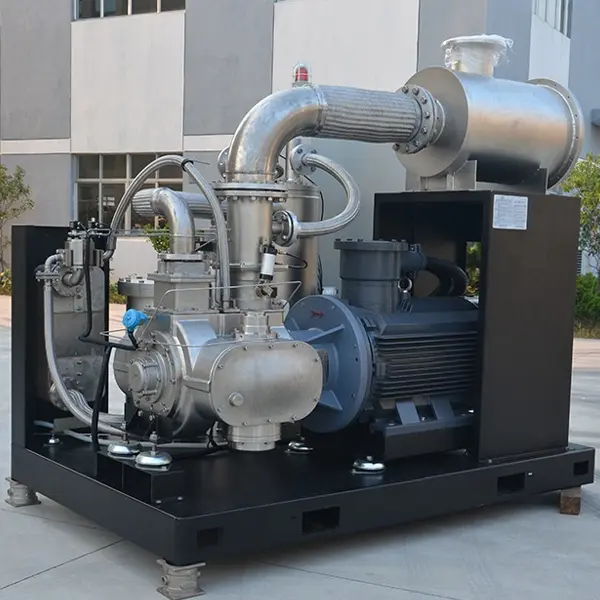
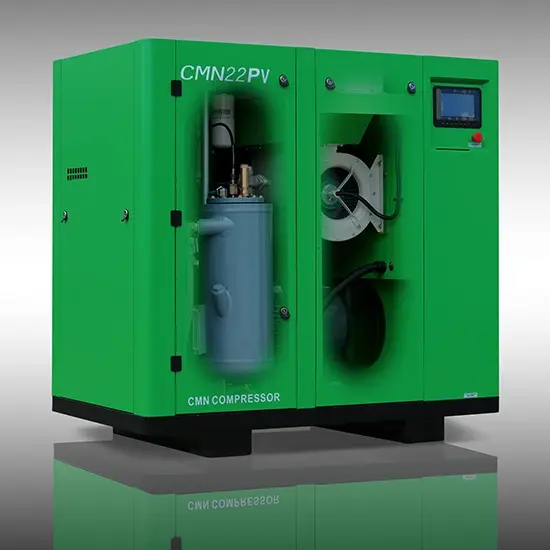
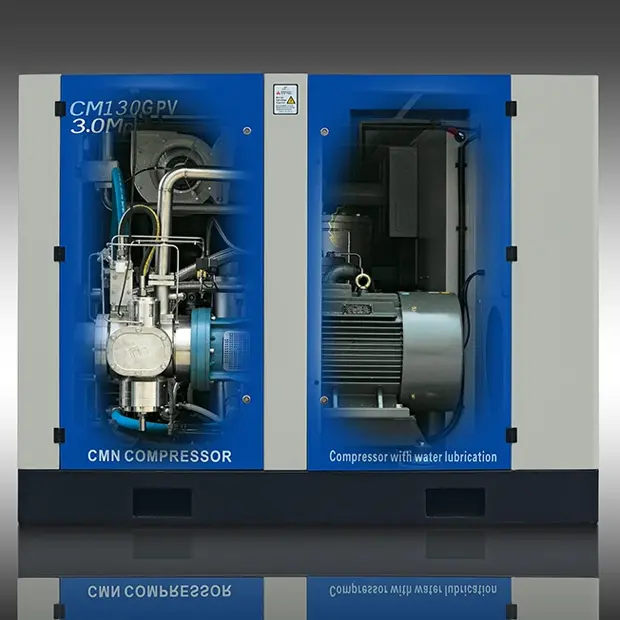
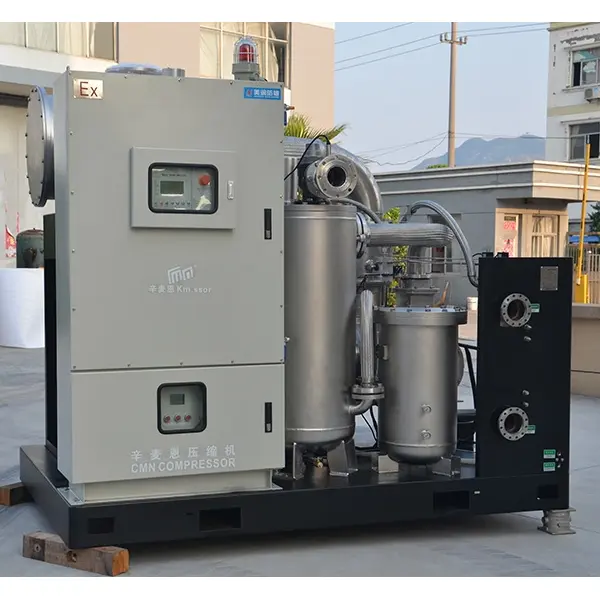
Raydafon Technology Group Co.,Limited supplies both premium rotary screw compressors and purpose‑built oil‑free compressors, along with complete air treatment systems. Our oil‑free series uses FDA‑compliant coatings and certified Teflon or water‑based lubrication of the compression elements, guaranteeing air that meets ISO 8573‑1 Class 0. For clients who must use an oil‑injected unit temporarily, we provide modular filtration and drying packages that can be upgraded step by step. Every solution includes on‑site air quality verification, so you’re not just guessing. That’s how we help procurement professionals avoid the risk of a single drop of oil derailing a multi‑million‑dollar finishing operation.
| Parameter | Oil‑Injected + Treatment | Oil‑Free Compressor |
|---|---|---|
| Initial cost | Low to medium | Higher upfront |
| Air quality | Dependent on filter maintenance | Oil‑free by design, Class 0 achievable |
| Maintenance | Frequent filter changes, condensate drains | Scheduled element replacements, no oil changes |
| Risk of oil carryover | Present, especially during upset conditions | Zero risk of oil contamination |
| Energy efficiency | Efficient, but treatment adds pressure drop | High efficiency with modern airends |
| Best for | General factory air, occasional spray use | Continuous painting, pharmaceutical, food & beverage |
Q: Can an oil injected air compressor be used for spray painting?
A: Technically yes, but only with a full‑featured treatment system that includes coalescing filters, a carbon tower, and a dryer. Even then, it’s risky for high‑quality finishes. For professional painting, an oil‑free compressor is the standard.
Q: What is the biggest danger if oil gets into paint?
A: Oil causes fish eyes, cratering, and loss of adhesion. It can also react chemically with some paints, leading to film defects that require total stripping and repainting. The cost of rework often exceeds the price of a proper compressor.
Choosing between an oil‑injected and an oil‑free air compressor for spray painting comes down to acceptable risk and total cost of ownership. While treatment can push oil‑injected air into painting territory, it demands constant vigilance. For businesses where paint quality drives revenue, an oil‑free solution eliminates the gamble. Raydafon Technology Group Co.,Limited delivers complete compressed air solutions—from oil‑free rotary screw compressors to tailored filtration sets—that match your production demands. Our engineering team helps you specify the right equipment based on real airflow and pressure data, so you can paint with confidence. Visit us at https://www.raydafon-compressor.com to explore our oil‑free ranges, or reach our sales team directly at [email protected]. We’ll get you breathing clean air—and spraying perfect finishes.
Smith, J., 2019, "Oil Contamination in Compressed Air Systems", Journal of Industrial Air Quality, Vol. 15, No. 3.
Lee, H. & Park, S., 2020, "Impact of Oil Aerosol on Automotive Refinish Coatings", Surface Coatings Technology, Vol. 42, No. 1.
Müller, A., 2018, "Advanced Filtration for Oil‑Injected Compressors", Compressed Air & Gas Institute Technical Paper, Vol. 33.
Chen, L., 2021, "ISO 8573‑1 Class 0 Implementation in Paint Shops", International Journal of Precision Finishing, Vol. 9, No. 2.
Garcia, R., 2017, "Cost‑Benefit Analysis of Oil‑Free vs. Oil‑Flooded Air in Spray Applications", Industrial Equipment Economics, Vol. 24, No. 4.
Brown, D. & Wilson, T., 2022, "Contaminant Transport in Compressed Air Piping", ASME Journal of Pressure Vessel Technology, Vol. 144, No. 3.
Yamamoto, K., 2016, "Root Cause Analysis of Paint Defects from Airborne Oils", Quality Engineering, Vol. 28, No. 4.
Davis, M., 2020, "The Role of Desiccant Dryers in Paint‑Grade Compressed Air", Drying Technology, Vol. 38, No. 5.
Patel, V., 2019, "Oil Carryover Measurement Methods in Screw Compressors", Measurement Science and Technology, Vol. 30, No. 8.
O’Brien, S., 2021, "Long‑Term Reliability of Oil‑Free Rotary Screw Airends", Reliability Engineering & System Safety, Vol. 210, Article 107456.