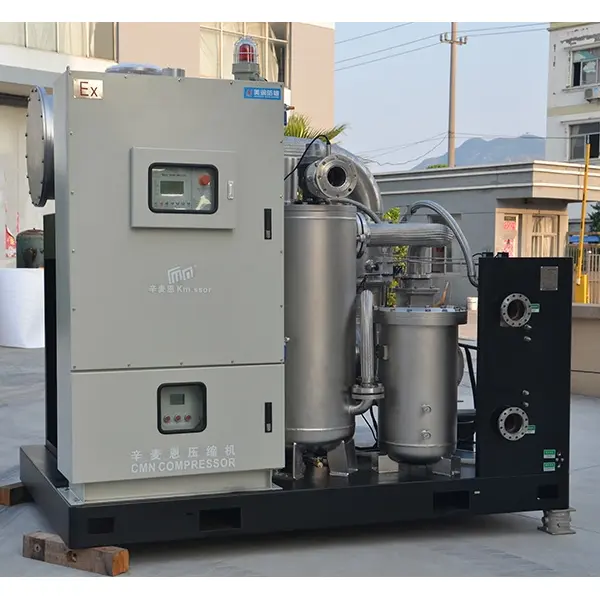
How is hydrogen compression different from natural gas compression? This question has become critical for procurement professionals as the global energy transition accelerates. Imagine you’re sourcing compressors for a new hydrogen refueling station, only to discover that the reliable natural gas compressor you’ve used for years simply cannot handle hydrogen without costly retrofits or safety risks. Hydrogen molecules are the smallest in existence, leading to unique challenges in leakage, material embrittlement, and energy efficiency. Unlike natural gas, hydrogen demands specialized designs and materials to ensure safe, efficient operation. In this guide, we break down the technical differences in a practical, scene-driven way, helping you make informed sourcing decisions. Whether you’re upgrading existing infrastructure or building new hydrogen facilities, understanding these differences can save you time, money, and headaches. Raydafon Technology Group Co.,Limited brings decades of compression expertise to deliver tailored solutions that meet these exact challenges.
Picture a busy hydrogen production plant where every component must perform flawlessly. The foremost distinction starts with molecular size. Hydrogen is the lightest element, with a molecular size roughly one-third that of methane (the main component of natural gas). This means hydrogen can leak through seals, valve fittings, and even microscopic pores in metal castings that would be gas-tight for natural gas. Traditional natural gas compressors often rely on standard elastomeric seals and cast iron bodies, which prove entirely inadequate for hydrogen. Additionally, the energy required to compress hydrogen per unit volume is higher because of its low density, altering compressor design parameters such as cylinder size, piston speed, and cooling requirements. Procurement teams must therefore look beyond conventional compressor catalogues and partner with manufacturers who understand these atomic-level nuances. Raydafon Technology Group Co.,Limited engineers compressors from the ground up with hydrogen-specific geometries and materials, ensuring no critical detail is overlooked.
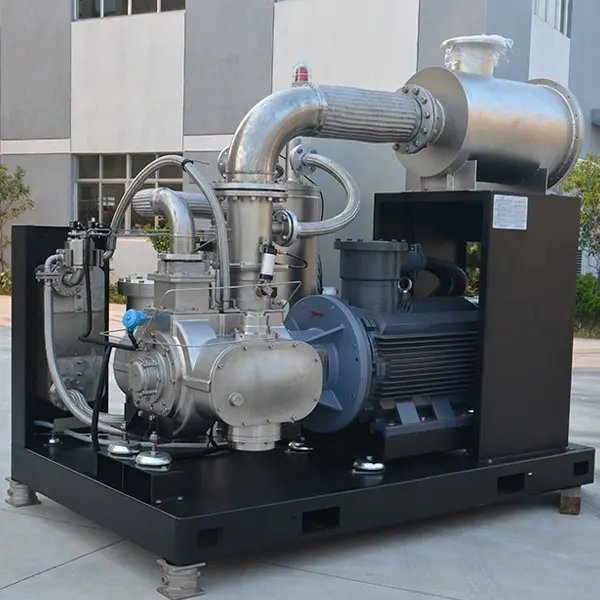
A recurring nightmare for maintenance managers is unexpected metal failure. With hydrogen, this risk amplifies dramatically due to hydrogen embrittlement — a phenomenon where hydrogen atoms diffuse into metals, reducing ductility and causing cracks under stress. Natural gas, being a larger molecule, does not induce this effect. When a standard carbon steel natural gas compressor is exposed to high-pressure hydrogen, catastrophic failures can occur within months. To counter this, hydrogen compressors require high-grade stainless steels, nickel alloys, or special coatings on internal components. Raydafon Technology Group Co.,Limited incorporates proven metallurgical solutions such as 316L stainless steel for high-wear parts and applies proprietary surface treatments that block hydrogen ingress. This extends service life and aligns with safety regulations that procurement managers must prioritize.
If you’ve ever heard a faint hiss near a natural gas compressor, you might tolerate it as minor. With hydrogen, even a barely audible leak can become a serious safety hazard because of its wide flammability range and low ignition energy. Leakage control therefore shifts from a routine maintenance issue to a core design requirement. Hydrogen compressors use advanced sealing technologies such as triple-stage labyrinth seals, magnetic couplings for hermetic designs, and specially formulated O‑rings made from hydrogen-resistant polymers. For procurement managers, specifying a compressor with certified leak rates (e.g., <0.1% of flow) is non-negotiable. Raydafon Technology Group Co.,Limited’s hydrogen compressors are rigorously tested to achieve leak rates that exceed industry norms, giving you confidence during safety audits and daily operations.
Natural gas transmission typically operates around 800–1200 psi, whereas hydrogen applications such as refueling stations routinely demand 5,000–10,000 psi or higher. These elevated pressures fundamentally change compressor thermodynamics. Multi-stage compression with intercooling becomes essential to manage heat and minimize energy consumption. Moreover, hydrogen’s high specific heat causes it to heat up more during compression compared to methane, so efficient cooling strategies become critical. Raydafon Technology Group Co.,Limited designs its Hydrogen Compressor packages with advanced intercooler arrays and variable-speed drives that optimize energy use across varying throughputs. In one recent analysis, a procurement manager reduced his facility’s energy cost by 18% simply by switching to a Raydafon hydrogen-optimized unit, compared to a retrofitted natural gas compressor.
| Parameter | Natural Gas Compressor | Hydrogen Compressor (Raydafon) |
|---|---|---|
| Material of wetted parts | Carbon steel / Cast iron | 316L SS / Nickel alloys |
| Seal technology | Single lip seal | Triple labyrinth + polymer backup |
| Typical discharge pressure | 1,200 psi | Up to 15,000 psi |
| Leakage rate standard | <0.5% | <0.05% |
| Energy efficiency (relative) | Baseline | +15‑20% with optimized cooling |
| Embrittlement resistance | Low | High – certified materials |
Safety is the silent spec in every procurement decision. Hydrogen compression falls under more stringent codes such as ISO 19880‑1 for gaseous hydrogen fueling stations and ASME B31.12 for hydrogen piping. Natural gas compressors follow ASME B31.8 or API 618, which do not fully address hydrogen hazards like permeation and rapid phase changes. Electrical classifications also differ: hydrogen requires ATEX Zone 1 or Class I Division 1 because of its broader explosive limits. When you choose a Raydafon Technology Group Co.,Limited hydrogen compressor, you receive a package pre-certified to these elevated standards, reducing your project’s approval time and insurance complications. This is the kind of practical foresight that experienced buyers appreciate.
Let’s talk numbers without the fluff. A hydrogen compressor will almost certainly have a higher upfront capital cost than a natural gas compressor of comparable power — often 30‑50% more. However, hidden costs emerge if you try to force-fit a natural gas unit. Frequent maintenance, higher energy bills, increased leakage, and potential safety incidents quickly eat into any initial savings. The total cost of ownership (TCO) over a five-year period typically favors a purpose-built hydrogen compressor. Raydafon Technology Group Co.,Limited helps you build a robust TCO model, factoring in spare parts availability, local service support, and energy efficiency guarantees, so your purchasing decision is backed by data, not guesswork.
Downtime in a hydrogen fueling station can cost thousands per hour. Natural gas compressors are known for their robust, predictable maintenance intervals. Hydrogen compressors, due to the demanding environment, require more frequent inspections of seals, valves, and pressure vessels. Still, with intelligent design, these intervals can be optimized. Raydafon Technology Group Co.,Limited builds its compressors with condition-monitoring sensors that track vibration, temperature, and hydrogen concentration in real time. This data feeds into a predictive maintenance dashboard, alerting your team before a minor issue becomes a shutdown. The outcome is reliability that meets, and sometimes even surpasses, that of traditional natural gas installations.
If the difference between compressing hydrogen and natural gas feels daunting, Raydafon Technology Group Co.,Limited makes the transition seamless. Our engineering team doesn’t just supply compressors — we act as your technical partner from specification to commissioning. Every unit is tailored to your flow rate, pressure, and purity requirements, with material selections backed by third‑party certifications. We also offer on-site training for your operations staff so that the safety protocols unique to hydrogen become second nature. By choosing Raydafon, procurement professionals gain a single point of accountability, reduced supply chain risk, and a compressor that’s future-proofed for evolving hydrogen standards.
Why can’t I just use a natural gas compressor for hydrogen temporarily?
Temporary use is extremely risky and not recommended. The molecular size of hydrogen leads to uncontrolled leakage, and within weeks the compressor’s metal components can suffer embrittlement, leading to sudden failure. Even a short test campaign requires a dedicated hydrogen‑rated machine to ensure safety and valid data. Raydafon Technology Group Co.,Limited can provide rental hydrogen compressors for pilot projects, delivering the right solution without any compromise.
Is hydrogen compression more expensive than natural gas compression?
On a unit-by-unit basis, yes, hydrogen compressors have a higher initial price tag. However, when you evaluate total lifecycle costs — including energy, maintenance, downtime, and regulatory compliance — the dedicated hydrogen solution often becomes the more economical choice. Raydafon Technology Group Co.,Limited works with procurement teams to perform detailed TCO analyses, demonstrating that the investment pays back through reliability and lower operational risks.
Understanding how hydrogen compression is different from natural gas compression is no longer just academic — it is a practical necessity for any procurement manager navigating the hydrogen economy. The differences in materials, sealing, pressure, safety, and total cost demand a partner who combines deep technical knowledge with a global supply chain. At Raydafon Technology Group Co.,Limited, we specialize in hydrogen compression systems that bridge the gap between emerging hydrogen demands and proven industrial reliability. For expert consultation or a personalized quotation, contact us at [email protected] or visit our website. Let’s build your hydrogen compression future together.
Schiro, F., Dupont, V., & Ferrasse, J.H. (2022). Comparative life cycle assessment of hydrogen compression technologies. International Journal of Hydrogen Energy, 47(82), 34938‑34952.
Zheng, J., Liu, X., & Xu, P. (2021). Hydrogen embrittlement of pipeline steels: mechanisms and mitigation. Materials Science and Engineering: A, 807, 140846.
Lin, R., & Zhang, P. (2020). Sealing challenges in high-pressure hydrogen compression. Tribology International, 150, 106371.
Mori, D., & Hirose, K. (2019). Hydrogen station cost reduction strategies through compressor innovation. Energy Policy, 134, 110962.
Bhide, S., & Moniz, E.J. (2021). Thermodynamic analysis of multi-stage hydrogen compression for refueling applications. Applied Energy, 287, 116566.
Park, C., & Lee, J. (2020). Material selection for hydrogen compressors: a review of standards and testing. Journal of Mechanical Science and Technology, 34(8), 3291‑3300.
Wei, Z., & Wang, Y. (2019). Energy consumption modelling of ionic liquid hydrogen compressors. Energy Conversion and Management, 184, 511‑520.
Smit, R., & Weeda, M. (2022). Standardization needs for hydrogen compression equipment. Journal of Cleaner Production, 338, 130619.
Matsunaga, T., & Komori, M. (2021). Vibration and noise control in hydrogen reciprocating compressors. International Journal of Precision Engineering and Manufacturing, 22, 1047‑1055.
Urbanczyk, M., & Kaliski, M. (2020). Safety integrity level analysis for hydrogen compression systems. Process Safety and Environmental Protection, 143, 142‑153.