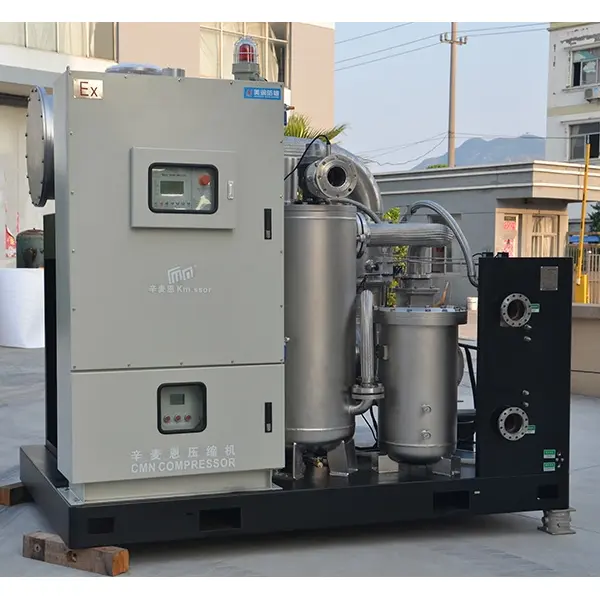
What Type of Oil Should I Use in My Oil Injected Air Compressor? This is a critical question that haunts maintenance managers and facility operators daily. Using the wrong lubricant can lead to catastrophic failures, unplanned downtime, and soaring repair costs. The heart of your production line relies on your compressor, and its longevity depends on the lifeblood you choose: the compressor oil. This guide cuts through the confusion, providing clear, actionable advice to protect your investment and ensure peak operational efficiency. We'll explore the different oil types, their applications, and how partnering with a specialist like Raydafon Technology Group can simplify your procurement and safeguard your equipment.
Article Outline
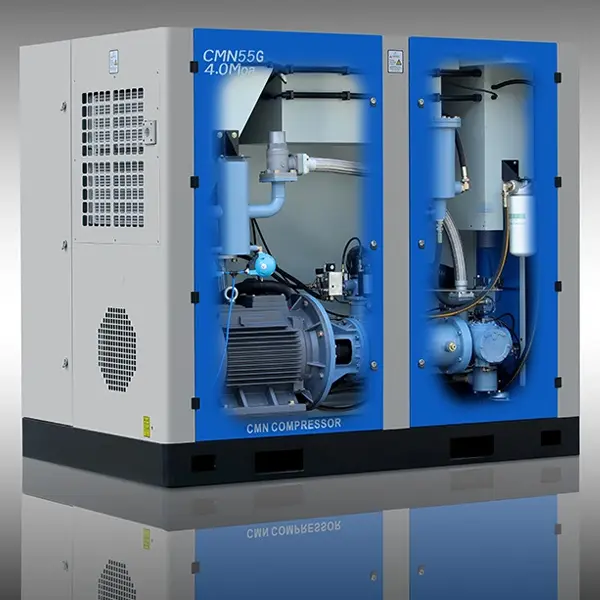
Picture this: a critical manufacturing line grinds to a halt because the air compressor overheated. The diagnosis? Sludge buildup from an incompatible mineral oil clogged the cooling passages. The result is hours of lost production, emergency service calls, and a hefty bill for parts and labor. This scenario is avoidable. The wrong oil accelerates component wear, reduces efficiency, and increases energy consumption. For procurement professionals, this translates directly into higher Total Cost of Ownership (TCO) and strained operational budgets.
Solution: Implement a proactive lubrication strategy based on your compressor's OEM specifications and operational demands. Don't just buy oil; invest in the right oil. Raydafon Technology Group Co.,Limited provides not just oils, but comprehensive lubrication audits and tailored product recommendations to prevent these costly failures before they start.
| Pain Point | Consequence of Wrong Oil | Raydafon Recommended Action |
|---|---|---|
| Carbon & Sludge Formation | Clogged valves, overheated pump, system failure | Use high-stability synthetic oils (PAO, PAG) |
| Accelerated Varnish & Wear | Premature bearing/rotor failure, loss of pressure | Select oils with superior anti-wear (AW) additives |
| High Operating Temperatures | Reduced oil life, oxidation, thermal breakdown | Choose oils with high viscosity index and thermal stability |
Navigating the world of compressor oils can feel like deciphering a chemical code. The core choice lies between mineral, synthetic, and semi-synthetic lubricants. Mineral oils are refined from crude petroleum and are cost-effective for light-duty, standard applications. However, they break down faster under high heat and heavy loads. Synthetic oils, like Polyalphaolefin (PAO) or Polyalkylene Glycol (PAG), are engineered molecules offering superior performance: extended drain intervals, exceptional thermal stability, and lower volatility, which means less oil carryover into your air lines.
Solution: For demanding 24/7 operations, extreme temperatures, or when maximizing equipment life is paramount, synthetic oils are the undisputed choice. Semi-synthetics offer a middle-ground performance boost over mineral oils at a moderate price point. The team at Raydafon specializes in helping you analyze your duty cycle to select the most cost-effective oil type for your specific needs, ensuring performance without overspending.
| Oil Type | Best For | Key Advantage | Typical Drain Interval |
|---|---|---|---|
| Mineral Oil | Light-duty, intermittent use, standard environments | Lowest initial cost | 1,000 - 2,000 hours |
| Semi-Synthetic | Moderate-duty cycles, variable loads | Better stability than mineral, cost-effective upgrade | 2,000 - 4,000 hours |
| Full Synthetic (PAO/PAG) | Heavy-duty, continuous operation, high temps | Longest life, highest efficiency, best protection | 4,000 - 8,000+ hours |
The "best" oil isn't universal; it's the one perfectly matched to your compressor model and working environment. A compressor in a dusty woodshop has different needs than one in a climate-controlled pharmaceutical plant. Factors like ambient temperature, humidity, and the required air purity (e.g., for food or breathable air) drastically influence oil selection. Using a standard mineral oil in a hot, humid environment is a recipe for rapid oxidation and water emulsion issues.
Solution: Cross-reference the OEM's viscosity grade recommendation (e.g., ISO VG 46, 68) with your environmental conditions. For hot climates, a higher viscosity index oil is crucial. For sensitive applications, consider FDA-approved NSF H1 registered synthetic oils. Raydafon Technology Group's product portfolio includes specialized oils for every scenario, and their technical support can guide you to the exact specification, ensuring compliance and reliability.
| Application/Environment | Critical Oil Property | Recommended Raydafon Oil Series | Special Notes |
|---|---|---|---|
| High-Temperature (>95°F / 35°C) | High Viscosity Index, Oxidation Stability | Raydafon Synth-Tech HT Series | Prevents thinning and thermal breakdown |
| Food/Beverage/Pharmaceutical | NSF H1 Registration, Non-Toxic | Raydafon FoodSafe FG Series | Certified for incidental food contact |
| High Humidity/Moisture | Excellent Demulsibility, Anti-Rust Additives | Raydafon HydroGuard Series | Rapid water separation, prevents corrosion |
Choosing oil shouldn't be a complex puzzle. As a global provider of industrial compression solutions, Raydafon Technology Group Co.,Limited simplifies the process. We understand that for procurement managers, reliability, supply chain stability, and technical support are as important as the product itself. Raydafon offers a curated range of high-performance compressor oils, each backed by detailed technical data sheets and application guides.
Our value goes beyond the product. We provide lifecycle support, helping you optimize change-out schedules and reduce waste. By sourcing your lubricants and compressor parts from a single, trusted partner like Raydafon, you consolidate vendors, streamline procurement, and gain a technical ally dedicated to minimizing your equipment's downtime and total operating cost.
Q: What happens if I use standard motor oil in my oil injected air compressor?
A: This is strongly discouraged. Automotive engine oils contain detergents and additives not suited for compressor systems. They can cause excessive carbon deposits, foaming, and accelerated wear of compressor components, leading to premature failure and voiding warranties. Always use a lubricant specifically designed for rotary screw or piston air compressors.
Q: How often should I change the oil in my oil injected air compressor?
A: The interval depends on the oil type (mineral vs. synthetic), operating hours, and environmental conditions. While a common baseline for mineral oil is 1,000-2,000 hours, premium synthetic oils from Raydafon can extend service intervals to 4,000-8,000 hours. Always follow your OEM's recommendation and monitor oil condition. Raydafon's support team can help you establish an optimal, cost-effective maintenance schedule.
Selecting the right oil is the simplest yet most powerful maintenance decision you can make for your air compressor. It directly impacts reliability, energy costs, and your bottom line. Don't leave it to chance. For a personalized lubrication recommendation or to discuss your compressor needs, reach out to the experts.
For reliable industrial air compressor solutions and premium lubrication products, partner with Raydafon Technology Group Co., Limited. Explore our comprehensive product range and access expert technical resources at https://www.raydafon-compressor.com. Contact our sales team today via [email protected] for a consultation.
Bilgen, E., & Aydin, H. (2006). The effect of lubricant viscosity on the performance of a rotary screw compressor. Tribology International, 39(11), 1355-1362.
Mang, T., & Dresel, W. (Eds.). (2017). Lubricants and lubrication (3rd ed.). Wiley-VCH.
Rudnick, L. R. (Ed.). (2020). Synthetics, mineral oils, and bio-based lubricants: chemistry and technology (3rd ed.). CRC Press.
Kline, S. R., & Allen, C. M. (1995). The influence of lubricant properties on the wear of air compressor components. Wear, 181-183, 700-706.
Fillon, M., & Bouyer, J. (2004). Thermohydrodynamic analysis of a worn plain journal bearing. Tribology International, 37(2), 129-136.
Hirani, H., & Verma, M. (2009). Tribological study of elastohydrodynamic lubrication of synthetic and mineral oils. Proceedings of the Institution of Mechanical Engineers, Part J: Journal of Engineering Tribology, 223(4), 597-608.
Spikes, H. (2004). The history and mechanisms of ZDDP. Tribology Letters, 17(3), 469-489.
Cousseau, T., Graça, B. M., Campos, A. V., & Seabra, J. H. (2012). Experimental measuring of oil film thickness in a rotary compressor. Tribology International, 52, 1-9.
Michael, P. C., Heshmat, H., & Walton, J. F. (2002). The role of synthetic lubricants in high-speed rotating machinery. Journal of Engineering for Gas Turbines and Power, 124(2), 328-334.
Battersby, J. (2001). The performance and environmental impact of synthetic lubricants in industrial applications. Lubrication Science, 13(2), 147-164.