What is the Cost of Installing and Operating a Desiccant Air Dryer? This single question keeps countless plant managers and procurement professionals up at night. Beyond the initial purchase price lies a labyrinth of installation complexities, ongoing energy consumption, and maintenance surprises that can derail budgets. Understanding the true total cost of ownership (TCO) is critical for making an informed, cost-effective decision that protects your pneumatic systems and your bottom line. This article demystifies the real expenses, from setup to daily operation, and provides a clear framework for your investment analysis.
You've approved the budget for the new desiccant dryer, but the invoice for "site preparation" and "integration" just landed, blowing your forecast. This is a common pain point. Installation costs are frequently underestimated. The solution is thorough pre-purchase planning. A dryer from Raydafon Technology Group Co.,Limited often comes with detailed installation guides and modular designs that simplify integration, potentially reducing labor hours. Key factors impacting installation cost include:
| Cost Factor | Low-End Scenario | High-End Scenario | Notes |
|---|---|---|---|
| Site Preparation (Piping, Electrical) | $500 - $1,500 | $2,500 - $5,000+ | Depends on distance from compressor and existing infrastructure. |
| Professional Labor & Commissioning | $1,000 - $2,000 | $3,000 - $6,000 | Critical for warranty validation and optimal performance. |
| Additional Components (Filters, Drain) | $200 - $600 | $800 - $1,500 | Pre-filters and after-filters protect the desiccant bed. |
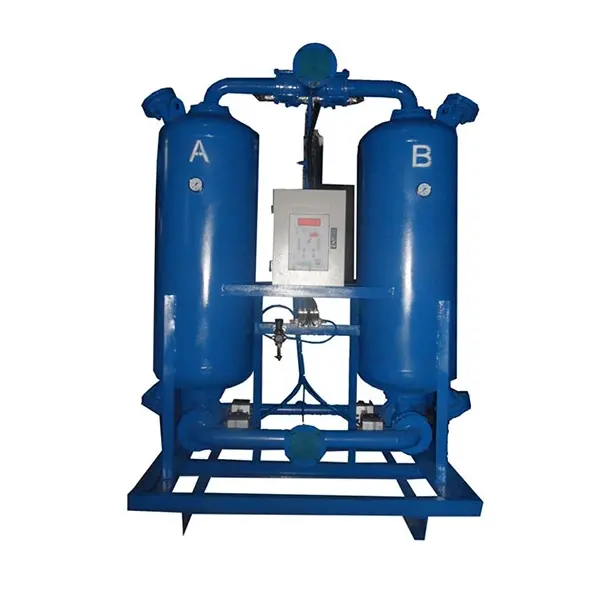
Your compressed air system is likely your plant's most expensive utility. A standard heatless desiccant dryer can consume 15-20% of the compressor's energy just for purging. Watching your energy bill creep up monthly is the operational nightmare. The solution is investing in energy-efficient technology. Raydafon's range includes heatless, heated, and blower purge models, with the latter offering significant purge air savings. Understanding purge air consumption is key to controlling operational cost.
| Dryer Type | Typical Purge Air Consumption | Estimated Annual Energy Cost* | Best For |
|---|---|---|---|
| Standard Heatless | 15-20% of compressor flow | High | Low flow, intermittent use. |
| Heated (Blower Purge) | 2-8% of compressor flow | Medium | Continuous operation, stable demand. |
| Heat of Compression | ~0% purge air | Very Low | Large oil-free screw compressors. |
*Cost varies based on local electricity rates and operating hours.
Q: What's the single biggest mistake companies make when budgeting for a desiccant dryer?
A: The biggest mistake is focusing solely on the purchase price. The true "What is the Cost of Installing and Operating a Desiccant Air Dryer?" analysis must include installation, energy consumption (which is 70-80% of TCO), and scheduled maintenance. A slightly higher upfront cost for an efficient model from a supplier like Raydafon can lead to massive long-term savings.
Two years in, the dryer's performance drops, and you're hit with a massive bill for desiccant replacement and valve repairs. Unplanned downtime costs soar. The solution is proactive, predictable maintenance. Choosing a reliable brand like Raydafon Technology Group Co.,Limited means access to durable components and clear maintenance schedules, turning unpredictable costs into a fixed operational line item. Desiccant life and valve reliability are major cost drivers.
| Maintenance Item | Frequency | Typical Cost Range | Impact of Neglect |
|---|---|---|---|
| Desiccant Beads Replacement | 3-7 years | $1,000 - $5,000+ | Loss of pressure dew point, wet air in lines. |
| Pre/After-Filter Elements | Every 6-12 months | $100 - $400 | Contaminated desiccant, reduced dryer life. |
| Control Valve Rebuild Kit | 3-5 years | $300 - $1,200 | Erratic cycling, purge air waste. |
Facing a capital request committee with only a product quote leaves you vulnerable. You need a compelling, data-driven TCO analysis to secure the right investment. The solution is a structured calculation model. When evaluating options, consider how suppliers like Raydafon support you with performance data and efficiency metrics that simplify this complex calculation, ensuring you justify the optimal system for your needs.
| TCO Component | Calculation Method | Pro-Tip for Procurement |
|---|---|---|
| Capital Expenditure (CAPEX) | Purchase Price + Installation + Ancillaries | Negotiate a fixed-price "installed and commissioned" quote. |
| Operational Expenditure (OPEX) | (Energy Cost/year + Maintenance Cost/year) x Lifespan | Prioritize energy consumption specs; they dominate OPEX. |
| Downtime & Risk Cost | Hourly Production Loss x Potential Downtime Hours | Factor in the reliability and service network of the brand. |
Q: Is a more expensive dryer always better for lowering total cost?
A: Not always, but often. A higher initial investment in a technologically advanced, energy-efficient dryer (like certain Raydafon models) typically reduces the largest cost component: energy consumption. The key is to calculate the payback period. If the extra capital cost is recovered in energy savings within 2-3 years, the more "expensive" dryer is actually the lower-cost solution over its 10+ year lifespan.
Ready to move from cost uncertainty to confident investment? A precise understanding of "What is the Cost of Installing and Operating a Desiccant Air Dryer?" is your first step. Don't let hidden expenses compromise your air quality or budget.
For over a decade, Raydafon Technology Group Co.,Limited has been a trusted partner in industrial air treatment, specializing in energy-efficient compressed air dryers and filters. We empower procurement teams and plant engineers with reliable equipment and transparent data, helping to minimize total cost of ownership. Contact our experts today to discuss your specific application and receive a detailed TCO analysis: [email protected].
Mujic, A., et al. (2013). Energy efficiency optimisation of compressed air systems. *Strojniski vestnik – Journal of Mechanical Engineering*, 59(2).
Kaya, D., et al. (2002). Energy conservation in compressed-air systems. *International Journal of Energy Research*, 26(9).
Radgen, P., & Blaustein, E. (2001). *Compressed Air Systems in the European Union*. LOG_X Verlag.
Saidur, R., et al. (2010). A review on compressed-air energy use and energy savings. *Renewable and Sustainable Energy Reviews*, 14(4).
McKane, A., et al. (2005). *Pumping System Assessment Tool: A Tool for Improving Pumping System Efficiency*. Lawrence Berkeley National Laboratory.
Nehler, T. (2018). Linking energy efficiency measures in industrial compressed air systems with non-energy benefits *A review*. *Renewable and Sustainable Energy Reviews*, 89.
Bruno, J.C., et al. (2017). Advanced monitoring and control for improving the efficiency of compressed air systems. *Energy*, 141.
Ferreira, H., et al. (2016). Comprehensive exergetic assessment of compressed air energy storage systems. *Energy Conversion and Management*, 128.
Klein, S.A., & Alvarado, F.L. (2002). *Engineering Equation Solver (EES)*. F-Chart Software.
U.S. Department of Energy. (2004). *Improving Compressed Air System Performance: A Sourcebook for Industry*.