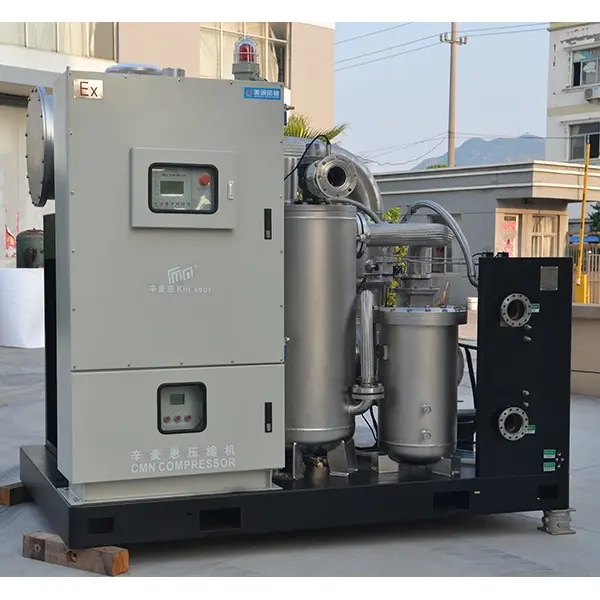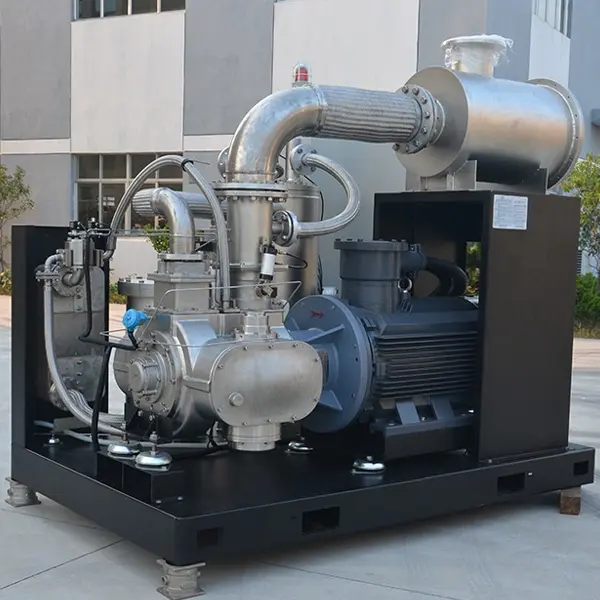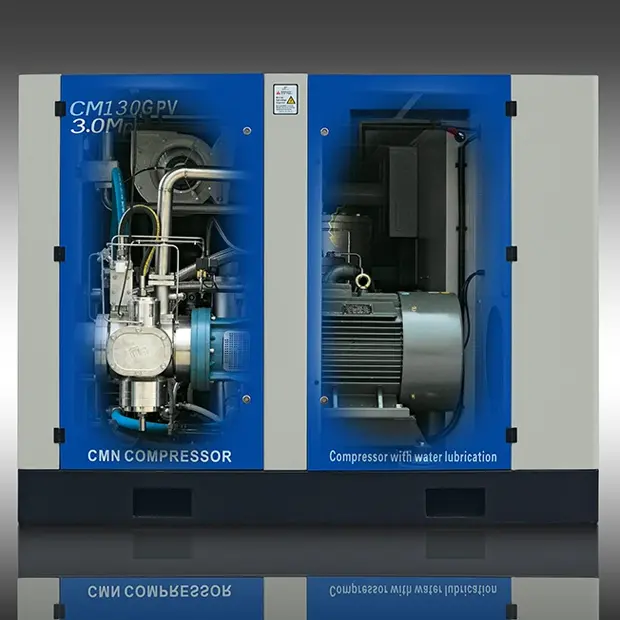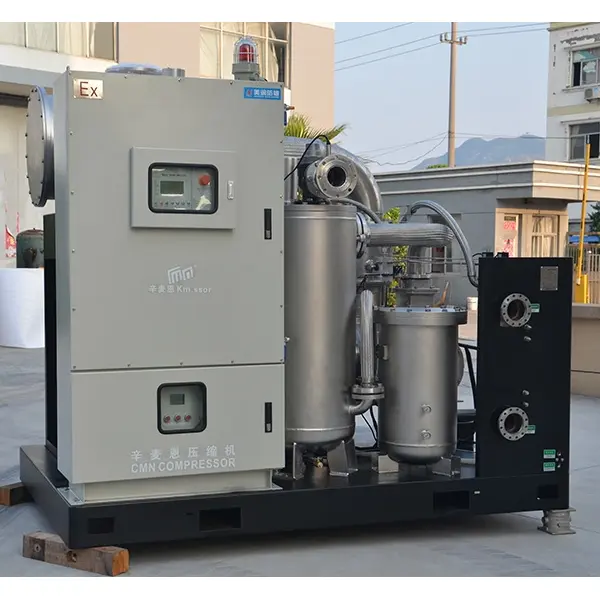
A line is ready, the air audit is signed off, and one item remains: the oil-free scroll package. How Should You Install and Maintain an Oil-Free Scroll Air Compressor System? For buyers, the answer shapes uptime, clean-air compliance, and total cost of ownership. Raydafon Technology Group Co.,Limited supports site planning, commissioning checks, and maintenance schedules.
On this page
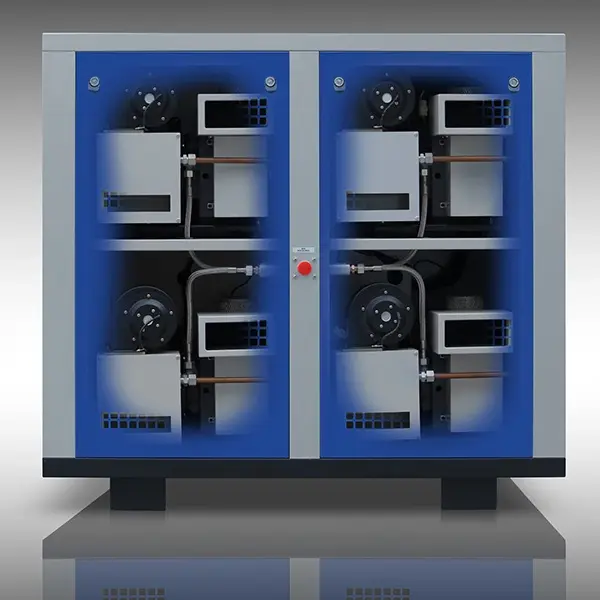
Pain point: A procurement team reserves a corner of a packed utility room, then discovers that heat build-up, dusty inlet air, and blocked service doors turn a clean-air project into a downtime risk.
Solution: Treat the oil-free scroll package as a system, not a box. Confirm ambient temperature, ventilation, inlet-air quality, and service clearance before the unit arrives. Keep the compressor away from steam, solvents, and corrosive gases. Use Raydafon layout drawings to mark filter access, controller sight lines, and drain routes so maintenance can be completed without moving production equipment.
| Parameter | Check Before Order | Why It Matters |
|---|---|---|
| Ambient temperature | Typical 5-40°C, or per Raydafon datasheet | Protects scroll cooling and controller life |
| Room ventilation | Heat exhaust path sized for full load | Prevents high discharge temperature trips |
| Service clearance | Front, side, and top access per manual | Speeds filter and cooler service |
| Inlet air | Cool, dry, low-dust, non-corrosive | Protects air quality and scroll life |
| Foundation | Level, rigid, vibration-isolated | Reduces noise and pipe strain |
Pain point: Rigid piping pulled into place can load the compressor frame, while a shallow drain slope lets condensate sit in the receiver and downstream filters.
Solution: Set the unit on a level base, fit vibration isolation if specified, and use a flexible connector between the compressor and plant piping. Support pipework independently, slope drain lines correctly, and install receiver, dryer, and filters in the right order. Keep bypass options simple so service does not stop the line.
| Parameter | Recommended Practice | Procurement Note |
|---|---|---|
| Base flatness | Level and capable of full wet weight | Request certified layout drawing |
| Vibration control | Pads or mounts per Raydafon specification | Include in civil works scope |
| Pipe connection | Flexible connector; no pipe strain | Confirm flange or thread standard |
| Drain slope | Continuous fall to safe discharge | Plan automatic drain service access |
| Air treatment | Receiver, dryer, and filters sized for duty | Match ISO 8573-1 air class |
Pain point: A new compressor starts, trips after ten minutes, and the team finds reversed rotation, loose terminals, or a pressure band that fights the production cycle.
Solution: Verify supply voltage, earthing, phase sequence, and motor rotation before load testing. Set pressure bands, safety devices, drain timers, and alarm limits to the site duty. Then run a leak test, record current draw, discharge temperature, pressure stability, noise, and dew point, and save the baseline in the service file.
| Parameter | Commissioning Check | Record to Keep |
|---|---|---|
| Supply voltage | Within nameplate tolerance | Voltage and phase reading |
| Earth connection | Secure and tested | Electrical sign-off |
| Rotation | Correct direction before load | Commissioning photo or note |
| Leak test | No leaks at joints and drains | Leak-test result |
| Baseline data | Pressure, temperature, current, noise | Signed commissioning report |
Pain point: Maintenance slips because no one owns the schedule. Dusty inlet filters, blocked cooler fins, and ignored drain valves raise power use and shorten scroll life.
Solution: Build a simple schedule around the Raydafon manual and site conditions. Daily checks catch drains, noise, and pressure drift. Weekly checks protect inlet filters and cooler fins. Longer service stops cover sensors, check valves, grease points, and scroll-set inspection. Keep a spare filter and drain valve on site to avoid waiting for parts.
| Interval | Task | Owner |
|---|---|---|
| Daily | Check pressure, temperature, noise, drains | Operators |
| Weekly | Inspect inlet filter and cooler fins | Maintenance |
| Monthly | Clean drains, check alarms, inspect piping | Maintenance |
| 2,000 hours | Filter service, electrical check, leak survey | Service team |
| 4,000 hours | Valve and sensor review, performance check | Service team |
| 8,000 hours | Scroll-set inspection and major service review | Raydafon service |
Pain point: The compressor is oil-free, but the plant still finds moisture, particles, or pressure drop because the dryer, filters, and leaks were never matched to the real air class.
Solution: Define the ISO 8573-1 class for each process, then select dryer and filter performance to match it. Test pressure dew point, pressure drop, and leak rate after commissioning. Fix leaks before adding another compressor. A clean, tight system lowers energy use and protects the oil-free claim at the point of use.
| Parameter | Target Example | Procurement Action |
|---|---|---|
| Air class | ISO 8573-1 Class 0 or project class | State class on the RFQ |
| Pressure dew point | Match dryer to site and season | Include dryer in scope |
| Leak rate | Find and repair before sign-off | Add leak survey to commissioning |
| Pressure drop | Keep filters and dryers within design | Review layout pressure budget |
| Filter change | Differential pressure or fixed interval | Stock correct filter elements |
Pain point: A low purchase price can hide missing drawings, unclear warranty terms, long spare-parts lead times, and no local service plan.
Solution: Ask for the maintenance manual, wiring diagram, layout drawing, commissioning report template, and spare-parts list before order release. Confirm warranty, response time, training, and recommended first-year spares. Raydafon supports buyers with documentation and service planning so the system can be maintained without guesswork.
| Item | What to Request | Business Value |
|---|---|---|
| Spare kit | Inlet filter, drain valve, sensors, seals as applicable | Reduces downtime risk |
| Documents | Manual, drawings, test report, parts list | Supports audits and training |
| Warranty | Clear terms and service path | Protects lifecycle budget |
| Lead time | Critical parts and service response | Improves planning |
| Training | Daily checks and alarm response | Raises operator confidence |
Keep the inlet cool and clean, preserve service access, and route heat away from the unit. Use a level base, flexible piping, and a drain route that can be reached without dismantling production equipment. In tight rooms, maintenance access often matters more than floor area.
Prepare power supply, earthing, ventilation, drain discharge, receiver, dryer, and filter capacity. Have the Raydafon layout drawing, electrical data, and commissioning checklist ready so the installation team and plant engineer work from the same plan.
Record voltage, rotation, pressure band, current draw, discharge temperature, noise, dew point, leak-test result, and alarm settings. This baseline makes future maintenance decisions faster and gives procurement a clear acceptance record.
Ask for the design description, test report, and air-quality verification method. Confirm that no oil enters the compression chamber and that downstream filters and dryers are sized for the required ISO 8573-1 class. Include acceptance criteria in the purchase order.
Start with inlet filters, drain valves, and the sensors or service kits named in the Raydafon manual. Add items based on duty cycle, ambient dust, and service response time. A small first-year kit is cheaper than an unplanned production stop.
Compare energy use at the real duty point, maintenance intervals, spare-parts prices, service response, warranty terms, and documentation quality. The lowest purchase price can lose on uptime, air quality, and maintenance hours.
Send your air demand, required dew point, ambient conditions, and site layout to the Raydafon team. We will help you review the installation plan, maintenance schedule, and spare-parts list before you release the order.
Raydafon Technology Group Co.,Limited supplies oil-free scroll air compressor systems for procurement teams that need clean air, clear documentation, and dependable service. Share your air demand, dew point, and site constraints at https://www.raydafon-compressor.com or email [email protected]; the team will help you review installation needs, maintenance intervals, and spare-parts planning before you place the order.
Research references
Wang, S., and Chen, L. (2018). Performance analysis of an oil-free scroll air compressor with cooling optimization. International Journal of Refrigeration, 89, 1-10.
Qiu, Y., Zhang, H., and Li, J. (2019). Thermal and mechanical behavior of a scroll compressor for oil-free air supply. Applied Thermal Engineering, 156, 214-225.
Kim, J., Park, S., and Lee, H. (2020). Experimental study on discharge temperature control in oil-free scroll compressors. International Journal of Refrigeration, 112, 45-54.
Liu, Q., Zhao, M., and Sun, Y. (2017). Leakage and efficiency characteristics of scroll compressors for clean compressed air. Proceedings of the Institution of Mechanical Engineers, Part A: Journal of Power and Energy, 231(4), 301-312.
Chen, Y., and Ma, R. (2021). Maintenance planning for oil-free compressed air systems in food production. Journal of Cleaner Production, 280, 124-136.
Singh, A., Kumar, P., and Rao, V. (2016). Energy saving opportunities in industrial compressed air systems: a review. Energy, 114, 1025-1040.
Gao, X., Li, W., and Zhou, F. (2022). Air quality verification for oil-free compressors using ISO 8573-1 classes. Measurement, 188, 110-119.
Park, D., Choi, S., and Yoon, J. (2015). Vibration and noise control for scroll compressor installations. Applied Acoustics, 96, 55-63.
Smith, R., and Brown, T. (2023). Procurement criteria for oil-free compressed air systems in regulated manufacturing. Journal of Purchasing and Supply Management, 29(2), 101-114.
Nakamura, K., Ito, T., and Mori, S. (2014). Scroll compressor service life and bearing lubrication under clean-air duty. Tribology International, 78, 88-97.
-