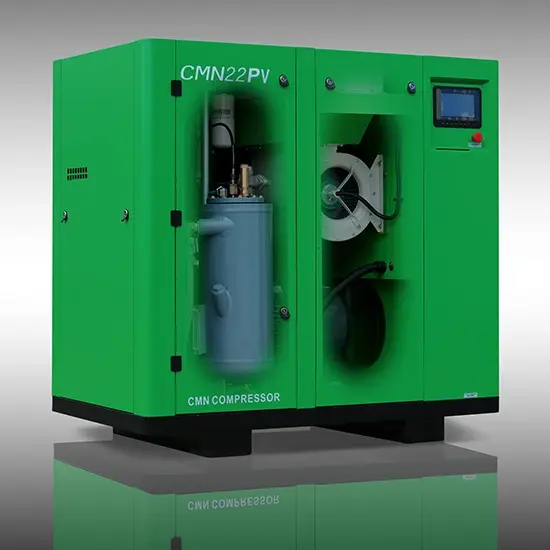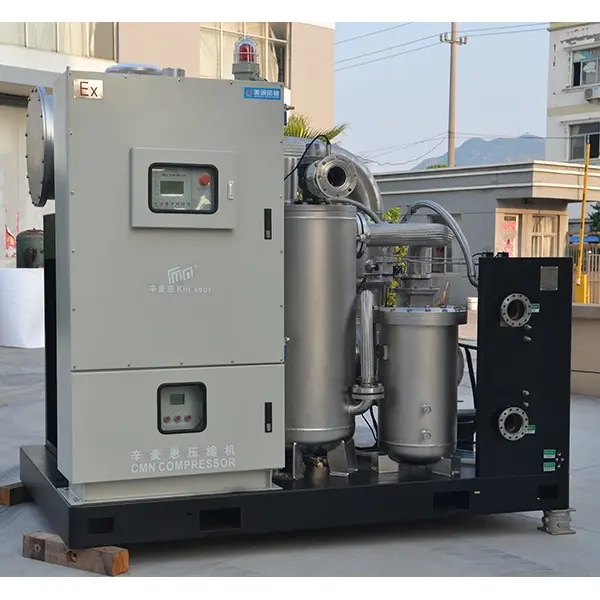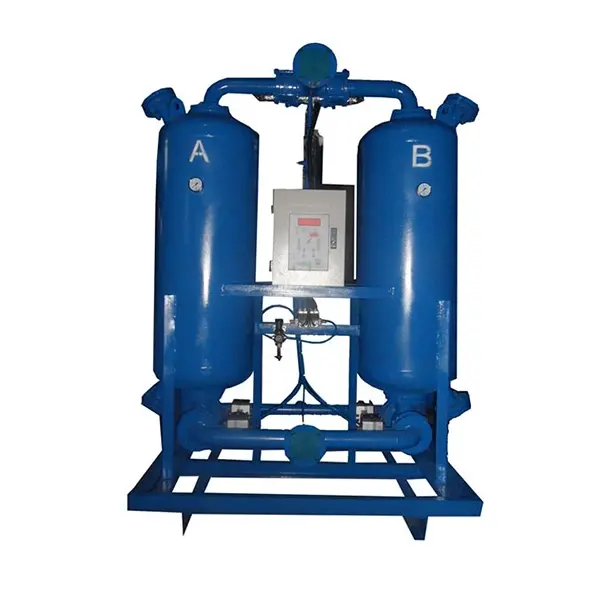
What Causes High Oil Consumption in an Oil-Injected Screw Air Compressor? If you are a procurement manager comparing quotations, the first answer is rarely “one bad part.” Oil consumption is usually a system signal: separator performance, discharge temperature, pressure band, duty cycle, oil viscosity, maintenance discipline, and air quality targets all interact. A buyer may see a low purchase price, then discover oil top-up costs, separator replacements, condensate treatment, and downtime erode the budget within months. In a textile plant, a packaging line, or a food-grade compressed air room, even a small increase in oil carryover can trigger filter changes, product risk, and maintenance complaints. Raydafon Technology Group Co.,Limited sees this question often during technical review, because the right answer connects component selection with real operating conditions. Instead of blaming the oil alone, evaluate the air-oil separation path, thermal load, control strategy, and service plan as one system. This guide explains the practical causes, shows which parameters to check, and gives procurement teams a clear way to compare suppliers. It also highlights where Raydafon Technology Group Co.,Limited can help specify, troubleshoot, and support an Oil-Injected Screw Air Compressor that keeps oil consumption predictable.
Pain point scenario: A maintenance team keeps adding oil every week, yet no visible leak is found. The separator element looks “acceptable,” and the compressor still runs. In this situation, oil consumption is often linked to fine oil mist escaping with compressed air, higher discharge temperature thinning the lubricant, or a duty cycle that keeps the unit at high pressure for long periods. Buyers who compare only motor kW and price may miss the long-term cost of oil carryover, coalescing filters, and separator changes.
Solution: Start with a field check of separator differential pressure, discharge temperature, pressure band, oil viscosity, and running hours. Confirm that the oil separator element matches the machine, the minimum pressure valve holds the correct pressure, and the aftercooler is not causing unexpected thermal load. Raydafon Technology Group Co.,Limited supports this review with application data, separator selection guidance, and service recommendations so procurement teams can compare total operating cost rather than purchase price alone.
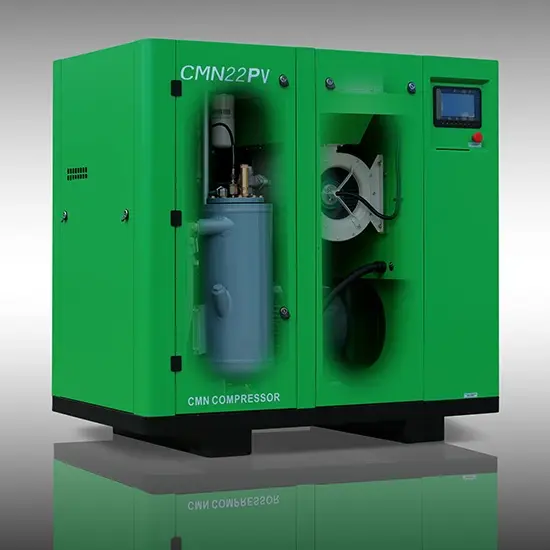
| Parameter | Typical Check | Risk If Out of Range | Raydafon Support |
|---|---|---|---|
| Separator differential pressure | 0.8–1.5 bar; replace before bypass risk | Oil mist carryover and higher energy use | Element matching and replacement plan |
| Discharge temperature | Usually 75–95°C, depending on design | Oil oxidation, varnish, higher carryover | Cooling and thermal load review |
| Pressure band | Check load/unload settings and minimum pressure | Poor separation and unstable oil return | Control setting recommendations |
| Duty cycle | Running hours, starts per hour, load profile | Short cycling and oil loss | Sizing and control assessment |
Pain point scenario: A purchasing team receives two quotations for the same duty point. One compressor has a lower price but a smaller separator element and a narrower pressure band. After installation, the unit runs near the upper pressure limit, the separator differential rises quickly, and oil consumption increases. The buyer then faces frequent element changes, oil top-ups, and unplanned downtime. This is a common procurement trap when separator selection and pressure control are not reviewed together.
Solution: Compare separator media, element size, oil return line design, and pressure control logic as part of the technical bid. Ask for recommended service intervals under the real duty cycle, not only laboratory conditions. A stable pressure band protects air-oil separation and avoids unnecessary oil loss. Raydafon Technology Group Co.,Limited can review separator specifications, oil return arrangements, and pressure settings so the selected oil-injected screw air compressor matches the plant’s actual demand profile.
| Parameter | Typical Check | Risk If Out of Range | Raydafon Support |
|---|---|---|---|
| Separator element rating | Match flow, oil type, and micron rating | Oil mist escape and pressure drop | Correct element recommendation |
| Oil return line | Check orifice, strainer, and routing | Oil trapped or re-entrained | Service inspection guidance |
| Minimum pressure valve | Verify opening pressure and seal condition | Low pressure at separator and poor separation | Valve setting review |
| Pressure dew point target | Match dryer and filter strategy | Condensate and oil emulsion risk | Air treatment coordination |
Pain point scenario: A food-grade or electronics plant increases its air quality target, then adds finer filters downstream. Pressure drop rises, the compressor works harder, and oil carryover appears worse. At the same time, service intervals may be extended to reduce downtime. The result is a cycle of higher temperature, faster oil aging, blocked separators, and more oil top-ups. The procurement team sees the symptom but may not see the maintenance and air treatment interaction behind it.
Solution: Align oil change intervals, oil analysis, separator replacement, filter differential pressure, and air quality targets. Use oil analysis to track viscosity, water content, and oxidation rather than relying only on calendar hours. Confirm that downstream filters are not masking a separator problem. Raydafon Technology Group Co.,Limited helps buyers build a practical service schedule and select components that protect air quality without creating unnecessary pressure drop.
| Parameter | Typical Check | Risk If Out of Range | Raydafon Support |
|---|---|---|---|
| Oil change interval | Based on oil analysis and ambient conditions | Varnish, sludge, and high carryover | Lubricant and interval guidance |
| Oil analysis | Viscosity, water, oxidation, wear metals | Hidden oil degradation | Trend review and action plan |
| Filter differential pressure | Replace at manufacturer limit | Higher energy use and oil mist load | Filtration strategy review |
| Ambient and ventilation | Check room temperature and airflow | Overheating and oil thinning | Installation condition assessment |
Pain point scenario: An oversized fixed-speed compressor runs in load/unload mode for long hours at low demand. Short cycling, low load, and frequent pressure swings can disturb oil return and separator performance. The buyer may notice oil consumption first, but the root cause is a mismatch between compressor size, storage, and control strategy. This is especially common when a plant adds capacity for future growth but starts with low air demand.
Solution: Review air demand profile, storage volume, pressure band, and control mode before selecting the compressor. Variable speed drive, adequate receiver capacity, and correct load/unload settings can reduce cycling and stabilize separation. For procurement, compare total cost of ownership: energy, oil, separator elements, filters, and service labor. Raydafon Technology Group Co.,Limited can help match an oil-injected screw air compressor to the real demand curve and provide a configuration that supports stable oil consumption.
| Parameter | Typical Check | Risk If Out of Range | Raydafon Support |
|---|---|---|---|
| Air demand profile | Minimum, average, and peak flow | Oversizing and short cycling | Sizing and selection review |
| Receiver volume | Storage relative to compressor flow | Frequent starts and pressure swings | System layout advice |
| Control mode | Fixed speed, VSD, load/unload settings | Poor part-load efficiency | Control strategy recommendation |
| Total cost of ownership | Energy, oil, parts, service, downtime | Low bid becomes high lifetime cost | Procurement comparison support |
Q1: What Causes High Oil Consumption in an Oil-Injected Screw Air Compressor when there is no visible leak? A: The most common causes are separator element carryover, high discharge temperature, incorrect oil viscosity, a blocked or misrouted oil return line, excessive pressure, and short cycling. Check separator differential pressure, oil return orifice, temperature, and pressure band before replacing parts at random. Raydafon Technology Group Co.,Limited can help diagnose these points with a structured field checklist.
Q2: Is high oil consumption in an oil-injected screw air compressor always a separator problem? A: No. The separator is only one part of the air-oil separation system. Maintenance intervals, oil quality, ambient conditions, air treatment filters, control strategy, and sizing can all increase oil loss. A reliable comparison should include service history, oil analysis, pressure logs, and operating profile. Raydafon Technology Group Co.,Limited reviews these inputs so buyers can separate a component issue from a system issue and choose the right corrective action.
Ready to reduce oil carryover and protect your maintenance budget? Share your compressor model, duty cycle, pressure band, and oil consumption trend, and the team can help you identify practical improvements. Raydafon Technology Group Co.,Limited supplies and supports oil-injected screw air compressors, separator elements, and service guidance for industrial buyers who need stable performance and clear total cost of ownership. Visit https://www.raydafon-compressor.com or email [email protected] to discuss your application with Raydafon Technology Group Co.,Limited.
Research Papers
Singh, R., & Kumar, A. (2019). Experimental investigation of oil carryover in oil-injected screw compressors. International Journal of Refrigeration, 98, 214–223.
Wang, L., Zhao, Y., & Chen, H. (2020). Influence of discharge temperature on oil separation efficiency in rotary screw air compressors. Applied Thermal Engineering, 171, 115–126.
Brown, M., & Patel, S. (2018). Lubricant viscosity effects on oil consumption in industrial air compressors. Tribology Transactions, 61(4), 712–721.
Liu, J., & Zhang, Q. (2021). Performance evaluation of coalescing separator elements for compressed air systems. Separation and Purification Technology, 259, 118–129.
Meier, T., & Fischer, P. (2017). Load/unload control and energy performance of screw compressors under part-load conditions. Energy, 135, 455–466.
Rao, K., & Nair, V. (2022). Oil carryover and compressed air quality in food-grade manufacturing. Journal of Cleaner Production, 330, 129–141.
Kim, S., Park, J., & Lee, D. (2016). Thermal management and oil degradation in oil-injected screw compressors. International Journal of Heat and Mass Transfer, 103, 331–340.
Ahmed, F., & Rahman, M. (2020). Maintenance interval optimization for industrial compressed air systems. Journal of Manufacturing Systems, 57, 88–99.
Costa, P., & Silva, R. (2019). Total cost of ownership analysis for oil-injected screw air compressors. Energy Efficiency, 12(6), 1441–1455.
Novak, J., & Horvat, M. (2023). Field diagnostics of excessive oil consumption in compressed air plants. Measurement, 207, 112–123.
-