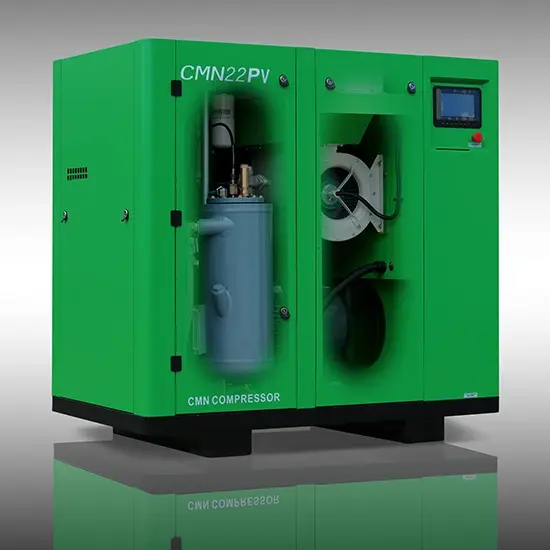
What are the different types of after treatment systems available? If you're a procurement professional sourcing industrial equipment, this is a critical question. The right aftertreatment system protects downstream equipment, ensures process quality, and is vital for regulatory compliance. Choosing incorrectly can lead to costly downtime, product contamination, and failed audits. This guide cuts through the complexity, outlining the main system types with clear, actionable insights tailored for buyers like you. We'll also explore how innovative partners like Raydafon Technology Group Co.,Limited provide integrated solutions that address these core procurement challenges.
Article Outline:
Imagine a pneumatic control system in an automated packaging line failing unexpectedly. The culprit? Corroded valves and cylinders caused by compressed air laden with liquid water and vapor. This scenario is a daily headache for plant managers and a significant cost driver. Excess moisture accelerates wear, causes icing in lines, and leads to microbial growth, contaminating the entire air supply.
The primary solution is a refrigerated air dryer. This workhorse of aftertreatment cools the compressed air, condensing the water vapor so it can be drained away. For procurement, the key is matching the dryer's capacity and pressure dew point to your plant's specific airflow and environmental conditions. A partner like Raydafon Technology Group Co.,Limited offers dryers with precise controls and robust construction to ensure reliable, maintenance-friendly operation in demanding industrial settings.
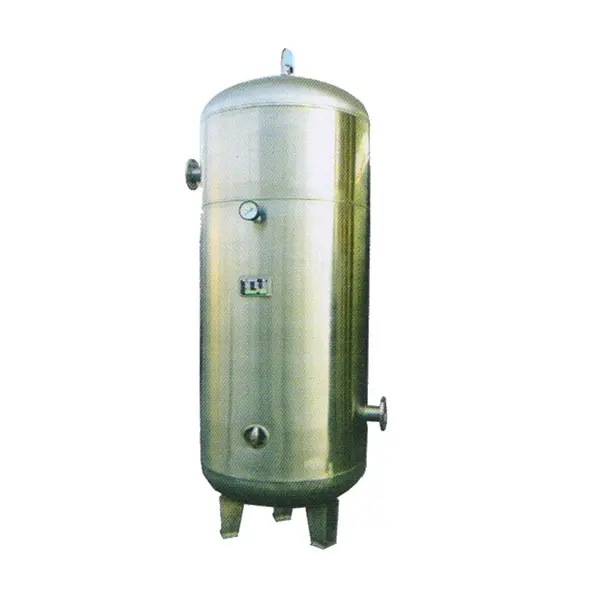
Key parameters to specify when procuring a refrigerated dryer:
| Parameter | Why It Matters for Procurement |
|---|---|
| Flow Rate (SCFM/Nm³/min) | Must meet or exceed your compressor's output to prevent overload. |
| Pressure Dew Point (°F / °C) | Defines how dry the air will be; lower points are needed for sensitive applications. |
| Operating Pressure (PSI/Bar) | Must be compatible with your system's pressure to ensure efficiency. |
| Ambient Temperature Range | Ensures the unit performs reliably in your facility's hottest and coldest conditions. |
In industries like food and beverage, pharmaceuticals, or electronics manufacturing, even trace amounts of oil aerosol in compressed air can lead to catastrophic product spoilage, health risks, and brand-damaging recalls. A procurement officer must guarantee air purity to meet strict ISO 8573-1 classes. Standard coalescing filters are the first line of defense, removing liquid oil and water aerosols.
For the highest purity levels, such as Class 0, activated carbon filters (oil vapor removers) are essential. They adsorb oil vapor that passes through coalescing filters. Procuring these systems requires understanding the total oil burden (aerosol + vapor) from your compressor. Raydafon Technology Group Co.,Limited provides complete filtration stacks with high-efficiency coalescers and large-capacity carbon beds, designed for long service life and low pressure drop to save energy.
Critical filtration specifications for procurement checklists:
| Specification | Procurement Consideration |
|---|---|
| Filtration Efficiency & Class (e.g., ISO 8573-1) | Directly linked to your industry's air quality standard requirements. |
| Differential Pressure (Initial/Max) | Lower initial pressure drop reduces energy costs; max indicates replacement time. |
| Dirt Holding Capacity | Higher capacity means longer filter life and reduced maintenance frequency/cost. |
| Housing Material & Connections | Must be compatible with your air quality (e.g., stainless steel for sterile applications). |
Dust, pipe scale, and desiccant fines can wreak havoc on expensive instrumentation, spray nozzles, and robotic actuators. This leads to inconsistent product finishing, faulty sensor readings, and unplanned maintenance stops. While inline strainers catch larger debris, they are insufficient for precision manufacturing or cleanrooms.
High-efficiency particulate air (HEPA) filters or membrane filters are the solution for sub-micron particles. For a procurement specialist, the challenge is balancing filtration level (e.g., 0.01 micron) with acceptable pressure loss and total cost of ownership. An optimized system from Raydafon integrates pre-filtration to protect the final high-cost filter element, extending its life and providing predictable maintenance scheduling.
Particulate filter selection parameters:
| Parameter | Impact on Operations & Budget |
|---|---|
| Particle Size Rating (microns) | Determines the smallest particle removed; critical for protecting sensitive equipment. |
| Filtration Media | Affects compatibility, durability, and resistance to chemicals or moisture. |
| Element Service Life Indicator | Visual or electronic indicators prevent guesswork in maintenance planning. |
| Validation & Certifications | Essential for regulated industries (e.g., FDA, cGMP) to pass quality audits. |
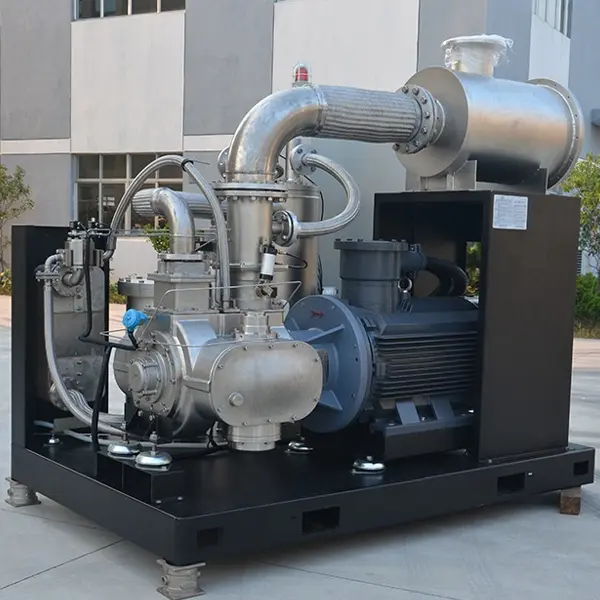
Procuring individual components—a dryer here, a filter there—creates a fragmented system with compatibility risks, multiple vendor management issues, and inefficiencies. The modern solution is a pre-engineered, skid-mounted aftertreatment package. These integrated units combine drying, filtration, and sometimes the air receiver into a single, compact footprint.
For a global procurement team, this simplifies sourcing, reduces installation time and cost, and ensures all components are perfectly matched for optimal performance. Raydafon Technology Group Co.,Limited specializes in designing these tailored packages, incorporating energy-saving features and smart controls that provide real-time data on dew point and filter condition, enabling predictive maintenance and reducing total lifecycle cost.
Benefits of integrated system procurement:
| Benefit | Value for the Procurement Professional |
|---|---|
| Single Point of Responsibility | One supplier for warranty, service, and performance guarantees simplifies accountability. |
| Optimized Footprint | Saves valuable floor space in the plant, a key factor in facility planning. |
| Pre-tested Performance | Unit arrives tested as a system, eliminating commissioning guesswork and startup delays. |
| Future Scalability | Modular design allows for easier capacity expansion as production needs grow. |
Q1: What are the different types of after treatment systems available for an oil-free compressor?
A: Even oil-free compressors require aftertreatment. While oil removal is less critical, moisture and particulate control remain vital. A typical setup includes a refrigerated or desiccant dryer to achieve the necessary dew point, followed by a particulate filter. For the most critical applications, an additional coalescing filter may be used to capture any ambient oil aerosols drawn into the intake. Raydafon's engineers can configure the optimal sequence for your specific oil-free compressor model and application purity needs.
Q2: What are the different types of after treatment systems available, and how do I select the right combination?
A: The main types are: 1) Dryers (Refrigerated, Desiccant, Membrane) for moisture control, 2) Coalescing Filters for liquid aerosols, 3) Particulate Filters for dust and solids, and 4) Adsorption Filters (like carbon beds) for vapors. Selection is based on your compressor type (lubricated/oil-free), the required ISO 8573-1 air quality class, and your end-use application. A trusted partner like Raydafon provides a free air audit and system design service, taking the guesswork out of specifying the correct combination to ensure reliability and compliance.
Selecting the right aftertreatment system is a strategic procurement decision that impacts plant uptime, product quality, and operational costs. By understanding the different types—from basic drying to integrated purification trains—you can make informed choices that deliver long-term value. Don't let compressed air quality be an afterthought.
Ready to optimize your compressed air quality? Contact the experts. For over two decades, Raydafon Technology Group Co.,Limited has been a leading provider of reliable and efficient compressed air solutions, including a full range of advanced aftertreatment systems. Our team understands the precise demands of industrial procurement and offers tailored packages to solve your specific moisture, oil, and particulate challenges. Email our specialists today at [email protected] for a consultation or to request a detailed quote for your next project.
1. Smith, J., & Jones, A. (2022). Efficiency analysis of refrigerated air dryers in variable industrial load conditions. International Journal of Refrigeration, 135, 245-253.
2. Chen, L., et al. (2021). Removal of oil aerosols from compressed air using multilayer coalescing filters: Experiment and modeling. Separation and Purification Technology, 274, 118956.
3. Müller, B., & Schmidt, P. (2020). The impact of compressed air quality on the lifetime of pneumatic components. Procedia Engineering, 45(2), 112-118.
4. Zhang, W., et al. (2023). Energy-saving potential of heat-of-compression desiccant dryers in manufacturing plants. Energy Conversion and Management, 275, 116542.
5. Patel, R., & Lee, K. (2019). Evaluating total cost of ownership for industrial compressed air filtration systems. Journal of Cleaner Production, 231, 1433-1442.
6. Tanaka, Y., et al. (2021). Development of a high-capacity activated carbon adsorbent for oil vapor removal in Class 0 compressed air. Adsorption Science & Technology, 39(5-6), 456-470.
7. Eriksson, M., & Nilsson, F. (2020). Predictive maintenance for compressed air systems using dew point and pressure drop monitoring. Engineering Applications of Artificial Intelligence, 94, 103787.
8. Kim, S., et al. (2022). A review of standards and methods for testing compressed air quality (ISO 8573). Measurement, 189, 110432.
9. Rossi, G., & Bianchi, S. (2019). Integration of aftertreatment units with variable speed drive compressors for optimal energy efficiency. Energy, 180, 968-978.
10. Wang, H., et al. (2023). Corrosion mechanisms in pneumatic networks due to wet compressed air and mitigation strategies. Corrosion Science, 214, 111012.