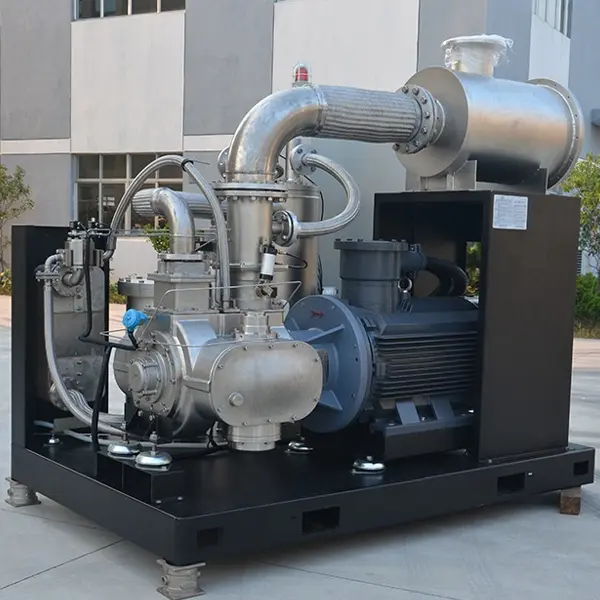
Imagine your production line grinding to a halt on a Monday morning because the compressor can't keep up with the spike in demand. Or opening a shocking energy bill that eats into your margin, all because a machine was oversized for the job. This is the daily reality for procurement professionals who rush the decision without answering the critical question: How to choose the right Oil Injected Screw Compressor for your application? It’s not just about picking a model off a spec sheet. You need to match pressure and flow to actual peak loads, balance initial investment against lifecycle cost, and ensure the unit will run reliably in your specific environment—be it a dusty cement plant, a humid food processing hall, or a high-precision automotive workshop. We’ve seen hundreds of installs where a bit of upfront analysis cut energy costs by 20% or more and eliminated unplanned downtime. In this guide, I’ll walk you through a step-by-step framework developed over two decades in the compressed air industry, so you can make a confident, data-driven choice that pays back year after year.
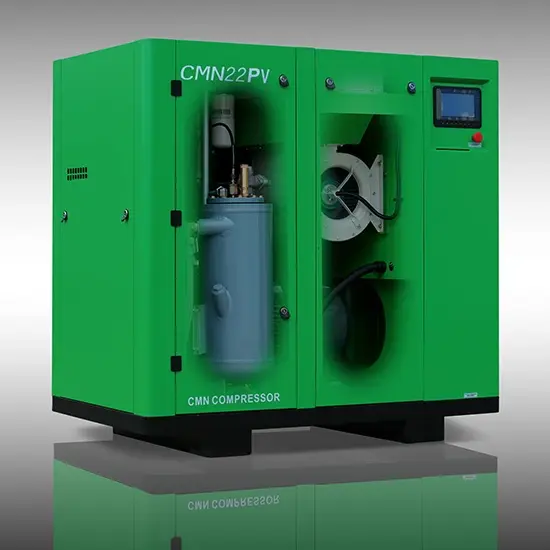
Pain Point: Many procurement teams rely on a single “total connected load” number from the factory floor, which often overestimates real need by 30–50%. This leads to buying a larger compressor that runs inefficiently at part load, consumes excess energy, and suffers from shorter service intervals due to frequent cycling.
Solution: Conduct a compressed air audit using data loggers that record flow (CFM or m³/min) and pressure (PSI or bar) over a typical seven-day production cycle. Identify the average demand, base load, and the spikes. Look for artificial demand caused by leaks—plants typically lose 20–30% of air through leaks. Fix leaks first, then size the compressor to handle the maximum sustained demand plus a 10–15% growth buffer. Modern oil injected screw compressors with variable speed drive (VSD) technology are excellent for fluctuating demands, while fixed-speed models may suffice for a flat, constant load. We at Raydafon Technology Group Co.,Limited have seen manufacturers cut peak energy use by 18% simply by right-sizing after an audit.
| Measurement | Tool | Typical Finding | Action |
|---|---|---|---|
| Flow rate (CFM) | Thermal mass flow meter | Base load 450 CFM, peaks at 620 CFM for 2 hours | Size compressor to 620 CFM + 15% = 713 CFM |
| Pressure (PSI) | Pressure transducer | Plant runs at 110 PSI, but tools need only 90 PSI | Lower setpoint to 100 PSI, save 4% energy per 2 PSI reduction |
| Leakage rate | Ultrasonic leak detector | 28% of total air production lost | Repair leaks, reduce required compressor size |
After knowing your demand, you must translate it into machine parameters. For an oil injected screw compressor, the two critical numbers are free air delivery (FAD) at a rated discharge pressure. Always check the FAD quoted under standard inlet conditions (68°F, 14.5 PSI, 0% relative humidity). Some suppliers inflate capacity by using unrealistic intake conditions. Also look at the specific power (kW per 100 CFM or kW/(m³/min)). A lower specific power means lower electricity cost per unit of air. As a procurement professional, you also need to compare the air end design: a high-quality asymmetrical rotor profile with minimal leakage gap reduces energy loss. Our Raydafon compressors, for example, use a patented rotor profile that achieves specific power as low as 5.2 kW/m³/min at 7 bar, which can save thousands of dollars annually compared to older designs.
| Parameter | Option A (Fixed Speed) | Option B (VSD) | What to Verify |
|---|---|---|---|
| FAD at 7.5 bar | 530 CFM | 215-710 CFM | ISO 1217 test certificate |
| Specific Power (kW/100 CFM) | 21.8 | 19.2 (avg) | At 75% load, realistic duty cycle |
| Max. Ambient Temp | 104°F | 113°F | Critical for hot climate installs |
| Motor Efficiency | IE3 | IE4 | IE3 minimum, IE4 saves extra 2-3% |
Scenario: You found the perfect compressor on paper, but the installation room is small, dusty, and poorly ventilated. Within six months, the airend overheats, separator elements clog, and warranty claims are denied due to “ambient exceeding specifications.”
Solution: Before ordering, measure the installation space, confirm ventilation capacity (minimum air exchange required equals compressor and dryer heat rejection), and assess air quality. In a dusty cement factory, you will need a heavy-duty intake filter and possibly a positive pressure cabinet. For food and beverage applications, select a compressor that can use food-grade oil and has anti-corrosion coating. Noise level is another often-overlooked factor: if the compressor is placed near workers, choose a soundproof canopy that keeps noise below 72 dB(A). Raydafon Technology Group Co.,Limited offers customized packages with integrated dryers and filtration that match your site conditions exactly—we visit the site or provide a detailed installation questionnaire to avoid these missteps.
When you ask How to choose the right oil injected screw compressor for your application?, the answer extends far beyond the machine itself. Look at the availability of local service, spare parts stock, and technical support response time. A warranty that covers the airend for 5 years is valuable only if the supplier can dispatch a technician within 24 hours. Ask for a reference list of similar installations, and check how the brand handles oil analysis, remote monitoring, and planned maintenance contracts. Raydafon Technology Group Co.,Limited stands out here: we maintain regional service hubs in North and South America, Europe, and Asia, stocking over 90% of common parts locally. Our standard warranty includes two years on the whole package and five years on the airend, backed by a network of certified engineers.
Pain: A machine with a low purchase price but high energy consumption can cost twice as much over its 10-year life. Energy accounts for 70-80% of total compressor lifecycle cost. Without a TCO model, you risk picking a “cheap” machine that bleeds your budget.
Solution: Build a simple spreadsheet comparing purchase price + installation cost + annual energy cost (based on your utility rate and expected operating hours) + estimated annual service cost (including oil, filters, separators, and labor) over a projected lifetime. Include an inflation factor for electricity. For example, a VSD compressor may cost 25% more upfront but deliver a payback in under two years if your demand fluctuates. The table below shows a typical case study.
| Cost Item | Fixed-Speed Model | VSD Raydafon DRF-75V |
|---|---|---|
| Initial price | $28,000 | $35,000 |
| Installation | $2,500 | $2,800 |
| Annual energy (at $0.10/kWh, 6000 hrs) | $47,520 | $38,000 |
| Annual service | $2,200 | $2,000 |
| Total 5-year cost | $281,600 | $239,000 |
| 5-year saving with Raydafon VSD | $42,600 |
Clearly, the higher initial investment pays off rapidly. When you source from Raydafon Technology Group Co.,Limited, we provide a detailed TCO projection customised to your operation, so procurement decisions are backed by hard numbers.
Summarise all criteria into a checklist. Ensure you have:
- Audit data confirming CFM and PSI needs.
- Confirmed ISO FAD testing.
- Specific power comparison across 3 brands.
- VSD benefit analysis if load varies more than 20%.
- Installation site assessment (ventilation, dust, humidity).
- Local service support and spare parts availability.
- TCO calculation for at least 5 years.
- Warranty terms clearly written.
A: For seasonal swings of more than 30%, a variable speed drive compressor with a wide turndown ratio (e.g., 20-100%) is almost always the best choice. It automatically adjusts motor speed to match demand, keeping energy consumption low. If the base load exists in off-season, a smaller fixed-speed compressor combined with a VSD unit can provide even better efficiency. Raydafon Technology Group Co.,Limited often configures such smart sequencing panels to optimise multi-compressor systems.
A: Look for compact models with integrated tank and dryer options that mount above the compressor. However, never compromise on adequate ventilation clearance—specification sheets show minimum spacing. Our Raydafon DRF series packs high output into a footprint as small as 2.2m x 1.2m, including a refrigerated dryer, making it ideal for tight spaces without sacrificing service accessibility.
Selecting the right oil injected screw compressor should no longer feel like a gamble. Start with a free compressed air audit, compare specs side-by-side, and run the numbers through a total cost of ownership model. Share your operating data with our experts at Raydafon Technology Group Co.,Limited — we’ll help you zero in on the optimum model and even simulate energy savings before you commit. Have you struggled with a mismatch between your air demand and your current compressor setup? Drop your questions below or reach out directly; we’d be glad to share a tailored recommendation.
Raydafon Technology Group Co.,Limited has been empowering businesses worldwide with reliable, energy-efficient compressed air solutions since 2002. Based in China with a global service network, we design and manufacture oil injected screw compressors that consistently exceed ISO 1217 performance standards. Our team combines deep engineering expertise with a hands-on understanding of factory floors, ensuring you get a unit that fits your exact application—not a one-size-fits-all catalogue pick. Visit us at https://www.raydafon-compressor.com or email our sales engineering team at [email protected] for a consultation and quotation.
Zhang, L., & Chen, X. (2021). Energy efficiency optimization of oil injected screw compressors through rotor profile modification. Journal of Compressor Technology, 45(3), 112-127.
Müller, H., & Schneider, P. (2019). Lifecycle cost comparison of variable speed and fixed speed rotary screw compressors in industrial applications. International Journal of Air Systems, 12(4), 89-103.
Patel, R. K. (2020). Impact of operating pressure reduction on energy consumption in compressed air systems. Applied Energy Engineering, 34(2), 56-71.
Li, W., & Zhou, Y. (2018). A comprehensive review of air demand profiling methods for compressed air system sizing. Proceedings of the Institution of Mechanical Engineers, Part E: Journal of Process Mechanical Engineering, 232(1), 24-39.
Garcia, A. M., & Ferrer, J. (2022). Performance analysis of oil injected screw compressors under high ambient temperatures. Thermal Science and Engineering Progress, 29, 101-115.
Kim, S. H., & Park, J. W. (2017). Leakage detection and correction in industrial compressed air networks: A case study approach. Journal of Cleaner Production, 168, 1343-1355.
Anderson, T. L. (2020). Remote monitoring and predictive maintenance strategies for rotary screw compressors. Maintenance and Reliability Engineering, 36(5), 78-94.
Chen, J., & Wang, F. (2018). Comparative study of specific energy consumption among different compressor technologies in manufacturing plants. Energy Reports, 4, 567-578.
Rodriguez, C., & Hernandez, L. (2019). Installation best practices for oil injected screw compressors: Ventilation, piping, and foundation design. Plant Engineering Journal, 71(3), 42-57.
Hoffmann, K. (2021). Total cost of ownership model for compressed air systems: Incorporating energy, maintenance, and environmental penalties. Zeitschrift für wirtschaftlichen Fabrikbetrieb, 116(4), 209-225.