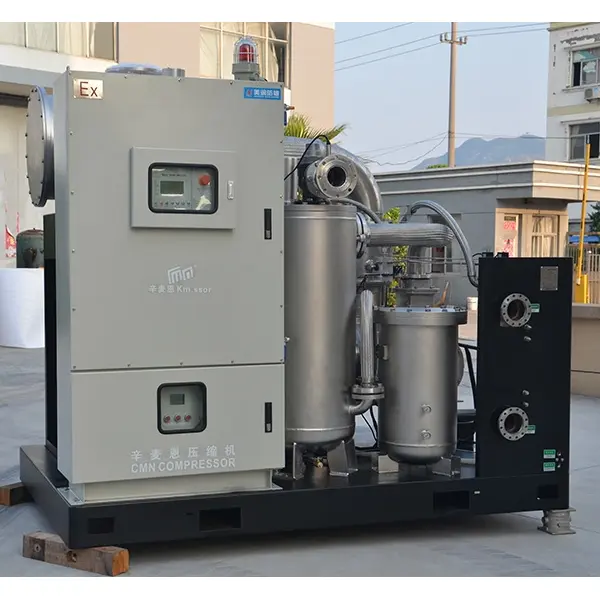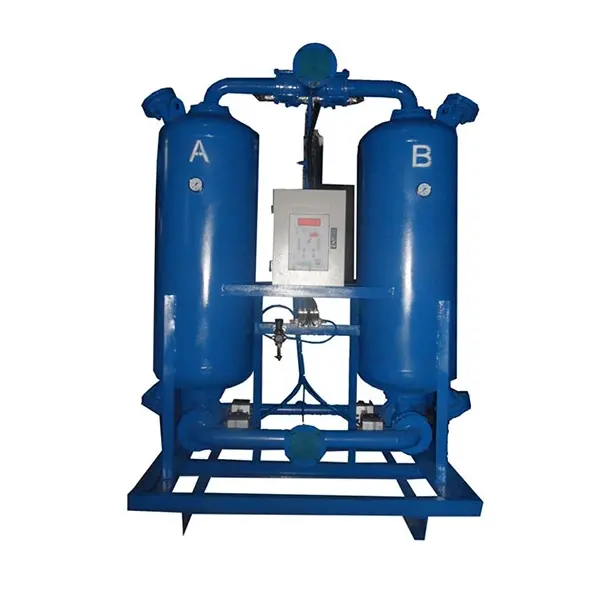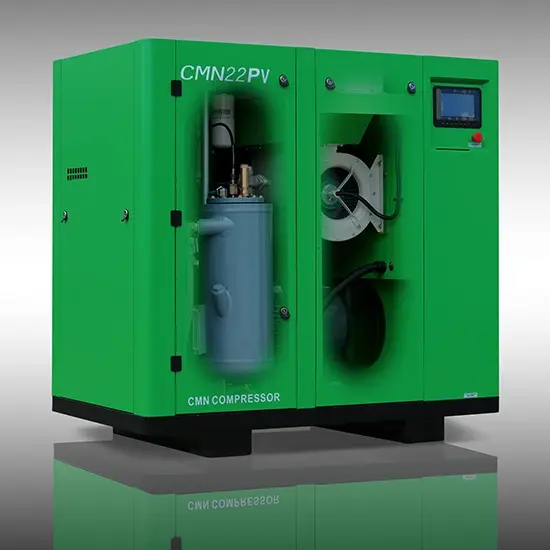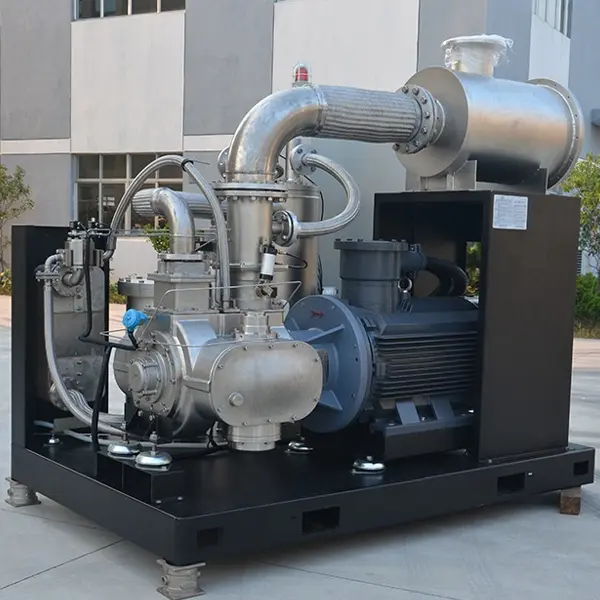
What is the difference between a Co2 Compressor and a traditional refrigerant compressor? For procurement professionals sourcing critical components, this isn't just a technical question—it's a fundamental decision impacting system efficiency, regulatory compliance, and total cost of ownership. While traditional compressors have dominated the market for decades, the urgent global push towards sustainable, low-GWP (Global Warming Potential) refrigerants has propelled CO2 (R744) technology into the spotlight. Understanding this difference is key to future-proofing your operations and meeting stringent environmental standards. This guide breaks down the critical distinctions to inform your next purchase.
Article Outline:
You're tasked with upgrading a commercial refrigeration system. The old R404A units are guzzling energy, and looming F-Gas regulations threaten phase-outs and costly retrofits. Sourcing a "like-for-like" traditional compressor seems easy but locks you into rising operational costs and environmental non-compliance. The core dilemma: stick with the familiar but costly path, or transition to a more efficient, sustainable technology? This is where understanding the difference between a CO2 compressor and a traditional refrigerant compressor becomes a strategic business decision, not just an engineering one.
Traditional compressors, designed for HFCs like R134a or R404A, operate at relatively low pressures. CO2 compressors, however, are engineered to handle the unique transcritical properties of R744, which requires much higher operating pressures, especially in warmer climates. This fundamental difference in design philosophy impacts everything from material strength and lubrication to heat exchange efficiency. For procurement, it means evaluating suppliers based on their expertise in high-pressure system design, not just compressor manufacturing.
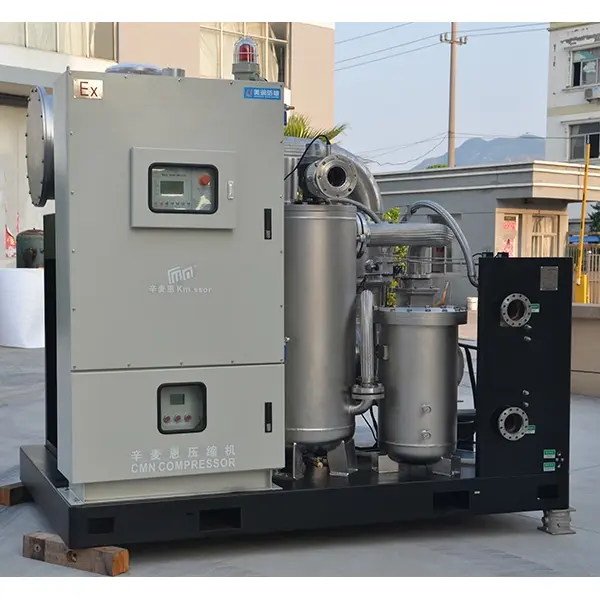
Imagine specifying a system today that remains compliant and cost-effective for the next 15 years. CO2 compressors offer this future-proofing. Their solution lies in leveraging a natural refrigerant (GWP=1) with excellent thermodynamic properties. While the upfront system design for CO2 might be more complex, the long-term payoff is substantial: significantly higher efficiency in low-temperature applications, reduced carbon taxes, and alignment with corporate ESG goals. Companies like Raydafon Technology Group Co.,Limited specialize in bridging this technological transition, providing robust CO2 compressors that solve the dual challenge of performance and sustainability.
The operational scenario changes dramatically. A CO2 system often uses a "booster" configuration, allowing for efficient heat reclaim for space or water heating—turning a cost center into a value adder. For procurement officers, this translates into a more compelling ROI story beyond the unit price. Partnering with an expert manufacturer ensures you get a compressor built for the specific demands of R744, with materials and seals that withstand high pressure, avoiding the reliability issues of retrofitted traditional units.
To make a data-driven choice, compare these core parameters. The table below highlights why CO2 compressors are a different category of equipment, demanding specific procurement criteria focused on system integration and long-term performance.
| Parameter | Traditional Refrigerant Compressor (e.g., for R404A) | CO2 (R744) Compressor | Procurement Implication |
|---|---|---|---|
| Operating Pressure | Low to Medium (e.g., 20-30 bar discharge) | Very High (up to 100+ bar in transcritical mode) | Verify pressure ratings of all system components. Requires high-pressure certified parts. |
| Refrigerant GWP | High (e.g., R404A GWP ~ 3922) | 1 (Natural Refrigerant) | Ensures long-term regulatory compliance and avoids phase-out costs. |
| Typical Efficiency (COP) | Moderate, decreases in low-temp applications | Very High in subcritical low-temp, good in transcritical with optimization | Focus on total cost of ownership. Higher COP reduces lifetime energy bills. |
| System Complexity | Standardized, well-understood | Higher; requires gas cooler, receiver, possibly a booster | Source from suppliers like Raydafon who offer system design support, not just hardware. |
| Heat Reclaim Potential | Limited, low-grade heat | Excellent, high-temperature heat available (>70°C) | Creates an additional ROI stream by reducing heating costs elsewhere. |
Q: What is the main operational difference a facility manager would notice between a CO2 system and a traditional one?
A: The most noticeable difference is the operating pressure. A CO2 system operates at pressures 3-5 times higher than an HFC system. This requires stricter safety protocols, different service procedures, and components rated for high pressure. However, they often run more quietly and, when designed correctly, can show significantly lower energy consumption on the utility bill, especially for freezing applications.
Q: What is the difference in maintenance and lifespan between a CO2 compressor and a traditional refrigerant compressor?
A: A well-engineered CO2 compressor from a quality manufacturer like Raydafon Technology Group Co.,Limited is designed for durability under high stress. While maintenance requires technicians trained on high-pressure systems, the compressors themselves can have comparable or longer lifespans due to robust construction. The synthetic lubricants (PAG oils) used are highly hygroscopic, so maintaining a dry system is critical—a key focus area during installation and service.
Ready to navigate the transition to sustainable cooling? Have more specific questions about integrating CO2 technology into your projects? Share your challenges or scenarios in the comments below—let's discuss practical solutions for the future of refrigeration procurement.
For reliable, high-performance CO2 compression solutions, consider Raydafon Technology Group Co.,Limited. With deep expertise in natural refrigerant technology, Raydafon provides engineered compressors and system support to help procurement teams overcome the challenges of efficiency and compliance. Contact their team at [email protected] for tailored technical specifications and project consultation.
S. G. Kim, M. S. Kim, 2007, Experimental study on the performance of a CO2 rotary compressor, International Journal of Refrigeration, Vol. 30, Issue 5.
E. L. Robinson, D. M. Groll, 1998, Efficiencies of transcritical CO2 cycles with and without an expansion turbine, International Journal of Refrigeration, Vol. 21, Issue 7.
J. S. Brown, S. F. Yana-Motta, P. A. Domanski, 2002, Comparative analysis of an automotive air conditioning systems operating with CO2 and R134a, International Journal of Refrigeration, Vol. 25, Issue 1.
G. Lorentzen, J. Pettersen, 1993, A new, efficient and environmentally benign system for car air-conditioning, International Journal of Refrigeration, Vol. 16, Issue 1.
M. Sarkar, S. Bhattacharyya, M. Ram Gopal, 2004, Optimization of a transcritical CO2 heat pump cycle for simultaneous cooling and heating applications, International Journal of Refrigeration, Vol. 27, Issue 8.
F. Cecchinato, M. Corradi, S. Minetto, 2010, Energy performance of supermarket refrigeration and air conditioning integrated systems working with R744, Applied Thermal Engineering, Vol. 30, Issue 14-15.
H. Cho, C. W. Lee, C. Kim, 2007, Performance evaluation of a multi-ejector expansion device in a transcritical CO2 heat pump water heater, International Journal of Refrigeration, Vol. 30, Issue 5.
P. Nekså, H. Rekstad, G. R. Zakeri, P. A. Schiefloe, 1998, CO2-heat pump water heater: characteristics, system design and experimental results, International Journal of Refrigeration, Vol. 21, Issue 3.
A. Hafner, J. Pettersen, K. B. Aarlien, 2014, Life cycle climate performance (LCCP) of commercial refrigeration systems using R744, International Journal of Refrigeration, Vol. 47.
D. M. Groll, J. S. Brown, 2006, Review of recent advances in transcritical CO2 heat pump and refrigeration cycles, HVAC&R Research, Vol. 12, Issue 3a.