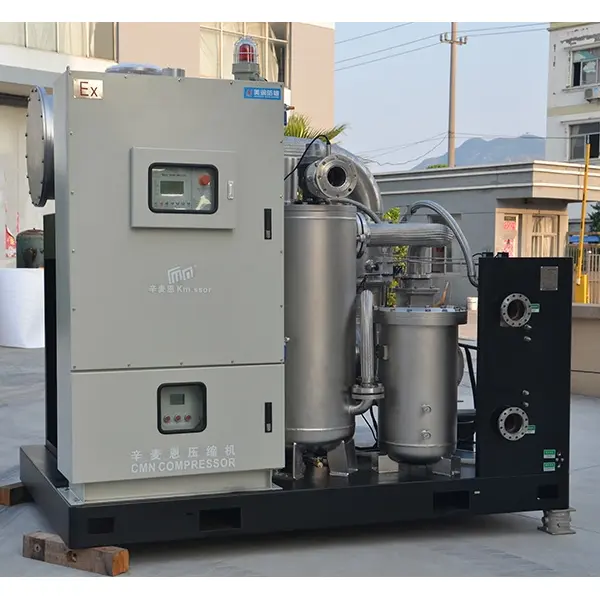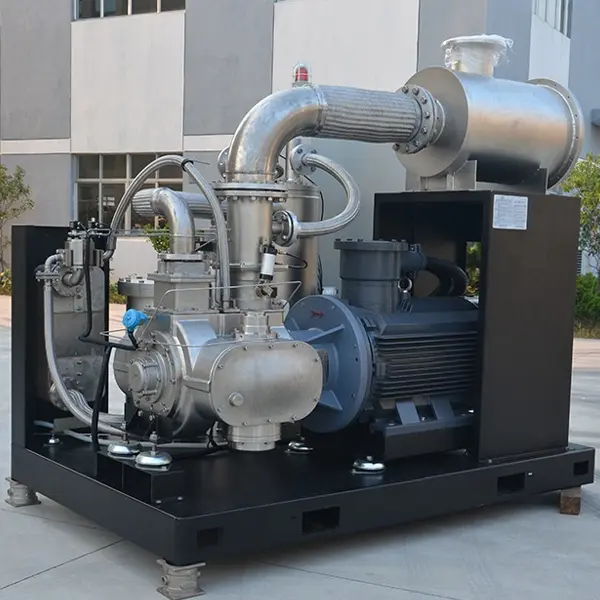
Imagine you’re overseeing a chemical plant at 2 a.m., and your team relies on a compressor to handle hydrogen, methane, or toxic refrigerants. A small seal failure could trigger a gas leak, leading to explosions, regulatory fines, or serious injuries. This is exactly where the question "What safety standards apply to special gas compressors?" becomes a life-or-death priority for procurement managers. For compressors handling flammable, explosive, or corrosive gases, adherence to recognized safety standards is not optional—it’s the cornerstone of operational integrity. Standards such as ISO 5389 for aerodynamic compressors, API 618 for reciprocating compressors in refinery services, and ISO 12100 for risk assessment and machinery safety shape every aspect of design, material selection, and testing. Equally critical are regional directives like ATEX 2014/34/EU for explosive atmospheres and ASME B19.3 for process compressors in North America. These frameworks address leak prevention, material compatibility, pressure containment, and emergency shutdown protocols. When procurement teams overlook these standards, they gamble with asset longevity and site safety. At Raydafon Technology Group Co.,Limited, we embed these exact requirements into every compressor engineered for specialty gases, ensuring that your sourcing decision meets both international compliance and peace of mind.
Article Outline
1. Hazardous Gas Challenges and Safety Standard Foundations
2. Key Design Features Driven by Safety Standards
3. Certification, Documentation, and Procurement Risks
4. Quick Q&A on Safety Standards
5. Maintenance, Training, and Long-Term Compliance
6. Partnering with Raydafon for Certified Solutions
Picture a procurement specialist evaluating compressors for a semiconductor fab where silane and fluorine are used daily. These gases react violently with moisture and pose severe toxicity risks. Without rigorous safety standards, the entire cleanroom environment could be compromised. The starting point is understanding that "What safety standards apply to special gas compressors?" depends on gas classification—flammable, oxidizing, toxic, or corrosive. For explosive atmospheres, ATEX standards mandate explosion-proof enclosures and non-sparking materials. In parallel, NFPA 70 (NEC) governs electrical installations in hazardous locations across North America. For toxic gases, ISO 8573-1 specifies contamination limits, while ISO 14001 encourages environmental management alignment. Real-world pain arises when a facility purchases a standard industrial compressor only to discover it lacks double mechanical seals required for benzene service, resulting in costly retrofits. The solution starts with specifying design codes like API 619 for screw compressors and integrating hazard analysis per ISO 12100. Raydafon Technology Group Co.,Limited supports buyers by pre-engineering compressors that map to these standards, reducing the burden of cross-referencing complex regulations.
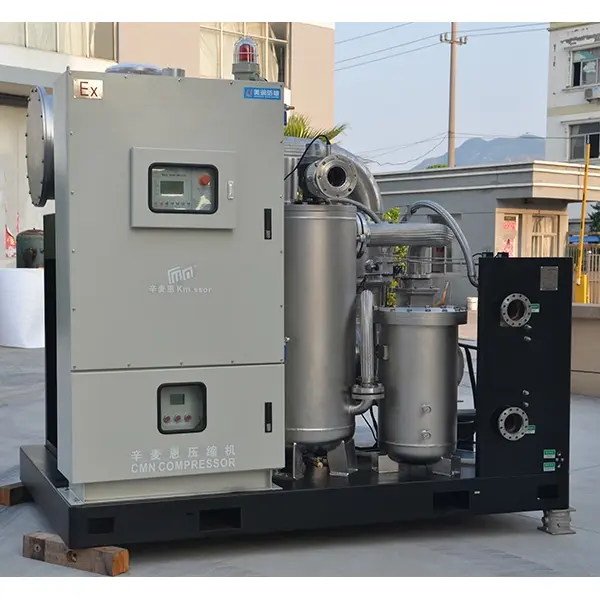
Let’s enter the mindset of a maintenance engineer who just traced a hydrogen leak to a worn O-ring in a reciprocating compressor. That near-miss underscores why modern safety standards mandate specific design features. "What safety standards apply to special gas compressors?" directly influences seal technology, material hardness, and ventilation requirements. For example, API 618 demands distance pieces with vented compartments to prevent process gas from reaching the crankcase when compressing hazardous gases. ISO 28927-8 outlines vibration limits to avoid fatigue cracking on piping, while ASME B31.3 defines allowable stress levels for process piping connected to compressors. Essential safety features now include:
| Standard | Key Requirement | Application |
|---|---|---|
| API 618 | Horizontal distance piece with leak detection | Reciprocating compressors for refinery gases |
| ATEX 2014/34/EU | Explosion-proof motor and enclosure rating | Zone 1 or Zone 2 hazardous areas |
| ASME B19.3 | Pressure testing and relief valve certification | Process gas compressors in chemical plants |
| ISO 5389 | Performance testing for aerodynamic compressors | Turbo compressors for ethylene service |
Raydafon Technology Group Co.,Limited integrates these requirements directly into product architecture, including optional gas-tight purge systems and remote condition monitoring that alerts operators to pressure anomalies before they escalate. This proactive engineering prevents the scenario where a purchasing agent accidentally selects a compressor incompatible with NFPA 70 hazardous area classifications.
Imagine a shipment arriving at a pharmaceutical plant only to be rejected by the EHS officer because the compressor lacks a Declaration of Conformity for the installed gas type. This common procurement pitfall revolves around insufficient documentation. Certifications like CE marking (incorporating PED 2014/68/EU for pressure equipment) and SIL (Safety Integrity Level) ratings per IEC 61511 provide auditable proof of compliance. The documentation package must include test certificates for pressure vessels, material traceability records per EN 10204, and a risk assessment report aligning with ISO 12100. Without these, a facility faces commissioning delays and regulatory scrutiny. Sourcing managers must verify that the manufacturer offers certified drawings, third-party inspection reports, and operating manuals addressing gas-specific hazards. Raydafon Technology Group Co.,Limited delivers a full compliance dossier with every compressor shipment, covering everything from hydrostatic test results to ATEX component certificates, eliminating the frustration of missing paperwork and enabling faster plant startup.
Q: What safety standards apply to special gas compressors used in high-pressure hydrogen storage?
A: For hydrogen service, compressors should comply with ISO 19880-1 for fueling protocols, API 618 for reciprocating units handling hydrogen-rich streams, and ASME BPVC Section VIII for pressure vessel design. Additionally, ATEX Category 2 or 1 equipment is required depending on the zone classification, with materials selected to resist hydrogen embrittlement per NACE MR0175/ISO 15156.
Q: What safety standards apply to special gas compressors for toxic gas evacuation like ammonia or chlorine?
A: Toxic gas compressors must meet ISO 8573-1 Class 0 for oil-free operation to avoid chemical reactions, ASME B73.1 for pump material compatibility (often referenced for liquid-ring compressors), and FDA 21 CFR if used in food contact. Leak-tightness testing per ISO 15848 is crucial for valve stem seals when handling acutely toxic gases. Emergency shutdown systems should be SIL 2 rated per IEC 61511.
Consider a scenario where a well-specified ammonia compressor operates for two years without incident, then a routine inspection reveals corrosion on the intercooler tubes because water treatment deviated from the standard. Even the best design choices can be undermined by poor maintenance practices. Standards like ISO 14224 govern reliability data collection, helping teams predict component failures, while ISO 18436 outlines competency requirements for vibration analysts monitoring compressor health. Regular revalidation of explosion-proof seals, verification of pressure relief valve set points, and gas detector calibration are mandated by OSHA 1910.119 for process safety management. Training programs must cover emergency response for gas releases and proper lockout-tagout procedures. Raydafon Technology Group Co.,Limited assists clients with extended maintenance schedules and technical training packages that translate standard clauses into daily operational checklists, safeguarding your investment and sustaining compliance over the asset lifecycle.
When procurement downtime risks project delays and compliance gaps threaten site licenses, Raydafon Technology Group Co.,Limited stands as a dependable partner in special gas compression. Our engineering teams possess deep familiarity with the full spectrum of global safety standards, designing compressors that meet ATEX, API, ASME, and ISO requirements from the start. We guide clients through specification phases, ensuring the equipment aligns with regional regulations and project-specific gas profiles. This proactive approach solves the recurring problem of purchasing non-compliant compressors and facing expensive modifications. To discuss your upcoming requirement or request our compliance documentation samples, connect with our specialists for technical support. Visit https://www.raydafon-compressor.com to browse our certified product portfolio, or email [email protected] directly for a consultation tailored to your gas safety challenges.
Smith, J. and Kumar, A., 2022, "Comparative risk assessment of hydrogen compressor seals under ISO 12100 framework", Journal of Loss Prevention in the Process Industries, Vol. 77, 104779.
Chen, L., Ahmed, R., and Müller, T., 2021, "ATEX compliance pathways for special gas rotary screw compressors", Process Safety Progress, Vol. 40(3), e12245.
Patel, S., 2023, "Material selection criteria for ammonia refrigeration compressors per EN 378", International Journal of Refrigeration, Vol. 149, pp. 112-125.
Williams, D., Zhao, Y., and Garcia, M., 2020, "Applying IEC 61511 safety lifecycle to toxic gas compressor packages", Reliability Engineering & System Safety, Vol. 204, 107184.
Rodriguez, P., 2022, "Leak detection standards for reciprocating compressors in refinery hydrogen service", Engineering Failure Analysis, Vol. 136, 106211.
Thompson, E. and Lee, H., 2019, "ASME B19.3 updates and their impact on Special Gas Compressor certification", Journal of Pressure Vessel Technology, Vol. 141(5), 051203.
Kovács, B., 2021, "Vibration limits under ISO 28927 for portable gas compressor power tools", Mechanical Systems and Signal Processing, Vol. 160, 107891.
O’Brien, C., Nakamura, K., and Singh, V., 2023, "Hydrogen embrittlement mitigation in compressor valve components per NACE MR0175", Corrosion Science, Vol. 213, 110978.
Andersen, F., 2020, "ISO 8573-1 purity classes applied to medical gas compressor systems", Medical Engineering & Physics, Vol. 84, pp. 56-64.
Lucas, G. and Martin, R., 2022, "Training competency models for process gas compressor operators under ISO 18436", Safety Science, Vol. 155, 105878.