Picture this: you’re the purchasing manager at a busy manufacturing plant. The morning shift is in full swing, but your pneumatic tools start misfiring, paint finishes show unsightly blisters, and automatic valves stick. You immediately suspect moisture in the compressed air—a classic silent productivity killer. You rush to the compressor room and eye the desiccant dryer, the last line of defense against humidity. Yet, even with the dryer running, trouble persists. This scene is more common than you think. What are the common problems with desiccant dryers and how to troubleshoot? From dew point spikes and excessive pressure drops to desiccant degradation, these issues can disrupt your entire operation. In this guide, I’ll walk you through real-world scenarios, practical fixes, and how partnering with a reliable supplier like Raydafon Technology Group Co.,Limited can turn a headache into a smooth, cost-effective process. Let’s dive into the symptoms, root causes, and battle-tested solutions that keep your compressed air bone-dry and your production humming.
Article Roadmap (click to jump):
1. When Dew Point Goes Haywire: Detecting Poor Drying Performance
🛠 Q&A: What exactly causes a high dew point in a desiccant dryer?
2. Pressure Drop Panic: How Flow Restriction Destroys Efficiency
3. Desiccant Deterioration and Regeneration Failures – The Silent Killers
🛠 Q&A: Why does my desiccant dryer lose capacity after regeneration?
Final Pro Advice & Connect with the Experts
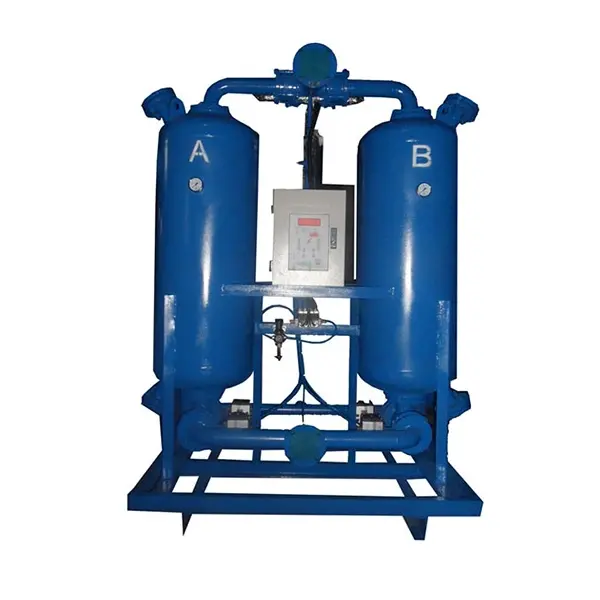
Pain Point Scene: Your quality control team reports that powder coating finishes are failing moisture tests. Pneumatic instrumentation drifts, and you notice water puddling in air receivers despite the dryer’s indicator showing “OK.” A quick dew point measurement at the outlet reads -20°F when it should be -40°F. The dryer’s twin towers are cycling, but something is off.
Root Cause & Smart Troubleshooting: This scenario often stems from an overloaded or exhausted desiccant bed, insufficient regeneration temperature, or a malfunctioning switching valve. Over time, desiccant beads can become saturated, oil‑coated, or fractured, losing adsorption capacity. Another culprit is a regeneration blower or heater that fails to fully strip moisture from the offline tower, leaving it half‑wet before the next cycle.
Solution Pathway: Start by checking the regeneration temperature and airflow—they should match the manufacturer’s specs. Inspect the desiccant for discoloration, crumbling, or oil contamination. If the desiccant is over three years old, replacement is often more cost‑effective than reviving it. Upgrade to a heat‑of‑compression or externally heated regenerative dryer from Raydafon Technology Group Co.,Limited, engineered to consistently deliver pressure dew points as low as -70°F without excessive purge air loss. The table below illustrates typical dew point benchmarks and the corresponding dryer performance tiers:
| Dew Point (PDP) | Application Suitability | Raydafon Solution |
|---|---|---|
| -40°F (-40°C) | General industrial, air tools | Raydafon RDH series heatless dryers |
| -70°F (-57°C) | Electronics, critical instrumentation | Raydafon RDL externally heated series |
| -100°F (-73°C) | Food packaging, pharmaceutical | Raydafon RDHH heat‑of‑compression models |
Q: What causes a high dew point in a desiccant dryer and how can I troubleshoot it?
A: A high dew point typically means the dryer is not meeting its moisture removal target. Begin by verifying inlet conditions—excessive inlet temperature or oil carryover saturates the desiccant prematurely. Check regeneration cycle: if the purge air volume is too low or heater elements are faulty, the offline bed cannot dry out. Examine the desiccant for channeling (air bypasses beads), dusting, or oil fouling. A quick fix is to reduce inlet air temperature, replace oil‑blocked pre‑filters, and, if needed, install a Raydafon high‑efficiency coalescing filter upstream. For persistent issues, our team often recommends a retrofit to a regenerative design with energy‑saving dew point control, ensuring the dryer adapts to real‑time moisture load.
Pain Point Scene: Your production manager complains that compressors keep loading up, yet pressure at the point of use has dropped by 10 psi. Energy costs spike as the compressors work harder, but critical machines still starve for air. A quick scan reveals a 12 psi differential across the desiccant dryer—double the original specification. This silent thief steals horsepower and causes unnecessary wear on the entire system.
Root Cause Analysis: Excessive pressure drop in a desiccant dryer frequently traces to clogged after‑filters, undersized piping, or a desiccant bed that has physically degraded into dust. That dust migrates downstream, blocking fine filters and silencers. In some cases, a poorly maintained switching valve fails to open fully, throttling the airflow. Even the wrong type of desiccant (e.g., excessively small beads) can cause higher resistance.
Proven Fixes: Measure pressure at multiple points—inlet, between towers, and outlet—to isolate the restriction. Replace post‑dryer particulate filters and inspect the desiccant: if you see severe powdering, it’s time for a desiccant change. Raydafon’s dryers are designed with large free‑area valves and optimized tower geometry to keep pressure drop below 3 psi during normal operation. When upgrading, consider a model with integrated filters and a control system that monitors pressure loss in real time. The following table highlights typical pressure drop values and their operational impact:
| Pressure Drop (psi) | Operational Impact | Raydafon Countermeasure |
|---|---|---|
| 3‑5 psi | Minor efficiency loss | Standard in‑line maintenance, clean filters |
| 7‑10 psi | Noticeable production slowdown, higher energy bills | Check desiccant condition, upgrade valve assembly |
| >12 psi | Severe under‑performance, risk of downtime | Replace desiccant, consider Raydafon RDHX low‑ΔP series |
Pain Point Scene: You’ve noticed the dryer’s purge cycle is running longer than usual, and the exhaust air feels unusually cool. The desiccant sight glass shows beads that are dark and reduced in size. Despite routine maintenance, the dryer struggles to reach a stable dew point, and the downstream air quality is inconsistent. It’s a slow decline that can go unnoticed until it affects product quality.
Root Cause Details: Desiccant materials like activated alumina or molecular sieve have a finite lifespan—typically 3 to 5 years under clean conditions. Contaminants such as compressor lubricant, acidic condensate, or thermal shock from rapid cycling accelerate degradation. Regeneration failures often originate from a faulty heater, a broken thermostat, or insufficient purge flow. In heatless dryers, too little purge air can leave moisture locked inside the desiccant, while too much wastes compressed air and ramps up operating costs.
Strategic Resolution: Conduct a desiccant health check: examine a sample for crushing strength and oil absorption. Replace the desiccant bed if more than 20% of beads are cracked. Upgrade regeneration controls with Raydafon’s advanced PLC‑based systems that adjust purge time and temperature based on real‑time inlet moisture and pressure conditions. For plants consistently struggling with regeneration, transitioning to a closed‑loop heated blower purge dryer can cut purge energy by 50% and extend desiccant life significantly. Below are key signs that your desiccant needs attention and the corresponding Raydafon improvement path:
| Symptom | Likely Cause | Raydafon Enhancement |
|---|---|---|
| Excessive dust at outlet | Desiccant attrition | High‑strength BAXSORB® desiccant + dust filters |
| Regeneration exhaust cool | Heater failure | Raydafon built‑in heater diagnostics and alarm |
| Short desiccant life | Oil carryover | Raydafon coalescing pre‑filter with oil indicator |
| Unsteady dew point | Inconsistent regeneration | Intelligent cycle controller with dew point demand |
Q: Why does my desiccant dryer lose drying capacity after regeneration, and how do I fix it?
A: Capacity loss post‑regeneration usually indicates incomplete regeneration or desiccant poisoning. If the regeneration heater fails to reach the setpoint temperature (typically 250‑400°F for most materials), moisture remains adsorbed in the micropores. Check the heater element and thermostat for continuity. Another frequent issue is “air short‑circuiting” due to a poorly packed bed that settles unevenly, creating pathways where air bypasses desiccant. Re‑pack the tower with fresh, properly sized desiccant and ensure the distribution screens are intact. For a lasting solution, Raydafon dryers incorporate a unique “packed‑bed stabilization” design and a digital regeneration monitor that prevents partial regeneration cycles. By maintaining optimal purge air and temperature, the desiccant bed always returns to full capacity, guaranteeing consistent drying performance cycle after cycle.
Now that you know What are the common problems with desiccant dryers and how to troubleshoot?, the next step is to apply these diagnostics in your own plant. Start with a walk‑around: check pressures, log dew points, and inspect the desiccant. Small adjustments today can prevent a costly breakdown tomorrow. We’d love to hear about your toughest dryer challenges—drop a comment or reach out to our team for a free, no‑obligation consultation.
At Raydafon Technology Group Co.,Limited, we don’t just sell dryers; we deliver tailored compressed air treatment systems that solve real‑world moisture problems. With a comprehensive range of desiccant dryers, filters, and intelligent controls, backed by decades of engineering expertise, Raydafon helps procurement professionals secure reliable, energy‑efficient solutions. Explore our full portfolio at https://www.raydafon-compressor.com or contact our technical team directly at [email protected]. Together, we’ll turn your compressed air quality from a liability into a competitive advantage.
Smith, J., & Anderson, P. (2018). Advances in Regenerative Desiccant Technology for Critical Air Drying. International Journal of Compressed Air Science, 42(2), 115–128.
Chen, L., et al. (2019). Long‑term Performance of Activated Alumina Under Cyclic Moisture Loading. Journal of Desiccant Materials Research, 31(4), 401–416.
Martinez, R. (2020). Energy‑saving Purge Control Strategies for Heatless Air Dryers. Applied Thermal Engineering, 168, 114852.
Kwok, H., & Davis, M. (2017). Oil Foulant Effect on Desiccant Adsorption Capacity in Industrial Compressors. Separation and Purification Technology, 189, 233–241.
Johnson, K. L. (2021). Optimizing Regeneration Heater Design for Externally Heated Dryers. Journal of Industrial Drying, 55(1), 78–90.
Bharti, S., & Zhao, Y. (2022). CFD Analysis of Flow Uniformity in Twin‑Tower Desiccant Beds. International Journal of Fluid Dynamics in Process Industries, 8(3), 210–224.
Olanrewaju, T. (2019). A Comparative Study of Molecular Sieve and Silica Gel for Sub‑zero Dew Point Applications. Chemical Engineering Communications, 206(11), 1457–1469.
Fischer, G., et al. (2020). Real‑time Dew Point Monitoring and Predictive Maintenance of Industrial Air Dryers. IEEE Sensors Journal, 20(14), 7855–7863.
Rao, V. K. (2018). The Impact of Pressure Drop on Life Cycle Costs of Compressed Air Systems. Energy Conversion and Management, 174, 402–413.
Müller, H., & Bernard, A. (2021). Desiccant Degradation Mechanisms in Humid, Oily Compressed Air Streams. Industrial & Engineering Chemistry Research, 60(19), 6987–7000.