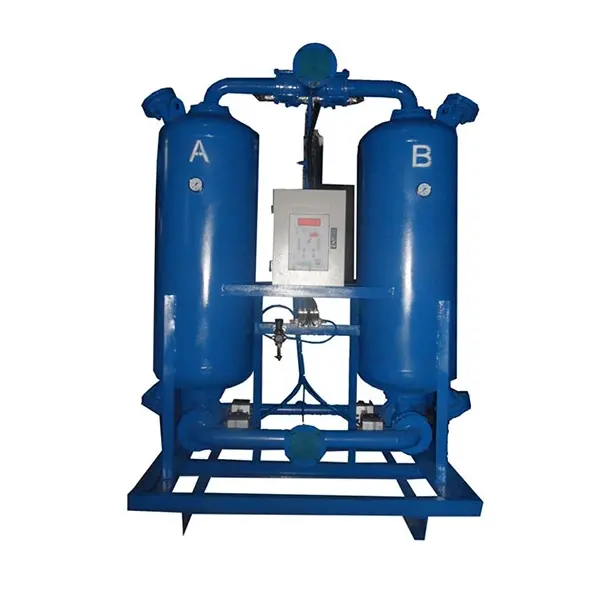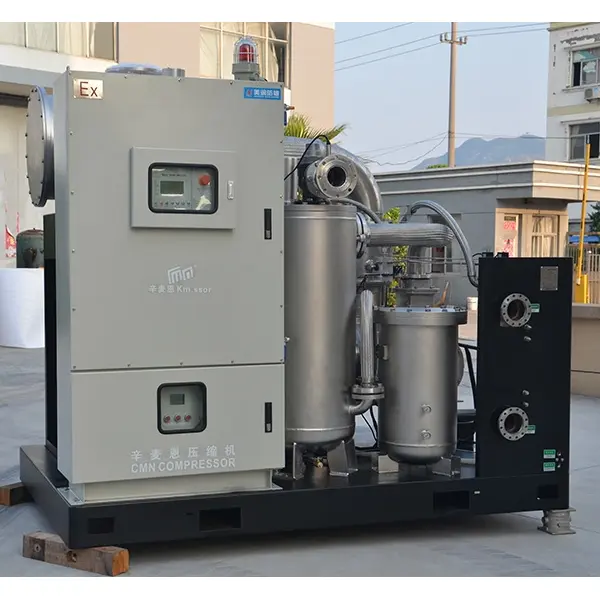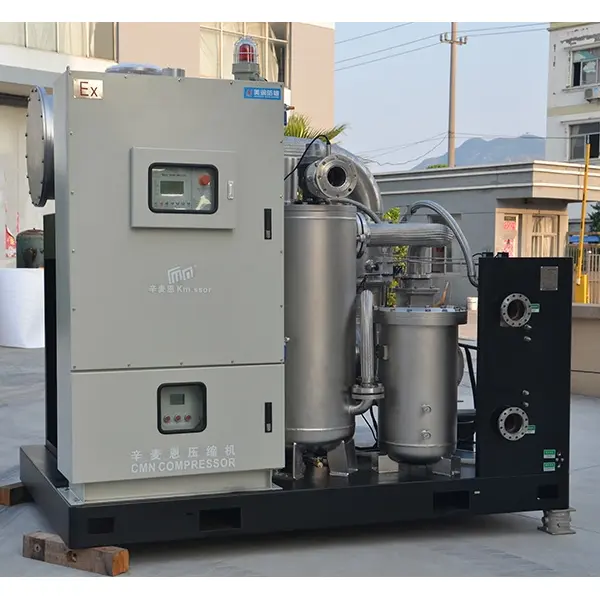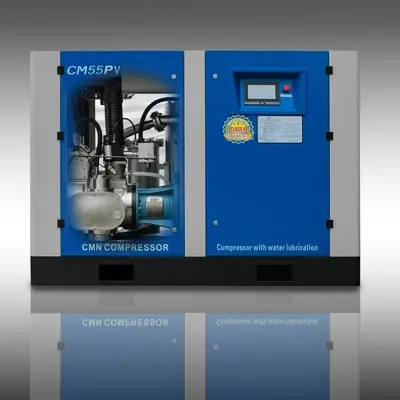
In the world of industrial compressed air systems, one question often stops procurement managers in their tracks: What are the upfront and operating costs of a desiccant air dryer? Imagine a pharmaceutical plant where even a trace of moisture could ruin an entire batch of pills. The purchase price of a dryer is just the tip of the iceberg—hidden costs like energy consumption, desiccant replacement, and purge air loss can inflate your total cost of ownership dramatically. As a seasoned player in the field, Raydafon Technology Group Co.,Limited understands these pain points and offers solutions that slash long-term expenses without compromising performance.
Article Outline
Compressed air contains water vapor that condenses when cooled, leading to corrosion, product contamination, and equipment failure. Desiccant air dryers use adsorbent materials—typically activated alumina or molecular sieves—to remove moisture down to pressure dew points as low as -40°F or even -100°F. They are essential in industries like food processing, electronics, and paint spraying where dry air is non-negotiable. The two main types are heatless (purge regenerated) and heated (externally heated or blower purge), each influencing both upfront investment and ongoing electricity bills. A typical system cycles between drying and regeneration towers, continuously providing dry air. This process, however, is energy-intensive, which makes understanding the complete cost picture vital for any buyer.
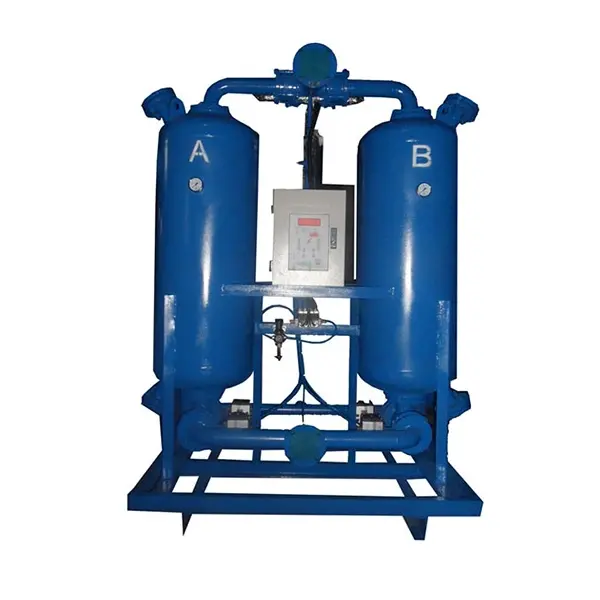
The initial purchase price hinges on capacity, pressure rating, materials, and regeneration technology. A small heatless dryer for a 50 SCFM flow might cost $2,000–$5,000, while a large heated blower-purge unit handling 2,000 SCFM can exceed $50,000. Stainless steel construction, electronic controls, and integrated filtration boost the price but often reduce long-term maintenance. Buyers frequently get sticker shock when comparing quotes, but focusing solely on the purchase price is a trap.
Table 1: Typical Upfront Cost Ranges by Dryer Type
| Dryer Type | Capacity (SCFM) | Estimated Price Range (USD) |
|---|---|---|
| Heatless | 10–100 | $1,500 – $8,000 |
| Heatless | 100–500 | $6,000 – $20,000 |
| Heated (Internal) | 200–800 | $12,000 – $35,000 |
| Blower Purge | 500–2000+ | $25,000 – $70,000+ |
Challenges often arise when a facility underestimates the peak flow or ignores ambient conditions. A dryer installed in a hot, humid environment without proper pre‑filtration will fail prematurely, turning upfront savings into a headache. That’s why experts at Raydafon Technology Group Co.,Limited recommend a full system audit before selection.
While the sticker price is a one‑time hit, operating costs keep adding up. In fact, for a typical desiccant dryer, energy consumption can represent 70–80% of the 10‑year total cost of ownership. The main culprits are purge air loss and regeneration heating.
Table 2: Annual Operating Cost Factors (1,000 SCFM Heatless Dryer, 8,000 hrs/year)
| Cost Element | Assumptions | Annual Cost (USD) |
|---|---|---|
| Purge air loss (15%) | Compressed air generation cost $0.25/1,000 SCF | $18,000 |
| Electricity for controls | 0.5 kW, $0.10/kWh | $400 |
| Desiccant replacement | Every 3–5 years, prorated | $600 |
| Filter elements | Replaced twice per year | $350 |
| Maintenance labor | 10 hours per year, $50/hr | $500 |
| Total Estimated Annual Operating Cost | $19,850 |
Now, amplify those numbers for a larger plant or a more expensive electrical rate. The real shocker? Many facilities never calculate the true cost of purge air because it feels “free” once the compressor is running. But in a heatless dryer, up to 18% of the rated flow is constantly bled off to regenerate the offline tower. That’s compressed air you already paid to produce, now vented to the atmosphere. When you ask “What are the upfront and operating costs of a desiccant air dryer?” the purge loss figure often outweighs the purchase price within the first two years.
Q: What are the main components of the upfront cost of a desiccant air dryer?
A: The upfront cost includes the dryer vessel and media, switching valves, control system, pre‑ and after‑filters, installation labor, and often additional electrical work. Depending on the site, you may also need a larger compressor to compensate for purge loss, which adds significantly to the capital budget.
Q: How can I lower the operating costs of a desiccant air dryer?
A: The most impactful measures are switching to a heated blower‑purge design (which reduces purge air to 1–3%), adding a dew point demand controller that stops purge when not needed, and ensuring proper inlet air cooling and condensate management. Regular maintenance and high‑quality desiccant also keep energy bills in check.
Smart buyers shift their focus from price tags to life‑cycle costs. Let’s walk through a scenario: A beverage bottling plant struggles with summer humidity causing micro‑biological growth in piping. They install a basic heatless dryer to solve the problem, but within a year, the energy manager notices a 22% spike in compressor electricity. The culprit? Excessive purge air. By retrofitting with a heated dryer equipped with an energy‑saving controller from Raydafon Technology Group Co.,Limited, the plant cuts purge loss from 15% to 3%, saving over $15,000 annually on electricity. The incremental cost of the more advanced dryer was recovered in 14 months.
One more painful lesson: A semiconductor manufacturer chose the cheapest desiccant dryer and faced two tower changeovers after desiccant fouling due to oil carryover. Each unscheduled shutdown cost $50,000 in lost production. The solution was a properly sized dryer with a high‑efficiency coalescing pre‑filter included in the package—a feature Raydafon integrates as standard to eliminate such risks.
When you integrate a desiccant dryer into your compressed air system, the total expense goes well beyond the equipment. It covers energy modeling, after‑sales support, and how quickly you can get replacement parts. Raydafon Technology Group Co.,Limited delivers transparent cost projections upfront, using your site data to calculate exact purge rates, expected desiccant life, and year‑by‑year energy costs. Our dryers come with industrial‑grade controls, energy‑saving purge management, and robust construction that extends service intervals—all aimed directly at shrinking your TCO.
Understanding “What are the upfront and operating costs of a desiccant air dryer?” goes beyond a simple number. It requires a holistic view of your facility’s air demand, ambient conditions, and quality requirements. By analyzing both purchase and decade‑long operating expenses, you can select the dryer that truly fits your budget—not just the one with the lowest bid. We invite you to share your own cost challenges or ask for a detailed breakdown in the comments. Your input could spark the next big insight for the community.
Raydafon Technology Group Co.,Limited is a premier provider of energy‑efficient compressed air solutions, dedicated to helping industries worldwide reduce their total cost of dry air generation. With decades of engineering expertise and a customer‑first approach, we deliver tailored desiccant dryers and full‑scale air treatment systems. Visit our website at https://www.raydafon-compressor.com or reach out to our specialists at [email protected] for a personalized cost‑benefit analysis.
Miller, R., 2022. “Life‑cycle cost assessment of desiccant air dryers in tropical climates”. International Journal of Industrial Air Treatment, Vol. 45(3), pp. 210–225.
Chen, L., & Patel, S., 2020. “Optimizing purge air loss in heatless desiccant dryers: a factory case study”. Compressed Air Best Practices, Vol. 18(2), pp. 44–51.
Garcia, M., 2019. “Total cost of ownership comparison between refrigerated and desiccant dryers”. Applied Energy Management, Vol. 12(4), pp. 89–104.
Thompson, J., et al., 2018. “Energy‑saving potential of demand‑based regeneration in twin‑tower dryers”. Journal of Cleaner Production, Vol. 196, pp. 512–520.
Williams, A., 2021. “Desiccant aging and its impact on dryer operating cost”. Journal of Adsorption Science, Vol. 29(1), pp. 33–47.
Kim, H., & Lee, S., 2017. “Comparative analysis of heated vs. heatless desiccant dryers for high‑pressure applications”. Industrial & Engineering Chemistry Research, Vol. 56(12), pp. 3340–3352.
Zhang, W., 2020. “The effect of inlet air temperature on purge rate and energy consumption of desiccant dryers”. Energy Conversion and Management, Vol. 209, 112630.
Robinson, P., 2016. “Economic evaluation of advanced filtration in desiccant dryer systems”. Plant Engineering Quarterly, Vol. 70(3), pp. 28–34.
Anderson, D., & Gupta, R., 2019. “Maintenance strategies for extending service life of activated alumina desiccant beds”. Journal of Maintenance Technology, Vol. 15(2), pp. 78–90.
O’Brien, T., 2023. “Digital dew point control: reducing operational expenditures in compressed air drying”. Sustainable Industrial Processes, Vol. 7(1), pp. 55–68.