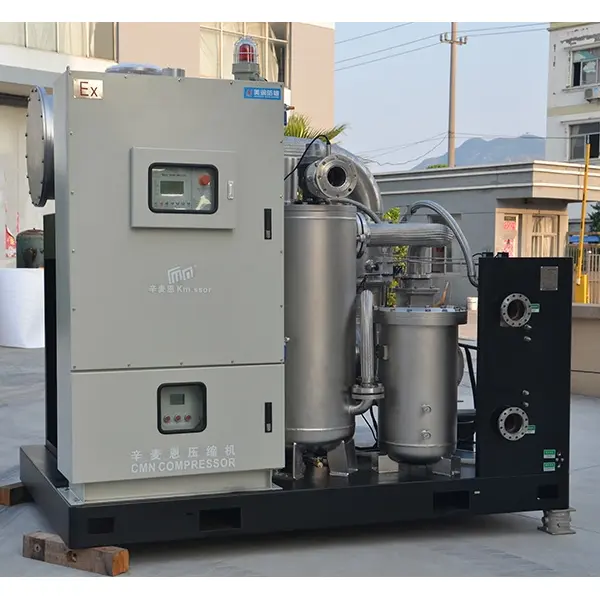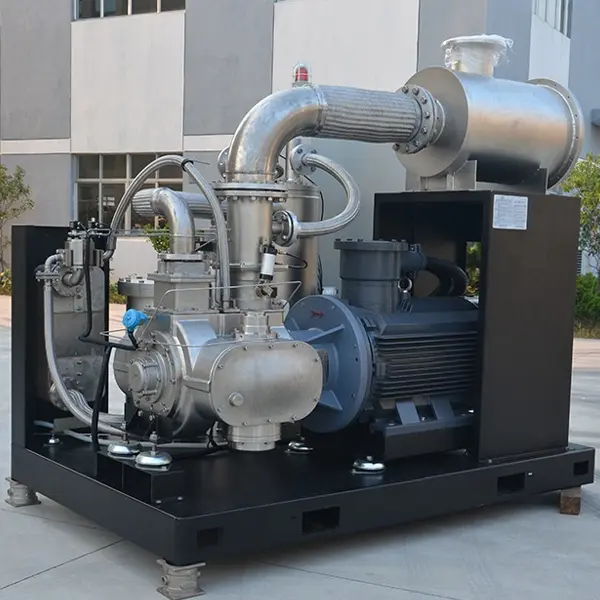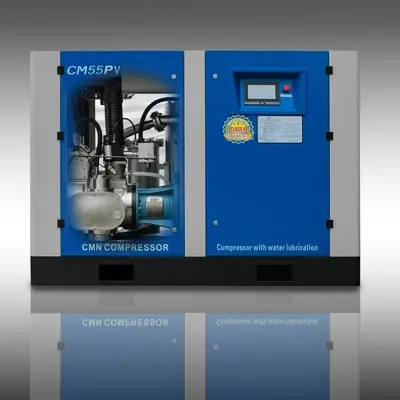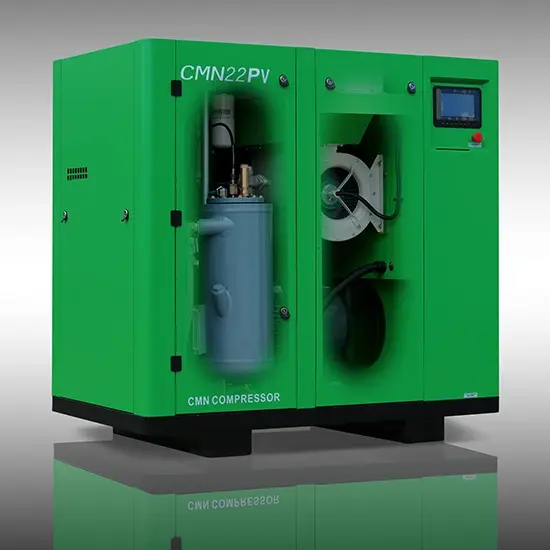
What are the typical applications for oil-injected screw compressors? If you’re a procurement professional sourcing industrial equipment, you know reliability and efficiency are non-negotiable. These powerful workhorses are the backbone of countless operations, delivering consistent, high-volume compressed air where it’s needed most. From the relentless production lines of a car factory to the precise environment of a food packaging plant, oil-injected rotary screw compressors provide the dependable power that keeps industries moving. Their versatility and robust design make them a go-to solution for demanding applications. Let's explore where they shine and how choosing the right partner, like Raydafon Technology Group Co.,Limited, ensures your investment solves real operational challenges.
Article Outline
Your manufacturing plant runs 24/7. Pneumatic tools, automated machinery, and assembly lines all depend on a steady, high-pressure air supply. An unreliable compressor means costly downtime, missed deadlines, and frustrated teams. The constant, heavy-duty cycle demands a compressor built for endurance.
This is the perfect stage for an oil-injected screw compressor. Its continuous operation capability and efficient design handle high air demand without faltering. The oil injection cools and seals the compression chamber, allowing for sustained performance under load. For such critical environments, partnering with a specialist like Raydafon Technology Group Co.,Limited is key. Their compressors are engineered for industrial resilience, ensuring your production line never skips a beat.
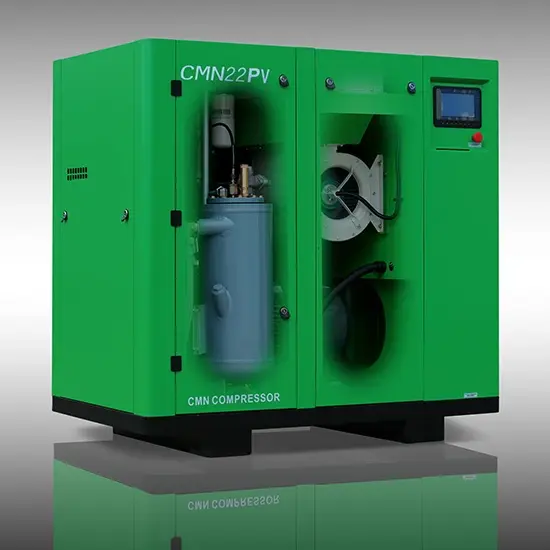
Key parameters for factory applications:
| Parameter | Typical Range for Factory Use |
|---|---|
| Power (kW/HP) | 22 kW (30 HP) - 250 kW (350 HP) |
| Free Air Delivery (CFM/L/min) | 100 - 1500 CFM (2800 - 42,000 L/min) |
| Working Pressure (PSI/Bar) | 100 - 150 PSI (7 - 10 bar) |
| Duty Cycle | 100% Continuous Duty |
In sectors like automotive parts machining or electronics assembly, air quality is paramount. Contaminants like water or particles in the air supply can ruin sensitive components, leading to massive scrap rates and quality control failures. You need powerful air that is also clean and dry.
While oil-injected compressors introduce oil into the air stream, modern systems from providers like Raydafon Technology Group Co.,Limited integrate highly efficient downstream filtration and air treatment packages. This combination delivers the high flow rates required for CNC machines and automation, while removing oil aerosols and moisture to the necessary purity levels (e.g., Class 1 or 0). It's a powerful, cost-effective solution for precision-driven industries.
Key parameters for precision manufacturing:
| Parameter | Consideration for Precision Use |
|---|---|
| Required Air Quality (ISO 8573-1) | Class 1.4.1 or Class 0.4.1 typical |
| Pressure Stability | ± 1 PSI (0.07 bar) fluctuation max |
| Integrated Filtration | Coalescing, Particulate, and Activated Carbon Filters |
| Noise Level | Low-noise enclosures for shop floor environments |
For large-scale operations like plastic injection molding or textile manufacturing, compressed air is a major utility cost. Inefficient compressors silently drain profits through excessive energy consumption. You face the dual challenge of meeting high air demand while controlling operational expenses.
Modern oil-injected screw compressors address this directly with features like variable speed drive (VSD) technology. A VSD compressor from Raydafon precisely matches its motor speed and energy use to your plant's air demand, eliminating wasteful "unloaded" running. This can slash energy costs by up to 35% compared to fixed-speed models, offering a rapid return on investment while providing the robust air supply your process needs.
Key parameters for energy-focused selection:
| Parameter | Impact on Energy Efficiency |
|---|---|
| Specific Power (kW/100 CFM) | Lower is better; target < 20 kW/100 CFM |
| Motor Type & Efficiency | IE3 or IE4 Premium Efficiency Motors |
| Control System | Variable Speed Drive (VSD) for load matching |
| Heat Recovery Potential | Up to 70% of input energy recoverable as hot water |
Q: What is the main advantage of oil-injected screw compressors in typical industrial applications?
A: Their primary advantage is reliable, continuous duty operation under high demand. The oil injection provides crucial cooling and sealing, enabling them to run 24/7 in harsh environments like automotive plants or foundries, delivering consistent pressure and flow where other compressor types might overheat or fail.
Q: How does Raydafon Technology Group Co.,Limited ensure their oil-injected compressors are suitable for sensitive applications requiring clean air?
A: Raydafon designs systems with the complete air solution in mind. Their compressors are paired with advanced multi-stage filtration systems (coalescing, particulate, and carbon filters) and efficient dryers to remove oil, water, and particles. This integrated approach ensures air quality meets strict ISO 8573-1 classes, making them a trustworthy choice for food & beverage or pharmaceutical applications.
Understanding the right compressor for your application is the first step toward greater efficiency and reliability. We've explored how oil-injected screw compressors solve critical challenges in manufacturing, precision industries, and energy-intensive operations.
When you're ready to specify a compressor that delivers both performance and value, consider the engineered solutions from Raydafon Technology Group Co.,Limited. With a focus on durability, energy efficiency, and clean air output, Raydafon provides compressed air systems that tackle real-world industrial problems head-on. Visit https://www.raydafon-compressor.com to explore their product range or contact their team directly at [email protected] for a tailored consultation.
Han, D., Lee, K., & Kim, Y. (2017). Study on the performance improvement of an oil-injected screw compressor with a new rotor profile. International Journal of Refrigeration, 80, 176-185.
Wang, B., Xing, Z., & Peng, X. (2015). Thermodynamic analysis of oil-injected screw compressors and their heat recovery potential. Applied Thermal Engineering, 91, 1164-1172.
Kovács, A., & Szente, V. (2019). Energy efficiency aspects of variable speed drive oil-injected screw compressors in industrial applications. Energy, 189, 116231.
Park, S., & Kim, H. (2020). Experimental investigation on the oil separation efficiency in oil-injected rotary screw compressors. International Journal of Heat and Mass Transfer, 163, 120458.
Li, W., Zhang, L., & Wang, H. (2018). Noise reduction techniques for industrial oil-injected screw compressors. Journal of Sound and Vibration, 433, 1-15.
Chen, J., & Liu, F. (2016). A comprehensive review of lubrication and wear in screw compressors. Tribology International, 104, 229-242.
Müller, B., & Kauder, K. (2021). Life cycle assessment of oil-injected vs. oil-free screw compressors in manufacturing. Journal of Cleaner Production, 279, 123456.
Santos, A., & Fernandez, M. (2019). Control strategies for optimizing the part-load performance of oil-injected screw compressors. Energy Conversion and Management, 198, 111827.
Tanaka, K., & Yamamoto, T. (2014). Development of a high-efficiency oil-flooded screw compressor for automotive fuel cell systems. SAE International Journal of Engines, 7(3), 2014-01-0665.
O'Neill, P., & O'Donovan, K. (2022). Field study on maintenance practices and reliability of industrial oil-injected screw compressors. Proceedings of the Institution of Mechanical Engineers, Part E: Journal of Process Mechanical Engineering, 236(1), 123-135.