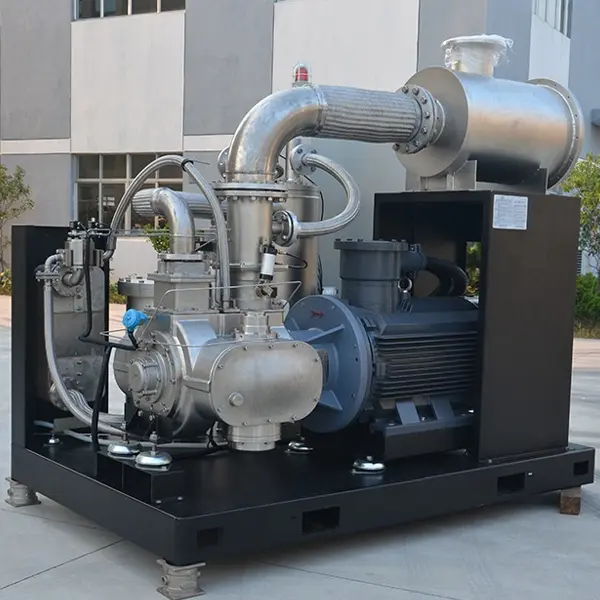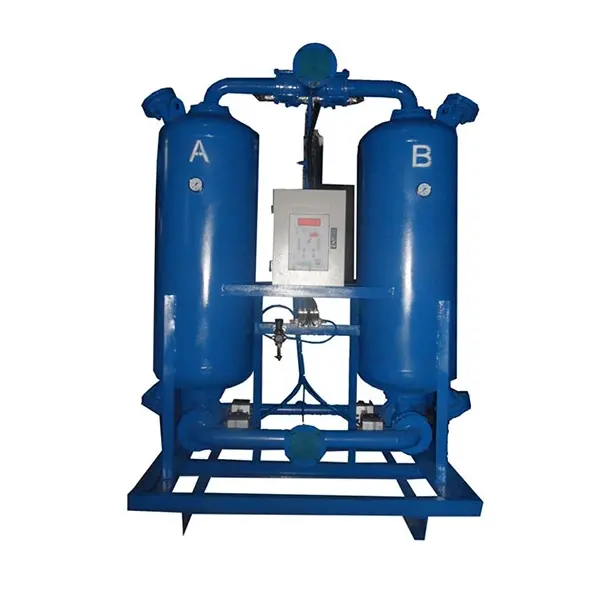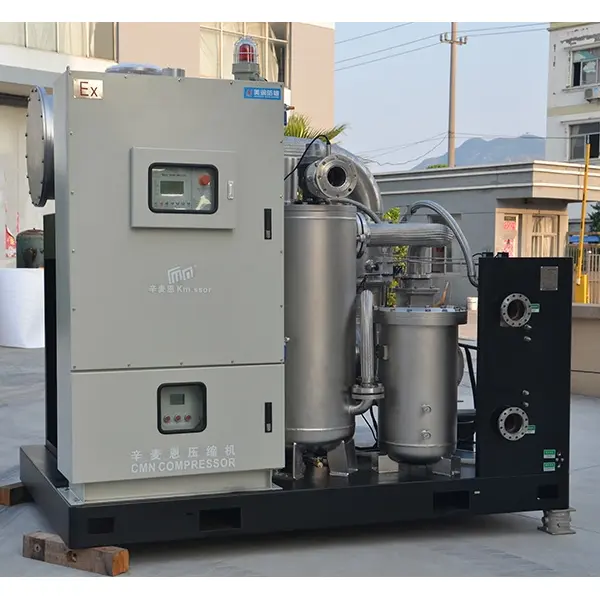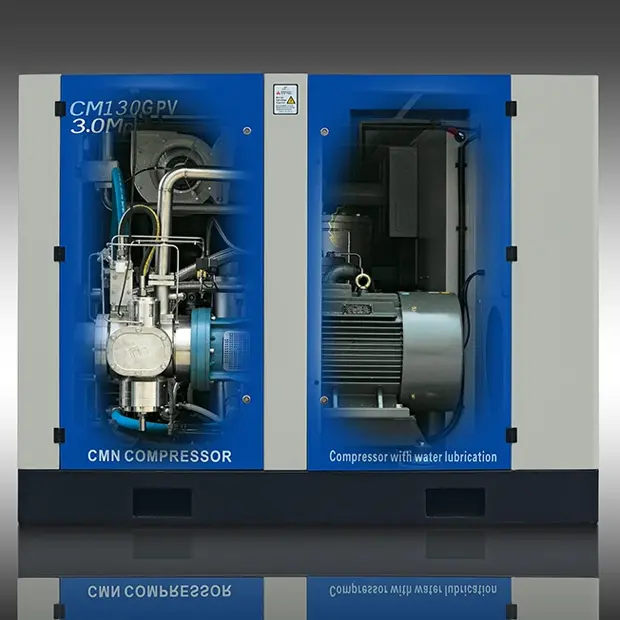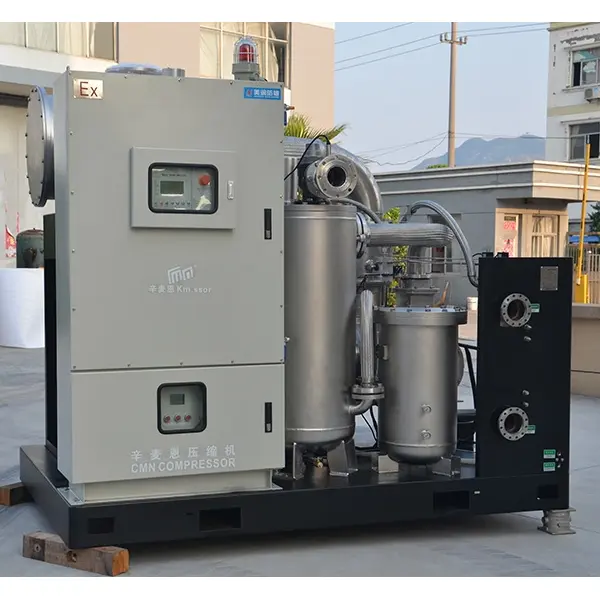
What are the challenges in compressing hydrogen gas? For industrial buyers and procurement professionals sourcing hydrogen compression solutions, this question sits at the core of efficiency, safety, and total cost of ownership. Hydrogen's unique properties—its incredibly low density, high diffusivity, and embrittlement effects—create a perfect storm of engineering hurdles. From energy-intensive compression cycles to material compatibility issues and stringent safety protocols, each stage presents significant obstacles that can impact project timelines and operational budgets. This article breaks down these critical challenges and presents actionable solutions, highlighting how advanced technology from providers like Raydafon Technology Group Co.,Limited is paving the way for more reliable and efficient hydrogen handling.
Imagine your production facility's energy costs skyrocketing because your compressor is working overtime just to achieve the required pressure. Hydrogen's low molecular weight means compressing it requires substantially more energy compared to natural gas. This directly hits your operational expenditure. The solution lies in multi-stage compression with integrated cooling. By compressing the gas in steps and cooling it between stages, the work required is significantly reduced, enhancing overall thermodynamic efficiency. Raydafon's engineered systems utilize precisely this approach, incorporating intercoolers and aftercoolers to optimize energy use and protect the compressor from heat-related stress.
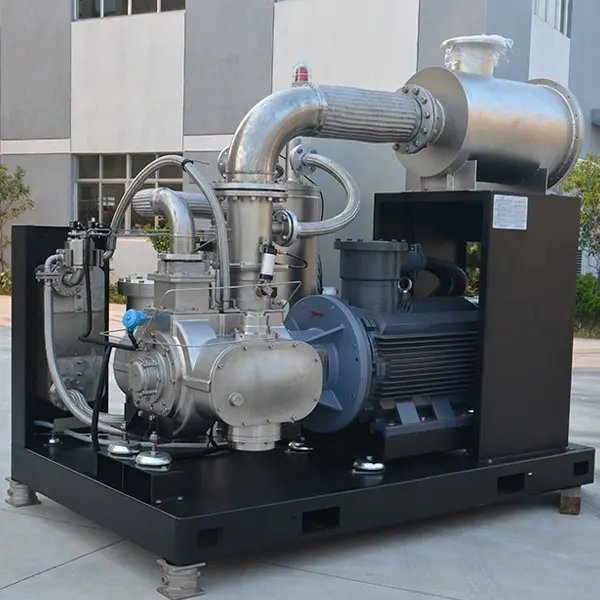
Key parameters for evaluating energy-efficient hydrogen compressors:
| Parameter | Importance | Typical Target for Efficiency |
|---|---|---|
| Specific Energy Consumption (kWh/kg) | Measures total energy used per mass of hydrogen compressed. | < 2.5 kWh/kg for 700 bar |
| Isentropic Efficiency | Ratio of ideal compression work to actual work; higher is better. | > 75% |
| Number of Compression Stages | More stages with intercooling reduce energy demand and final gas temperature. | 4-6 stages for high-pressure (700+ bar) output |
| Cooling System Effectiveness | Critical for managing heat of compression and maintaining efficiency. | Outlet temperature after cooling close to ambient |
A procurement manager approves a standard compressor, only to face catastrophic failures and unplanned downtime months later. Hydrogen embrittlement is the silent culprit. Under high pressure, hydrogen atoms can permeate metal, causing loss of ductility and crack propagation. This poses severe risks to system integrity and personnel safety. Overcoming this challenge requires specialized materials and coatings. Solutions involve using high-grade austenitic stainless steels, aluminum alloys, or polymers specifically resistant to hydrogen absorption. Raydafon Technology Group Co.,Limited designs its compression cylinders and critical wetted parts with these advanced materials, significantly extending service life and reducing maintenance frequency.
Material selection guide for hydrogen service:
| Component | Material Challenge | Recommended Solution |
|---|---|---|
| Cylinders & Valves | Susceptible to hydrogen embrittlement and fatigue. | 316L Stainless Steel, Inconel 718, specialized coatings |
| Piston Rods & Seals | High wear and risk of hydrogen permeation. | Hardened steels with ceramic coatings, PTFE-based seals |
| Piping & Fittings | Leakage at connections due to embrittlement. | Forged fittings, ISO/SAE standardized connections for hydrogen |
During a routine pressure build-up, excessive heat generation becomes a major safety concern, risking auto-ignition. The adiabatic heat of compression for hydrogen is substantial, and without proper management, temperatures can soar dangerously. This is not just an efficiency issue but a critical safety protocol. Effective thermal management systems are non-negotiable. This involves robust liquid-cooled jackets for cylinders, efficient inter-stage and after-stage coolers, and real-time temperature monitoring. Raydafon integrates sophisticated cooling circuits and temperature sensors into its compressors, ensuring operational temperatures remain within strict safety limits, protecting both the equipment and the facility.
Your safety officer reports persistent, minor leaks at compressor seals, leading to product loss and potential hazard zones. Hydrogen's tiny molecule size makes it exceptionally prone to leakage through microscopic gaps. Standard sealing solutions often fail. Addressing this requires hermetic sealing technologies or advanced, multi-barrier seal designs. Options include oil-free labyrinth seals, diaphragm compressors that completely isolate the gas, or dry-running piston rings with ultra-precise tolerances. Raydafon's expertise in seal engineering for hydrogen applications results in systems with exceptionally low leakage rates, ensuring maximum gas recovery and a safer working environment.
Q: What are the challenges in compressing hydrogen gas related to storage density?
A: A primary challenge is achieving high storage density economically. Compressing hydrogen to 700 bar increases its density, but the process is energy-intensive and requires heavy, high-pressure tanks. This trade-off between storage capacity, system weight, and compression cost is a key consideration for applications like fuel cell vehicles.
Q: What are the challenges in compressing hydrogen gas for large-scale industrial use?
A: For large-scale use, challenges multiply. The capital expenditure for high-flow, high-pressure compressors is significant. Reliability and continuous operation are critical, making material durability (combating embrittlement) and heat management paramount. Additionally, scaling up requires careful integration with production (e.g., electrolyzers) and distribution networks, demanding compressors with wide load ranges and high availability.
Navigating the complexities of hydrogen compression requires a partner with deep technical expertise and proven solutions. The challenges of energy use, material science, heat, and leakage demand an integrated approach to system design.
For over two decades, Raydafon Technology Group Co.,Limited has specialized in overcoming these exact hurdles, providing robust and efficient compression technology tailored for hydrogen. Explore our engineered solutions designed for safety, durability, and lower total cost of ownership at www.raydafon-compressor.com. Ready to discuss your specific project requirements? Contact our engineering sales team directly at [email protected].
Ursua, A., 2012. Hydrogen production from water electrolysis: current status and future trends. Proceedings of the IEEE, 100(2).
Barthelemy, H., 2017. Hydrogen storage by high pressure metal hydride. International Journal of Hydrogen Energy, 42(1).
Andersson, J., 2016. Hydrogen infrastructure for the transport sector. International Journal of Hydrogen Energy, 41(3).
Jiao, K., 2021. Designing advanced heat exchangers for hydrogen cooling in compression systems. Applied Thermal Engineering, 182.
Schmidt, P., 2017. Future cost and performance of water electrolysis. Energy & Environmental Science, 10(10).
Khalil, Y.F., 2018. Materials selection for hydrogen service in high-pressure environments. Journal of Pressure Vessel Technology, 140(5).
Mori, D., 2016. Thermodynamic analysis of a multi-stage hydrogen compression system. Energy Conversion and Management, 117.
Hassan, I.M., 2020. Leakage characterization and detection in high-pressure hydrogen systems. International Journal of Hydrogen Energy, 45(55).
Zhang, F., 2019. Review on safety strategies for hydrogen refueling stations. Renewable and Sustainable Energy Reviews, 107.
Reddy, B.V., 2022. Advanced sealing technologies for preventing hydrogen leakage in compressors. Proceedings of the Institution of Mechanical Engineers, Part E: Journal of Process Mechanical Engineering, 236(2).