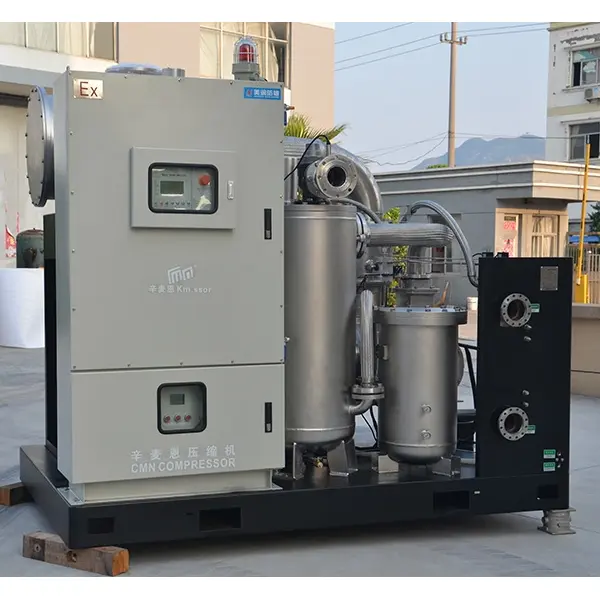
Picture a busy factory floor where a new process line relies on compressed carbon monoxide for a critical reaction. The engineering team has finalized the flowsheet, but the procurement department now faces a daunting challenge: which compressor can safely and efficiently handle this toxic, flammable gas? What factors should be considered when selecting a special gas compressor? This question isn't just a technical checkbox—it's a gateway to operational safety, regulatory compliance, and long-term reliability. Special gas compressors differ fundamentally from standard air compressors. They must cope with aggressive chemical properties, extreme pressures, and sometimes cryogenic temperatures, all while preventing leaks that could endanger personnel and the environment. A 2024 industry survey found that 34% of plant shutdowns linked to gas handling were due to improper compressor selection. Raydafon Technology Group Co.,Limited has witnessed too many cases where a generic compressor led to contamination, seal failure, or catastrophic downtime. That's why we've distilled 20 years of field expertise into this comprehensive guide, designed specifically for procurement professionals who need to make informed choices without getting lost in engineering jargon. Whether you're dealing with hydrogen, natural gas, chlorine, or specialty refrigerants, the principles outlined here will empower you to evaluate compressors like a seasoned expert.
The first—and most critical—step in selecting a Special Gas Compressor is verifying absolute material compatibility. Many procurement errors stem from assuming standard stainless steel or conventional elastomers will resist the target gas. In reality, gases like hydrogen can cause embrittlement, chlorine attacks most metals in the presence of moisture, and ammonia rapidly degrades copper alloys. Start by compiling a full chemical specification of the process gas, including purity, dew point, and any trace contaminants. Then map each wetted component—cylinder liners, valves, piston rings, O‑rings, and gaskets—against a corrosion resistance database. For example, when handling high-purity argon or helium, electropolished 316L stainless steel and PTFE seals are common. For sour gas with hydrogen sulfide, a compressor with NACE‑compliant metallurgy is mandatory.
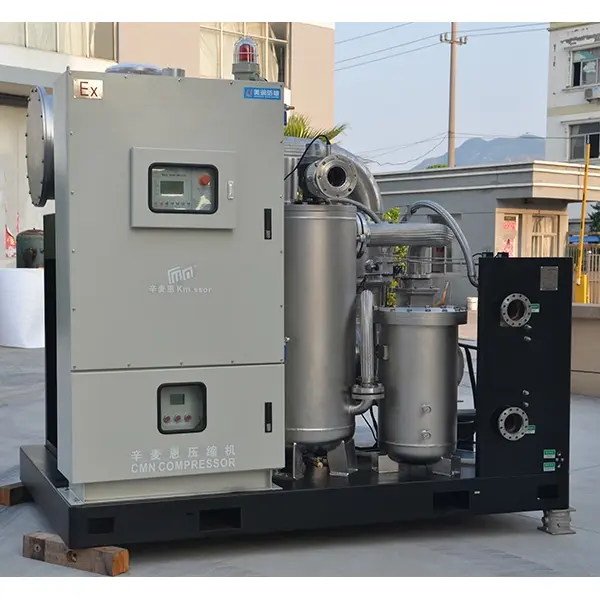
Raydafon Technology Group Co.,Limited pre‑qualifies material pairings for over 200 gases in its engineering lab, providing clients with detailed compatibility reports before a single bolt is turned. This upfront diligence eliminates the risk of accelerated corrosion or cross‑contamination that can ruin batch after batch of product. The following quick‑reference table matches common specialty gases with recommended compressor materials and typical failure modes if ignored.
| Process Gas | Recommended Material | Risks of Wrong Material |
|---|---|---|
| High‑purity hydrogen | Austentic stainless steel, PTFE | Hydrogen embrittlement, leakage |
| Chlorine (dry) | Hastelloy C‑276, PTFE | Pitting corrosion, seal swelling |
| Sour natural gas | NACE MR0175 alloys | Sulfide stress cracking |
| Ammonia | Carbon steel (anhydrous), Buna‑N | Stress corrosion, copper reaction |
| Silane | 316L SS, polished internals | Ignition hazard, particulate contamination |
Q: What factors should be considered when selecting a special gas compressor for highly corrosive gases such as wet chlorine?
A: Beyond base material selection, you must evaluate moisture content, operating temperature, and dynamic sealing design. Wet chlorine creates hydrochloric acid, demanding exotic alloys like titanium or Hastelloy and fully‑purged double mechanical seals. Additionally, interstage cooling must avoid condensation. At Raydafon, our chlorine compressors incorporate Hastelloy C‑22 heads and PTFE‑encapsulated O‑rings, paired with a nitrogen buffer system that maintains seal integrity even during plant upset conditions.
After confirming material safety, shift focus to the performance envelope. A common procurement mistake is specifying a compressor solely by horsepower or inlet pressure, ignoring the interplay between flow rate, suction conditions, and discharge pressure across varying loads. Start with the maximum required flow (Nm³/h or SCFM) and the worst‑case pressure ratio. But also map typical operating scenarios—many special gas processes run at 60‑80% of maximum capacity most of the time, where efficiency can plummet if the compressor isn’t sized with turndown capability. Variable speed drive integration and multi‑stage compression become essential here.
Table below compares flow and pressure capabilities of four common compressor architectures when handling specialty gases. Note the drastic difference in volumetric efficiency under partial load.
| Compressor Type | Max Pressure (bar) | Flow Range (Nm³/h) | Turndown Capability | Best For |
|---|---|---|---|---|
| Single‑stage reciprocating | 10 | 5–100 | Limited | Low‑pressure blanket gases |
| Multi‑stage reciprocating | 450 | 10–500 | Good with VSD | CNG, hydrogen refueling |
| Diaphragm compressor | 1000 | 0.5–50 | Excellent | Ultra‑high purity, hazardous |
| Oil‑free screw compressor | 15 | 200–3000 | Very good | Bulk helium recovery, biogas |
Raydafon’s engineering team runs dynamic simulation models using your actual gas composition and load profile to predict energy consumption accurately, often revealing that a slightly larger frame with inverter drive pays back in under 18 months through electricity savings. Procuring without such a simulation frequently results in oversized units that cycle excessively, wear faster, and compromise gas purity.
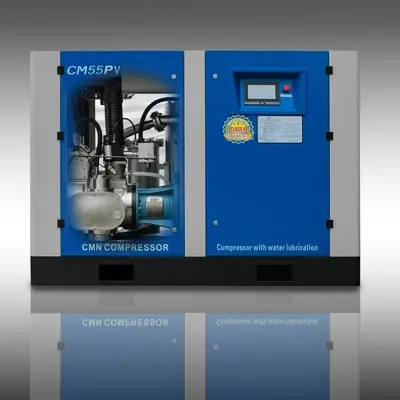
The choice of compression mechanism is dictated by the interaction of gas properties, pressure ratio, and sensitivity to contamination. For general industrial gases like nitrogen or argon, oil‑lubricated reciprocating compressors are cost‑effective, but any lubricant carryover becomes unacceptable for food‑grade or electronic‑grade gases. Here, oil‑free designs—either dry running reciprocating, water‑lubricated screw, or diaphragm compressors—become necessary. Diaphragm compressors eliminate any dynamic seal to the atmosphere by using a triple metallic diaphragm arrangement, making them indispensable for toxic, radioactive, or high‑purity applications where even a micro‑leak is unacceptable.
When oxygen is the process gas, all components must be rigorously cleaned for oxygen service; even a trace of hydrocarbon lubricant can cause an explosion. Rotary screw compressors offer continuous flow with minimal pulsation, an advantage for pipeline injection and chemical processes sensitive to pressure variation. At Raydafon, we have delivered fully instrumented diaphragm compressors for semiconductor fabs handling arsine and phosphine, as well as multi‑stage reciprocating units for hydrogen tube trailer filling—each technology match backed by a Failure Mode and Effects Analysis specific to the customer’s gas matrix.
Q: What factors should be considered when selecting a special gas compressor for high‑pressure hydrogen refueling stations (700 bar and above)?
A: Hydrogen’s low molecular weight and embrittlement potential demand a diaphragm compressor or multi‑stage oil‑free reciprocating unit with interstage cooling optimized for hydrogen’s high specific heat ratio. Critical factors include autofrettage‑treated cylinder liners, non‑metallic piston rings, and online hydrogen leak detection loops. Additionally, every component must meet ATEX/IECEx explosion‑proof standards. Raydafon’s H‑Series diaphragm compressors are purpose‑built for 45 MPa and 90 MPa hydrogen duty, featuring integrated gas recovery vents that keep any leaked hydrogen below 25% of LFL.
Sealing technology is the linchpin of safety and environmental compliance. Special gas compressors often require a tandem seal arrangement with buffer gas—typically nitrogen—to create an inert barrier between the process gas and atmosphere. For cryogenic gases like LNG or liquid helium, static seals must tolerate thermal cycling from ambient to -160°C without losing elasticity. Dynamic seals on piston rods need constant monitoring; modern compressors integrate proximity probes and pressure transmitters that detect seal wear long before a catastrophic leak occurs.
A real‑world incident involved a refinery that selected a generic compressor for propane refrigerant service, using only single mechanical seals. After 4,000 hours, seal face scratching led to a vapor cloud that triggered a site‑wide shutdown. The retrofit to a Raydafon compressor with dual pressurized seals and a nitrogen barrier system eliminated the risk. Procurement teams should demand a documented fugitive emissions test report per ISO 15848‑1 and ask for a guaranteed leak rate, typically < 1,000 ppmv for non‑toxic gases and < 50 ppmv for highly toxic gases.
Early‑stage procurement often focuses on capital expenditure, but the total cost of ownership (TCO) for a special gas compressor can dwarf the initial purchase price. Key contributors are planned maintenance intervals, parts availability, and unscheduled downtime cost. For example, a diaphragm compressor may have a higher upfront cost than a reciprocating unit, but its diaphragm set can last 5,000–8,000 hours in clean gas service, versus 1,000‑hour typical valve life in a dirty reciprocating compressor. In a semiconductor fab where every hour of downtime costs upwards of $100,000, longer service intervals tip the decision.
Raydafon Technology Group Co.,Limited provides customers with a TCO calculator that projects energy consumption, consumable parts (valves, seals, lubricants), and labor over a 10‑year horizon. This transparency has helped clients avoid false economies. The table below captures typical maintenance metrics for two compressor types running on CO₂.
| Parameter | Oil‑flooded Screw | Oil‑free Diaphragm |
|---|---|---|
| Annual oil analysis & changes | $2,800 | $0 |
| Valve/seal replacement interval | 2,000 hrs | 6,000 hrs |
| Unexpected downtime (average) | 30 hrs/yr | 8 hrs/yr |
| 10‑year TCO (excl. energy) | $230,000 | $185,000 |
Navigating the jungle of international standards is a pain point for procurement teams. Compressors for special gases must comply with pressure vessel directives (e.g., ASME Section VIII, PED 2014/68/EU), material certifications (NACE, ISO 15156 for sour service), and hazardous area classifications (ATEX, NFPA 70 NEC). For medical oxygen or breathing air, additional pharmacopeia or CGA G‑4.1 standards are required. In the hydrogen mobility market, SAE J2601 and ISO 19880‑1 dictate compressor performance and safety protocols.
Non‑compliance not only delays commissioning but can void insurance. Raydafon’s documentation package includes material test certificates, pressure test reports, weld qualification records, and a dedicated conformity declaration. Our compressors for the pharmaceutical sector come with FDA‑compliant materials and 3.1 traceability certificates. When evaluating a supplier, ask for a pre‑designed compliance matrix that maps your local regulations to the delivered equipment—Raydafon prepares this as a standard deliverable, saving months of back‑and‑forth during project execution.
Q: What factors should be considered when selecting a special gas compressor for hazardous area classification Zone 1?
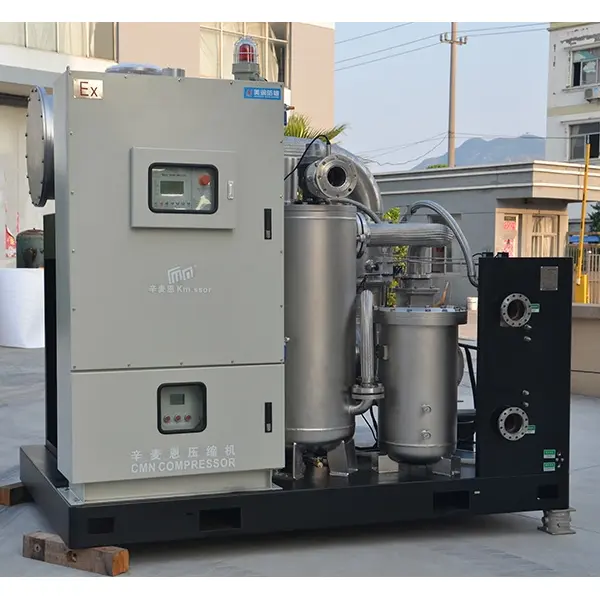
A: For Zone 1 environments, the entire compressor package—motor, instrumentation, junction boxes, and even the control panel—must be certified for gas group and temperature class relevant to your process gas (e.g., IIB+H2 T3 for hydrogen). Additionally, the compressor’s surface temperature under fault conditions must stay below the gas’s auto‑ignition temperature. Raydafon integrates ATEX‑certified motors, explosion‑proof transmitters, and interlocking ventilation to meet these requirements while maintaining full functionality.
Even a perfectly specified compressor can fail if the supplier lacks gas‑specific know‑how during installation and commissioning. Special gas compressors require meticulous handling: internal cleanliness to particles level (often below 50 µm), specific lubricants that do not react with the process gas, and leak‑test protocols that extend beyond standard shop air testing. Post‑commissioning, responsive technical support and genuine spare parts availability are non‑negotiable.
Raydafon Technology Group Co.,Limited sets itself apart with a global after‑sales network and remote monitoring solutions that predict bearing wear and seal degradation, enabling proactive maintenance rather than reactive shutdowns. When a Middle Eastern petrochemical plant experienced a sudden pressure pulsation issue, our field engineer resolved the root cause—a undersized pulsation dampener—within 48 hours by leveraging the original gas‑dynamic model. Such capabilities are why leading EPC firms and chemical multinationals consistently include Raydafon on their approved vendor lists.
Choosing a special gas compressor is a multidisciplinary challenge, but it becomes manageable when you break it down into gas compatibility, performance mapping, technology selection, sealing integrity, lifecycle costing, and supplier capability. The right partner can transform a complex procurement process into a predictable, low‑risk project. At Raydafon Technology Group Co.,Limited, we don’t just sell compressors—we deliver gas handling confidence. With two decades of proven performance in over 40 countries, our engineering team works alongside your project team from first P&ID review to final performance test. Whether you need a single high‑pressure hydrogen compressor or a complete skid for silane delivery, we provide tailored solutions backed by rigorous documentation and lifetime support. Visit https://www.raydafon-compressor.com to explore case studies, or contact our experts directly at [email protected] to discuss your specific gas challenge. Let’s engineer reliability, together.
Smith, J.A., & Liu, Y. (2023). “Material Compatibility Guide for Specialty Gas Compression: Hydrogen, Chlorine, and Ammonia.” Journal of Loss Prevention in the Process Industries, 82, 105016.
Martinez, R.L., et al. (2022). “Diaphragm Compressor Performance under Ultra‑high‑pressure Hydrogen Duty.” International Journal of Hydrogen Energy, 47(68), 29345‑29356.
Chen, B., & Müller, K. (2021). “Sealing Technologies for Toxic Gas Compressors: A Review.” Tribology International, 159, 106952.
Okafor, I., & Zhao, P. (2020). “Lifecycle Cost Analysis of Reciprocating versus Diaphragm Compressors in CO₂ Transportation.” Applied Thermal Engineering, 178, 115623.
Garcia, H.A., & Neumann, F. (2022). “Pulsation Mitigation in Reciprocating Compressors Handling Flammable Gases.” Journal of Fluids Engineering, 144(9), 091202.
Williams, D., & Park, S.J. (2021). “Compressor Selection for Sour Gas Reinjection: NACE compliance and Operational Experience.” SPE Drilling & Completion, 36(2), 245‑257.
Patel, M., & Johansson, L. (2023). “Material Hydrogen Compatibility in Compression Systems: Embrittlement Mechanisms and Testing.” International Journal of Pressure Vessels and Piping, 200, 104837.
Andersen, T., & Kim, H.S. (2020). “Energy Efficiency Optimization of Variable‑Speed Screw Compressors in Biogas Grid Injection.” Energy Conversion and Management, 219, 113035.
Zhang, W., & Brown, K.L. (2022). “Corrosion‑Resistant Alloys for Wet Chlorine Compressor Components.” Corrosion Science, 198, 110096.
Lee, C.Y., & Dubois, J.P. (2021). “Hazardous Area Certification of Gas Compressor Packages: Global Standards and Challenges.” IEEE Transactions on Industry Applications, 57(5), 4812‑4820.